Results by title
267 books match the query 'Frontier and pioneer life' and 12 start with b

Bachelor Bess
The Homesteading Letters of Elizabeth Corey, 1909-1919Philip L. Gerber
University of Iowa Press, 1990
In July 1909 twenty-one-year-old Elizabeth Corey left her Iowa farm to stake her claim to a South Dakota homestead. Over the next ten years, as she continued her schoolteaching career and carved out a home for herself in this inhospitable territory, she sent a steady stream of letters to her family back in Iowa. From the edge of modern America, Bess wrote long, gossipy accounts—"our own continuing adventure story," according to her brother Paul—of frontier life on the high plains west of the Missouri River. Irrepressible, independent-minded, and evidently fearless, the self-styled Bachelor Bess gives us a firsthand, almost daily account of her homesteading adventures. We can all stake a claim in her energetic letters.
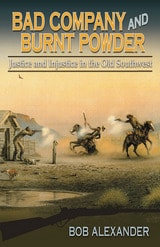
Bad Company and Burnt Powder
Justice and Injustice in the Old SouthwestBob Alexander
University of North Texas Press, 2014

Barbs, Bullets, and Blood
The 1880s Texas barbed Wire WarsHarold D. Jobes
University of North Texas Press, 2025
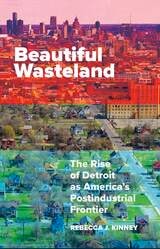
Beautiful Wasteland
The Rise of Detroit as America's Postindustrial FrontierRebecca J. Kinney
University of Minnesota Press, 2016
According to popular media and scholarship, Detroit, the once-vibrant city that crumbled with the departure of the auto industry, is where dreams can be reborn. It is a place that, like America itself, is gritty and determined. It has faced the worst kind of adversity, and supposedly now it’s back. But what does this narrative of “new Detroit” leave out? Beautiful Wasteland reveals that the contemporary story of Detroit’s rebirth is an upcycled version of the American Dream, which has long imagined access to work, home, and upward mobility as race-neutral projects. They’re not. As Rebecca J. Kinney shows, the narratives of Detroit’s rise, decline, and potential to rise again are deeply steeped in material and ideological investments in whiteness.
By remapping the narratives of contemporary Detroit through an extension of America’s frontier mythology, Kinney analyzes a cross-section of twentieth and twenty-first century cultural locations—an Internet forum, ruin photography, advertising, documentary film, and print and online media. She illuminates how the stories we tell about Detroit as a frontier of possibility enable the erasure of white privilege and systemic racism. By situating Detroit as a “beautiful wasteland,” both desirable and distressed, this shows how the narrative of ruin and possibility form a mutually constituted relationship: the city is possible precisely because of its perceived ruin.
Beautiful Wasteland tackles the key questions about the future of postindustrial America. As cities around the country reckon with their own postindustrial landscapes, Rebecca Kinney cautions that development that elides considerations of race and class will only continue to replicate uneven access to the city for the poor, working class, and people of color.

Becoming Laura Ingalls Wilder
The Woman behind the LegendJohn E. Miller
University of Missouri Press, 2005
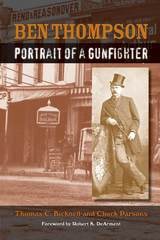
Ben Thompson
Portrait of a GunfighterThomas C. Bicknell
University of North Texas Press, 2018
Billy the Kid
El Bandido SympaticoJames B. Mills
University of North Texas Press, 2022
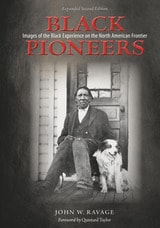
Black Pioneers
Images of the Black Experience on the North American FrontierJohn Ravage
University of Utah Press, 1997
Using public and private collections in every western state and in Canada, Ravage has gathered more than three hundred photographs, line drawings, lithographs, stereoviews, and other images. This new edition also adds sections on black entertainers and ranchers, a chapter on the dating of historic photographs and their genealogical significance, as well as an expanded bibliography. All aid understanding of the black frontier experience.
Ravage goes beyond the stereotypical photography of the era, which often reflected white fears and prejudices, to present the works of frontier photographers. Galveston’s Lucius Harper, Denver’s John Green, and the Northwest’s nomadic James Presley Ball all bring life to their subjects and meaning to their presence in the American West. Black Pioneers is a vibrant visual document of the profound influence blacks had on communal and frontier history.
Blue Men and River Monsters
Folklore of the NorthJohn Zimm
Wisconsin Historical Society Press, 2014
Bodie’s Gold
Tall Tales and True History from a California Mining TownMarguerite Sprague
University of Nevada Press, 2011
Bones on the Ground
Elizabeth O'Maley
Indiana Historical Society Press, 2014

Border Beagles
A Tale of MississippiWilliam Gilmore Simms
University of Arkansas Press, 1996