Results by title
93 books match the query 'Genocide & War Crimes' and 9 start with b

Battling for Hearts and Minds
Memory Struggles in Pinochet's Chile, 1973–1988Steve J. Stern
Duke University Press, 2006
In the 1970s, Chilean dissidents were lonely “voices in the wilderness” insisting that state terror and its victims be recognized and remembered. By the 1980s, the dissent had spread, catalyzing a mass movement of individuals who revived public dialogue by taking to the streets, creating alternative media, and demanding democracy and human rights. Despite long odds and discouraging defeats, people of conscience—victims of the dictatorship, priests, youth, women, workers, and others—overcame fear and succeeded in creating truthful public memories of state atrocities. Recounting both their efforts and those of the regime’s supporters to win the battle for Chileans’ hearts and minds, Stern shows how profoundly the struggle to create memories, to tell history, matters.
Battling for Hearts and Minds is the second volume in the trilogy The Memory Box of Pinochet’s Chile. The third book will examine Chileans’ efforts to achieve democracy while reckoning with Pinochet’s legacy.
Becoming Rwandan
Education, Reconciliation, and the Making of a Post-Genocide CitizenS. Garnett Russell
Rutgers University Press, 2020
Being Human
Political Modernity and Hospitality in Kurdistan-IraqFazil Moradi
Rutgers University Press, 2024
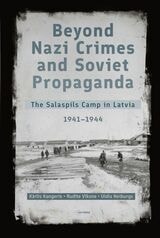
Beyond Nazi Crimes and Soviet Propaganda
The Salaspils Camp in Latvia, 1941-1944Karlis Kangeris
Central European University Press, 2027
The Salaspils camp near Riga, which was operated during the Nazi occupation of Latvia, has long been the subject ofcontrovery. Around 23,000 people were imprisoned there: half were political prisoners, labor resisters and convicted soldiers, the rest prisoners from special operations against civilians in Belarus, Russia and the Latgale region of Latvia. The death toll in the camp, including the number of Jews who died during construction, is well over 3,000 people.
Despite the relatively small size of this camp, it became a model for Russian remembrance policy. Soviet propaganda claimed that up to 100,000 prisoners were killed there, charged that children were used to extract blood, and greatly exaggerated the extent of the persecution of imprisoned lawbreakers and political dissidents . Salaspils became a myth in Russian-speaking society in Latvia that served to reinforce Soviet narratives of the “Great Patriotic War.”
The three authors drew on sources from the archives of Latvia, Germany and Russia and critically analyzed oral testimonies and earlier research to create a comprehensive account of the Salaspils camp in Nazi-occupied Latvia. Their book furthers the understanding of processes of deformation of collective memory and the techniques of memory politics from the Cold War to the present.
Beyond Repair?
Mayan Women’s Protagonism in the Aftermath of Genocidal HarmAlison Crosby
Rutgers University Press, 2019
Honorable Mention, 2020 CALACS Book Prize
Beyond Repair? explores Mayan women’s agency in the search for redress for harm suffered during the genocidal violence perpetrated by the Guatemalan state in the early 1980s at the height of the thirty-six-year armed conflict. The book draws on eight years of feminist participatory action research conducted with fifty-four Q’eqchi’, Kaqchikel, Chuj, and Mam women who are seeking truth, justice, and reparation for the violence they experienced during the war, and the women’s rights activists, lawyers, psychologists, Mayan rights activists, and researchers who have accompanied them as intermediaries for over a decade. Alison Crosby and M. Brinton Lykes use the concept of “protagonism” to deconstruct dominant psychological discursive constructions of women as “victims,” “survivors,” “selves,” “individuals,” and/or “subjects.” They argue that at different moments Mayan women have been actively engaged as protagonists in constructivist and discursive performances through which they have narrated new, mobile meanings of “Mayan woman,” repositioning themselves at the interstices of multiple communities and in their pursuit of redress for harm suffered.
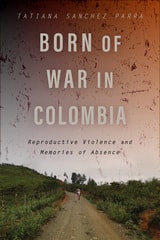
Born of War in Colombia
Reproductive Violence and Memories of AbsenceTatiana Sanchez Parra
Rutgers University Press, 2024
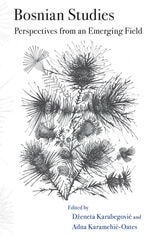
Bosnian Studies
Perspectives from an Emerging FieldDzeneta Karabegovic
University of Missouri Press, 2023
Diaspora communities have formed in North America (especially in St. Louis), Europe, and Australia because of war and displacement, and have themselves become a considerable topic of study spanning the disciplines of anthropology, migration studies, political science, memory studies, conflict and security studies, psychology, and geography.
This volume seeks to illuminate how Bosnian migrant and diaspora scholars are contributing to the development of Bosnian Studies. The authors included in this volume are either writing from their (new) home bases in Australia, Austria, Canada, Switzerland, the United Kingdom, and the United States, among others, or they have returned to Bosnia after a period of migration. Their chapters have distinct entry points of inquiry, demonstrating how scholars have integrated Bosnia as a theme across the range of disciplines in which they are situated. The selections included in the volume range from literary analysis to personal memoirs of the conflict, from studies of heritage and identity to political science analysis of diaspora voting, to genocide studies and questions of (or lack of) ethics in the growing field of Bosnian Studies.

Breaking the South Slav Dream
The Rise and Fall of YugoslaviaKate Hudson
Pluto Press, 2003
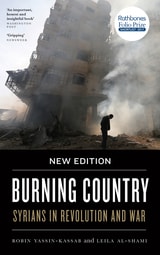
Burning Country
Syrians in Revolution and WarRobin Yassin-Kassab and Leila Al-Shami
Pluto Press, 2018
Burning Country explores the complicated reality of life in present-day Syria with unprecedented detail and sophistication, drawing on new firsthand testimonies from opposition fighters, exiles lost in an archipelago of refugee camps, and courageous human rights activists. Robin Yassin-Kassab and Leila Al-Shami expertly interweave these stories with an incisive analysis of the militarization of the uprising, the rise of the Islamists and sectarian warfare, and the role of Syria’s government in exacerbating the brutalization of the conflict. Through these accounts and a broad range of secondary source material, the authors persuasively argue that the international community has failed in its stated commitments to support the Syrian opposition movements.
This new edition brings the story up to the present, with a new chapter that covers the internationalization of the conflict, including interventions by the United States, Russia, and Iran; the rollback of ISIS; the fall of Daraya and Aleppo; the crushing of local democracy; sectarian cleansing; and the forced exile of millions of Syrians.