Results by title
153 books match the query 'Genres' and 9 start with b
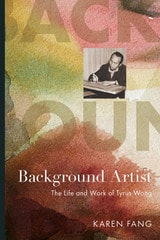
Background Artist
The Life and Work of Tyrus WongKaren Fang
Rutgers University Press, 2025
Chinese American Librarians Association Best Book Award (Honorary Mention, Adult Non-fiction category)
You might not know the name Tyrus Wong, but you probably know some of the images he created, including scenes from the beloved Disney classic Bambi. Yet when he came to this country as a child, Tyrus was an illegal immigrant locked up in an offshore detention center. How did he go on to a long and prosperous career drawing animation cels, storyboards, and greeting cards that shaped the American imagination?
Background Artist shares the inspiring story of Tyrus Wong’s remarkable 106-year life and showcases his wide array of creative work, from the paintings and fine art prints he made working for Roosevelt’s Works Progress Administration to the unique handmade kites he designed and flew on the Santa Monica beach. It tells how he came to the United States as a ten-year-old boy in 1920, at a time when the Chinese Exclusion Act barred him from legal citizenship. Yet it also shows how Wong found American communities that welcomed him and nurtured his artistic talent. Covering everything from his work as a studio sketch artist for Warner Bros. to the best-selling Christmas cards he designed for Hallmark and other greeting card companies, this book celebrates a multitalented Asian American artist and pioneer.
Larry Potash (WGN News) and "The artist who saved a Hollywood classic from never being made" (https://www.youtube.com/watch?v=P471NdY7TdE)
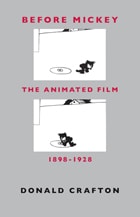
Before Mickey
The Animated Film 1898-1928Donald Crafton
University of Chicago Press, 1993
This witty and fascinating study reminds us that there was animation before Disney: about thirty years of creativity and experimentation flourishing in such extraordinary work as Gertiethe Dinosaur and Felix the Cat. Before Mickey, the first in-depth history of animation from the turn of the century until the debut of Disney, includes accounts of mechanical ingenuity, marketing, and art. Donald Crafton is equally adept at explaining techniques of sketching and camera work, evoking characteristic styles of such pioneering animators as Winsor McCay and Ladislas Starevitch, placing work in its social and economic context, and unraveling the aesthetic impact of specific cartoons.
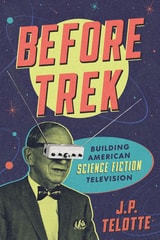
Before Trek
Building American Science Fiction TelevisionJ. P. Telotte
University of Texas Press, 2026
Recounts the early development of TV science fiction as it shaped how American audiences looked at television in an increasingly mediated world.
Long before Star Trek became synonymous with televised science fiction, a generation of space operas and anthology programs laid the groundwork for the genre’s cultural legitimacy. With Before Trek, J. P. Telotte reexamines the formative decades of science fiction television, the late 1940s through the mid-1960s, when both the medium and genre were defining themselves. At a moment when science fiction was often dismissed as juvenile escapism, early programs such as Captain Video, Space Patrol, Tales of Tomorrow, and Science Fiction Theatre worked to reshape audience and industry expectations, establishing the genre as a vehicle for serious storytelling.
Tracing the evolution of the genre through The Twilight Zone, The Outer Limits, and ultimately Star Trek, Telotte reveals how television and science fiction developed in tandem, each helping to articulate the technological anxieties of the postwar era. These programs offered viewers new ways of seeing: approaches to social critique, political tension, and cultural change that conventional broadcasting often could not accommodate. By situating early televised science fiction within broader debates about media, modernity, and what Guy Debord termed the “Society of the Spectacle,” Telotte reclaims a largely overlooked body of work and demonstrates its foundational role in shaping both contemporary television and the imaginative vocabulary of modern culture.
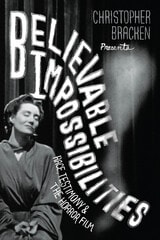
Believable Impossibilities
Race, Testimony, and the Horror FilmChristopher Bracken
University of Chicago Press, 2026
A gripping exploration of belief in the impossible through horror film, informed by philosophy, history, and anthropology.
What if aliens crash-landed at an old mine? What if you discovered your spouse is protecting you from witchcraft? What if you received messages from the dead? You wouldn’t believe it, of course—but you might investigate. As Christopher Bracken shows through this gripping exploration of the horror film, this is the first step toward believing the impossible.
In Believable Impossibilities, Bracken examines the genre in which we are most frequently called on to believe something seemingly impossible has unsettled our ordinary lives—the horror story. Whether on the page or on screen, horror draws us into narratives in which a community of nonbelievers are suddenly confronted with the challenge of believing in events and experiences that radically break with expectation. As Bracken argues, questions of belief often intersect with issues of race and Indigeneity because, historically, belief in the impossible has been racially coded as a trait of “primitive” thought. Drawing on philosophy, anthropology, and psychoanalysis, Bracken explores the fictional spaces in which the paranormal and supernatural challenge and defy our social bonds.
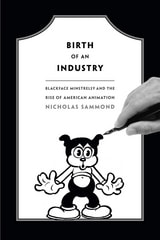
Birth of an Industry
Blackface Minstrelsy and the Rise of American AnimationNicholas Sammond
Duke University Press, 2015
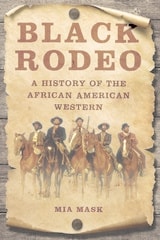
Black Rodeo
A History of the African American WesternMia Mask
University of Illinois Press, 2023
A first-of-its kind survey, Black Rodeo illuminates the figure of the Black cowboy while examining the intersection of African American film history and the western.
Border Mediascapes
Cinematic Itineraries at the Edge of EuropeFrancesco Zucconi
University of Minnesota Press, 2026
How the cinematic gaze reveals the hidden operations of border zones
Examining a variety of documentary films made along the borders of Europe since the turn of the twenty-first century, Border Mediascapes takes a cinematic eye to the technologies employed in governing spatial movement. Working at the intersections of social sciences, political theory, contemporary media, and cinema aesthetics, this book expands our understanding of the border as not just a static political boundary inscribed on a map but a complex, dynamic network of human and nonhuman agents.
Francesco Zucconi asserts that contemporary borders are environments defined by media: a perpetually shifting set of interactions between physical bodies and sensors, surveillance cameras, satellites, mapping programs, digital signage, and cellular devices. Analyzing documentaries filmed by or in collaboration with migrants, Border Mediascapes demonstrates how cinema can be used to reveal the otherwise unseen apparatuses that facilitate systematized practices of recognition, expulsion, and erasure.
As he details the ways specific border technologies measure and identify individuals as part of the larger project of territorial control, Zucconi illustrates the effectiveness of cinema for capturing the entanglement of geopolitics and biopolitics. Viewing the cinematic perspective as simultaneously analytical, critical, and complicit with the new technological frontier, Zucconi shows how the medium can deepen our understanding of borders as sites of power, resistance, and resilience.
Retail e-book files for this title are screen-reader friendly with images accompanied by short alt text and/or extended descriptions.
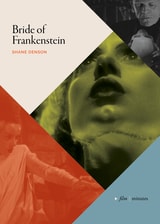
Bride of Frankenstein
Shane Denson
Lever Press, 2025
Volumes in the film|minutes series cut up films into segments of exactly one minute and transform each minute into an innovative tool for thinking with the film. Each volume works rigorously with the concept of “the minute” as a non-cinematic scale/quantity, a means to zoom in on (dis)orderly fragments that do not necessarily respect the confinements of cinematic form or meaning. As a critical practice, the focus on minutes causes disruptions and displacement that create novel connections and perspectives, and uncovers hidden traces, making it possible to watch each film anew.

British and French Television Drama
Innovation and Change in the 1950s and 1960sJoy Leman
Intellect Books, 2026
The era after World War II marked a formative moment for television drama in France and Britain—a time of technological change, social transformation, and new possibilities for innovation in communication systems. Although the two countries developed distinct broadcasting cultures, this book reveals striking similarities in the intentions and achievements of socially conscious communication practitioners.
Drawing on cross-boundary comparison, the book uncovers the internal struggles within the French and British institutions that controlled broadcasting. It shows how creative initiatives with a social class perspective were able to break through the dense fabric of institutional control before bureaucratic structures fully solidified. The study offers a unique view of the active engagement and political judgment of writers, editors, producers, and directors who, though facing managerial skepticism and at times direct interference, persisted in reaching rapidly expanding audiences.
Combining historical contextual research, detailed case studies, and first-hand practitioner insights, the book illuminates the personal and political dimensions of television drama production in both nations. In doing so, it also speaks to contemporary debates, addressing current threats to public broadcasting from political and commercial pressures worldwide.