212 books match the query 'German' and 3 start with b
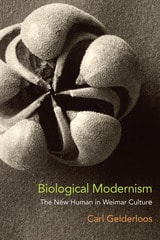
cover of Biological Modernism: The New Human in Weimar Culture

Biological Modernism

The New Human in Weimar Culture

Carl Gelderloos

Northwestern University Press, 2020

Honorable Mention for the DAAD/GSA Book Prize for the Best Book in Germanistik or Cultural Studies

Biological Modernism
identifies an intellectual current in the Weimar Republic that drew on biology, organicism, vitalism, and other discourses associated with living nature in order to redefine the human being for a modern, technological age. Contrary to the assumption that any turn toward the organic indicated a reactionary flight from modernity or a longing for wholeness, Carl Gelderloos shows that biology and other discourses of living nature offered a nuanced way of theorizing modernity rather than fleeing from it. Organic life, instead of representing a stabilizing sense of wholeness, by the 1920s had become a scientific, philosophical, and disciplinary problem. In their work, figures such as Alfred Döblin, Ernst Jünger, Helmuth Plessner, and August Sander interrogated the relationships between technology, nature, and the human and radically reconsidered the relationship between the disciplines as well as the  epistemological and political consequences for defining the human being. Biological Modernism will be of interest to scholars of German literature and culture, literary modernism, photography, philosophical anthropology, twentieth-century intellectual history, the politics of culture, and the history of science.
[more]
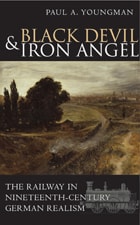
cover of Black devil and iron angel: the railway in nineteenth-century German realism

Black devil and iron angel

the railway in nineteenth-century German realism

Paul A. Youngman

Catholic University of America Press, 2005

Black Devil and Iron Angel examines how the railway was received and represented by a variety of nineteenth-century German and Austrian realist authors including Berthold Auerbach, Theodor Fontane, and Gerhart Hauptmann.
[more]
cover of Bluestocking Feminism and British-German Cultural Transfer, 1750-1837

Bluestocking Feminism and British-German Cultural Transfer, 1750-1837

Alessa Johns

University of Michigan Press, 2014

Bluestocking Feminism and British-German Cultural Transfer, 1750–1837 examines the processes of cultural transfer between Britain and Germany during the Personal Union, the period from 1714 to 1837 when the kings of England were simultaneously Electors of Hanover. While scholars have generally focused on the political and diplomatic implications of the Personal Union, Alessa Johns offers a new perspective by tracing sociocultural repercussions and investigating how, in the period of the American and French Revolutions, Britain and Germany generated distinct discourses of liberty even though they were nonrevolutionary countries. British and German reformists—feminists in particular—used the period’s expanded pathways of cultural transfer to generate new discourses as well as to articulate new views of what personal freedom, national character, and international interaction might be. Johns traces four pivotal moments of cultural exchange: the expansion of the book trade, the rage for translation, the effect of revolution on intra-European travel and travel writing, and the impact of transatlantic journeys on visions of reform. Johns reveals the way in which what she terms “bluestocking transnationalism” spawned discourses of liberty and attempts at sociocultural reform during this period of enormous economic development, revolution, and war.
[more]