Results by title
60 books match the query 'Ghana' and 5 start with b
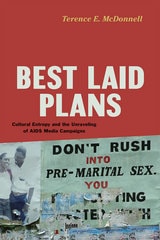
Best Laid Plans
Cultural Entropy and the Unraveling of AIDS Media CampaignsTerence E. McDonnell
University of Chicago Press, 2016
McDonnell argues that these well-designed campaigns are undergoing “cultural entropy”: the process through which the intended meanings and uses of cultural objects fracture into alternative meanings, new practices, failed interactions, and blatant disregard. Using AIDS media campaigns in Accra, Ghana, as its central case study, the book walks readers through best-practice, evidence-based media campaigns that fall totally flat. Female condoms are turned into bracelets, AIDS posters become home decorations, red ribbons fade into pink under the sun—to name a few failures. These damaging cultural misfires are not random. Rather, McDonnell makes the case that these disruptions are patterned, widespread, and inevitable—indicative of a broader process of cultural entropy.
Between Feast and Famine
Food, Health, and the History of Ghana's Long Twentieth CenturyJohn Nott
University College London, 2025
Between Feast and Famine unravels the intertwined histories of food, health, and capitalism in Ghana, charting the country’s shifting nutritional landscape from colonial-era hunger crises to contemporary epidemics of obesity and diabetes. Moving between Ghana’s diverse ecological and economic zones, John Nott excavates how uneven capitalist transformation reshaped diets and childhood nutrition across the twentieth century. At the heart of this story is the evolving science of nutrition itself, from its colonial-era applications to its role in shaping modern health policies.
Using a new historical approach, Between Feast and Famine exposes how global scientific debates and local lived realities co-produced the country’s shifting nutritional conditions. A necessary contribution to African history and medical humanities, this book debunks preconceived notions about hunger and public health, suggesting crucial insights into the complex relationship between food systems and human well-being.
Between HIV Prevention and LGBTI Rights
The Political Economy of Queer Activism in GhanaEllie Gore
University of Michigan Press, 2024
Gore combines original ethnography, documentary analysis, and the examination of development and global health data to connect the struggle for queer liberation in Ghana to broader trajectories of capitalist transformation and crisis and the afterlives of colonialism. In doing so, Between HIV Prevention and LGBTI Rights offers fascinating insights into the political economy of sexuality and global development for scholars, activists, and policymakers seeking to understand and address sexual injustice and oppression, both in Africa and beyond.
The open access edition of this book was made possible through the support of the Economic and Social Research Council (UK).
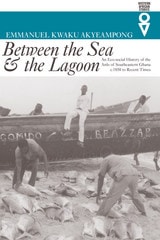
Between the Sea and the Lagoon
An Eco-social History of the Anlo of Southeastern Ghana c. 1850 to Recent TimesEmmanuel Kwaku Akyeampong
Ohio University Press, 2002
This study offers a “social interpretation of environmental process” for the coastal lowlands of southeastern Ghana. The Anlo-Ewe, sometimes hailed as the quintessential sea fishermen of the West African coast, are a previously non-maritime people who developed a maritime tradition. As a fishing community the Anlo have a strong attachment to their land. In the twentieth century coastal erosion has brought about a collapse of the balance between nature and culture. The Anlo have sought spiritual explanations but at the same time have responded politically by developing broader ties with Ewe-speaking peoples along the coast.
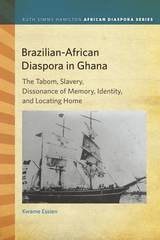
Brazilian-African Diaspora in Ghana
The Tabom, Slavery, Dissonance of Memory, Identity, and Locating HomeKwame Essien
Michigan State University Press, 2016