Results by title
90 books match the query 'Growth' and 4 start with b

Becoming What We Are
Classical and Christian Readings of ModernityJude P. Dougherty
Catholic University of America Press, 2023
Boomtown Columbus
Ohio’s Sunbelt City and How Developers Got Their WayKevin R. Cox
The Ohio State University Press, 2021
How have development interests become entwined with government? How has a policy of annexation reformed the city’s map? Why have airline service and major league prestige lagged behind its status as a regional center? And what, if anything, makes this city with a reputation for being average stand apart? In Boomtown Columbus, Cox applies both scholarly expertise and his personal experience as a long-time resident of the city to look at the real-life costs of policy. The resulting narrative will fascinate not only locals but anyone with a stake in understanding American cities and a path toward urban livability for all.
Bristlecone Pine in the White Mountains of California
Growth and Ring-Width CharacteristicsHarold C. Fritts
University of Arizona Press, 1969
Papers of the Laboratory of Tree-Ring Research, No. 4
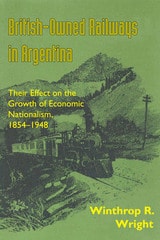
British-Owned Railways in Argentina
Their Effect on the Growth of Economic Nationalism, 1854-1948By Winthrop R. Wright
University of Texas Press, 1974
During the nineteenth century, British-owned railways grew under the protection of an Argentine ruling elite that considered railways both instruments and symbols of progress. Under this program of support for foreign enterprise, Argentina had by 1914 built the largest railway network in Latin America.
During the first decades of the twentieth century, the railways were successful in following a policy of calculated disregard for Argentine interests in general. However, following the end of World War I, the British economic empire began to decline and Argentine economic nationalism grew. A number of popularistic political movements incorporated economic nationalism into their platforms, and even among the ruling elite there were signs of increasing nationalistic sentiment.
Although most studies of economic nationalism have emphasized the importance of the middle-class Radical party in the rise of xenophobia, Winthrop R. Wright's study shows that antiforeign economic nationalism was not entirely a reaction to the conservative elite. Between 1932 and 1938 the nationalistic programs of General Agustin Justo's government—basically a conservative regime—led the British interests to decide to sell their holdings. The British govemment had arrived at a position of supporting the economic withdrawal of the large British-owned firms long before Juan D. Perón appeared on the political scene.
Perón combined traditional Argentine economic nationalism with his own scheme to gain power over all elements in Argentina. His solution to the railway problem, although more dramatically executed, did not differ greatly from that of the conservative Justo. Perón purchased the railways outright in 1947–1948, but his use of nationalism was in reality covering his own inability to outbargain Britain and the United States following the conclusion of World War II.