Results by title
278 books match the query 'Guide' and 14 start with b
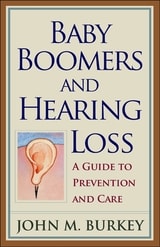
Baby Boomers and Hearing Loss
A Guide to Prevention and CareBurkey, John M
Rutgers University Press, 2006
In Baby Boomers and Hearing Loss, audiologist John Burkey shows readers how they can continue to enjoy youthful living, regardless of whether their hearing abilities are undiminished or severely compromised. In a reassuring and straightforward style, Burkey explains the typical causes of hearing loss, from genetic factors to years of exposure to loud noises, and demystifies the sometimes confusing results of a hearing test. Fortunately, new technologies and advances in medicine have made it easier to detect signs of initial hearing loss and to prevent it from becoming a serious problem.
For those who have already sustained some damage, the author suggests ways to manage daily activities by using a range of techniques, equipment, and medical procedures. His suggestions include minor changes, such as using a vibrating alarm clock rather than one that is sound-based. More dramatic but often highly effective options, including reconstructive surgery, cochlear implants, and bone-anchored hearing aids, are also described.
In his previous award-winning book, Overcoming Hearing Aid Fears: The Road to Better Hearing, Burkey addressed common fears, concerns, and misconceptions that people have about choosing and using hearing aids. In this second indispensable volume, he offers a comprehensive guide on how to cope with and prevent hearing impairment. For a generation that refuses to slow down or quietly accept limitations, this book is essential reading.
Bareface
A Guide to C.S. Lewis's Last NovelDoris T. Myers
University of Missouri Press, 2004
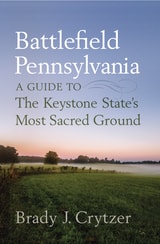
Battlefield Pennsylvania
A Guide to the Keystone State's Most Sacred GroundBrady J. Crytzer
Westholme Publishing, 2018
Pennsylvania is a battlefield. Fort Necessity. Brandywine. Gettysburg. The Homestead Strike. Flight 93. In many ways battlefields are like scars on the landscape. They remind us that history is real, and their effects stay with us forever. In Battlefield Pennsylvania: A Guide to the Keystone State’s Most Sacred Ground, award-winning historian Brady J. Crytzer takes the reader on a fascinating tour of over three hundred years of Pennsylvania history through twenty-nine of the state’s most significant battlegrounds, based on his popular Pennsylvania Cable Network television program. The author shows that debates and neighborly disputes have been present throughout the history of William Penn’s “Peaceable Kingdom,” but that battles are not the natural resolution of these conflicts; they are a failure of the system. Understanding how these systems break down and descend into violence and chaos is one of the most important purposes of this book. When the forces of Britain and France met on the battleground of North America, they each waged war in the name of a vision—a defense of the future, not merely the present. The same can be said for the Indian warriors and settlers of the backcountry, and the striking workers of the industrial age. When the young men of the American Civil War era donned the Butternut and Blue, they were not just fighting over a hill or a railroad junction, but for an American future. Illustrated with maps and period and contemporary images, Battlefield Pennsylvania presents each event through background information, a description of the battle itself, the legacy of the battle, and what a visitor can see today. Rather than viewing preserved battlefields as a hollow tribute to days gone by, the author demonstrates that these sites are a great inheritance provided by past generations, and just as they entrusted them to us, we will entrust them to future generations as well.
Bioethics Mediation
A Guide to Shaping Shared Solutions, Revised and Expanded EditionNancy Neveloff Dubler
Vanderbilt University Press, 2011
Conflicts come in different guises, and the key to successful resolution is early identification and intervention. Every bioethics mediator needs to be prepared with skills to listen, "level the playing field," identify individual interests, explore options, and help craft a "principled resolution" -- a consensus that identifies a plan aligned with accepted ethical principles, legal stipulations, and moral rules and that charts a clear course of future intervention.
The organization of the book makes it ideal for teaching or as a handbook for the practitioner. It includes actual cases, modified to protect the privacy of patients, providers, and institutions; detailed case analyses; tools for step-by-step mediation; techniques for the mediator; sample chart notes; and a set of actual role plays with expert mediator and bioethics commentaries. The role plays include:
- discharge planning for a dying patient
- an at-risk pregnancy
- HIV and postsurgical complications in the ICU
- treatment for a dying adolescent
- dialysis and multiple systems failure
Expanded by two-thirds from the 2004 edition, the new edition features two new role plays, a new chapter on how to write chart notes, and a discussion of new understandings of the role of the clinical ethics consultant.
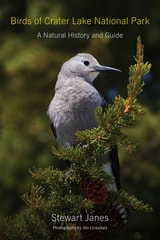
Birds of Crater Lake National Park
A Natural History and GuideStewart Janes
Oregon State University Press, 2026
From the Clark’s Nutcracker to the White-crowned Sparrow, the guide provides species accounts of the most characteristic birds found in the park. Accompanied by detailed color photographs, each entry also includes the scientific name, description, and distribution along with a short narrative.
With essays focusing on the history, climate, geology, and geography of the region, this guide offers a strong foundation to greater understanding of the birds of Crater Lake. Plus, chapters like “Birds Beyond Crater Lake National Park” and “Some Places to Bird in Crater Lake National Park,” along with a birding checklist, offer invaluable resources to beginner and skilled birders alike.
Birdscaping in the Midwest
A Guide to Gardening with Native Plants to Attract BirdsMariette Nowak; Foreword by Peter H. Raven
University of Wisconsin Press, 2012
Blank Verse
A Guide to Its History and UseRobert B. Shaw
Ohio University Press, 2007
With its compact but inclusive survey of more than four centuries of poetry, Blank Verse is filled with practical advice for poets of our own day who may wish to attempt the form or enhance their mastery of it. Enriched with numerous examples, Shaw’s discussions of verse technique are lively and accessible, inviting not only to apprentice poets but to all readers of poetry.
Shaw’s approach should reassure those who find prosody intimidating, while encouraging specialists to think more broadly about how traditional poetic forms can be taught, learned, practiced, and appreciated in the twenty-first century. Besides filling a conspicuous gap in literary history, Blank Verse points the way ahead for poets interested in exploring blank verse and its multitude of uses.

Blueprint for Your Library Marketing Plan
A Guide to Help You Survive and ThrivePatricia H. Fisher
American Library Association, 2006

Book and Verse
A Guide to Middle English Biblical LiteratureJames H. Morey
University of Illinois Press, 2000
Book and Verse is an indispensable guide to the variety and extent of biblical literature in England, exclusive of drama and the Wycliffite Bible that appeared between the twelfth and the fifteenth centuries. Entries provide detailed information on how much of what parts of the Bible appear in Middle English and where this biblical material can be found. Comprehensive indexing by name, keyword, and biblical verse allows a researcher to find, for example, all the occurrences of the Flood Story or of the encounter between Elijah and the Widow of Sarephta. An invaluable resource, Book and Verse provides the first easy access to the "popular Bible" assembled before and after John Wyclif's translation of the Vulgate into English.
Books Are Made Out of Books
A Guide to Cormac McCarthy's Literary InfluencesBy Michael Lynn Crews
University of Texas Press, 2017
Cormac McCarthy told an interviewer for the New York Times Magazine that “books are made out of books,” but he has been famously unwilling to discuss how his own writing draws on the works of other writers. Yet his novels and plays masterfully appropriate and allude to an extensive range of literary works, demonstrating that McCarthy is well aware of literary tradition, respectful of the canon, and deliberately situating himself in a knowing relationship to precursors.
The Wittliff Collection at Texas State University acquired McCarthy’s literary archive in 2007. In Books Are Made Out of Books, Michael Lynn Crews thoroughly mines the archive to identify nearly 150 writers and thinkers that McCarthy himself references in early drafts, marginalia, notes, and correspondence. Crews organizes the references into chapters devoted to McCarthy’s published works, the unpublished screenplay Whales and Men, and McCarthy’s correspondence. For each work, Crews identifies the authors, artists, or other cultural figures that McCarthy references; gives the source of the reference in McCarthy’s papers; provides context for the reference as it appears in the archives; and explains the significance of the reference to the novel or play that McCarthy was working on. This groundbreaking exploration of McCarthy’s literary influences—impossible to undertake before the opening of the archive—vastly expands our understanding of how one of America’s foremost authors has engaged with the ideas, images, metaphors, and language of other thinkers and made them his own.
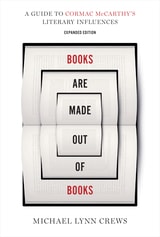
Books Are Made Out of Books
A Guide to Cormac McCarthy's Literary InfluencesMichael Lynn Crews
University of Texas Press, 2024
Cormac McCarthy told an interviewer for the New York Times Magazine that “books are made out of books,” but he was famously unwilling to discuss how his own writing draws on the works of other writers. Yet his novels and plays masterfully appropriate and allude to an extensive range of literary works, demonstrating that McCarthy was well aware of literary tradition and deliberately situating himself in a knowing relationship to precursors.
In Books Are Made Out of Books, Michael Lynn Crews thoroughly mines McCarthy’s literary archive to identify over 150 writers and thinkers that McCarthy referenced in early drafts, marginalia, notes, and correspondence. Crews organizes the references into chapters devoted to McCarthy’s published works, the unpublished screenplay Whales and Men, and McCarthy’s correspondence. This updated edition now examines McCarthy’s final publications: the novel The Passenger and its play-like coda Stella Maris.
For each work, Crews identifies authors, artists, or other cultural figures that McCarthy referenced; gives the source of the reference in McCarthy’s papers; provides context for the reference as it appears in the archives; and explains the significance of the reference to the novel or play that McCarthy was working on. This groundbreaking exploration of McCarthy’s literary influences vastly expands our understanding of how one of America’s foremost authors engaged with the ideas, images, metaphors, and language of other thinkers and made them his own.
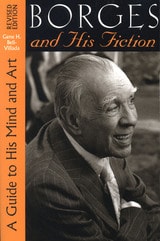
Borges and His Fiction
A Guide to His Mind and ArtBy Gene H. Bell-Villada
University of Texas Press, 2000
From reviews of the first edition:
"A compulsively readable account of the life and works of our greatest...writer of fantasy. With a keen appreciation of Borges himself and a pleasant disregard for the critical clichés, Bell-Villada tells us all we really want to know about the modern master-from pronouncing his name to understanding the stories." —New York Daily News
"Of the scores of Borges studies by now published in English, Bell-Villada's excellent book stands out as one of the freshest and most generally helpful.... Lay readers and specialists alike will find his book a valuable and highly readable companion to Ficciones and El Aleph." —Choice
Since its first publication in 1981, Borges and His Fiction has introduced the life and works of this Argentinian master-writer to an entire generation of students, high school and college teachers, and general readers. Responding to a steady demand for an updated edition, Gene H. Bell-Villada has significantly revised and expanded the book to incorporate new information that has become available since Borges' death in 1986. In particular, he offers a more complete look at Borges and Peronism and Borges' personal experiences of love and mysticism, as well as revised interpretations of some of Borges' stories. As before, the book is divided into three sections that examine Borges' life, his stories in Ficciones and El Aleph, and his place in world literature.

Butterflies in Your Pocket
A Guide to the Butterflies of the Upper MidwestSteve & Diane Hendrix & Debinski
University of Iowa Press, 2003

Butterflies of New Jersey
A Guide to Their Status, Distribution, and AppreciationMichael Gochfeld and Joanna Burger
Rutgers University Press, 1997
Butterfly watching has begun to gain the popularity that bird watching has enjoyed for half a century. Much as birds served as a flagship of the conservation movement in this country, butterflies are coming to be seen as the rallying point for the protection of invertebrate species--now regarded as increasingly important for the well-being of all members of the ecosystem.
Butterflies of New Jersey discusses the behavior, status, distribution, taxonomy, ecology, and conservation of butterflies in New Jersey. It is an innovative companion and complement to any butterfly identification guide of the Northeast. It pays particular attention to the place of butterflies in the ecosystem of New Jersey and neighboring regions and their relationships to other butterflies around the world. Its detailed species accounts of 140-plus kinds of butterflies found in the state and neighboring regions (out of 700 North American species) alert butterfly watchers to changes in populations over time. Where other butterfly guides typically include a section on collecting butterflies, this one includes a detailed chapter on protecting them by creating butterfly gardens and preventing habitat destruction.
Butterflies of New Jersey is indispensable for everyone interested in the butterflies and natural history of the Garden State and its neighbor.