Results by title
405 books match the query 'Human Geography' and 15 start with b
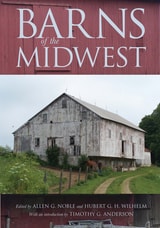
Barns of the Midwest
Allen G. Noble
Ohio University Press, 2018
Originally published in 1995, Barns of the Midwest is a masterful example of material cultural history. It arrived at a critical moment for the agricultural landscape. The 1980s were marked by farm foreclosures, rural bank failures, the continued rise of industrialized agriculture, and severe floods and droughts. These waves of disaster hastened the erosion of the idea of a pastoral Heartland knit together with small farms and rural values. And it wasn’t just an idea that was eroded; material artifacts such as the iconic Midwestern barn were also rapidly wearing away.
It was against this background that editors Noble and Wilhelm gathered noted experts in history and architecture to write on the nature and meaning of Midwestern barns, explaining why certain barns were built as they were, what types of barns appeared where, and what their functions were. Featuring a new introduction by Timothy G. Anderson, Barns of the Midwest is the definitive work on this ubiquitous but little studied architectural symbol of a region and its history.
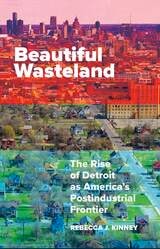
Beautiful Wasteland
The Rise of Detroit as America's Postindustrial FrontierRebecca J. Kinney
University of Minnesota Press, 2016
According to popular media and scholarship, Detroit, the once-vibrant city that crumbled with the departure of the auto industry, is where dreams can be reborn. It is a place that, like America itself, is gritty and determined. It has faced the worst kind of adversity, and supposedly now it’s back. But what does this narrative of “new Detroit” leave out? Beautiful Wasteland reveals that the contemporary story of Detroit’s rebirth is an upcycled version of the American Dream, which has long imagined access to work, home, and upward mobility as race-neutral projects. They’re not. As Rebecca J. Kinney shows, the narratives of Detroit’s rise, decline, and potential to rise again are deeply steeped in material and ideological investments in whiteness.
By remapping the narratives of contemporary Detroit through an extension of America’s frontier mythology, Kinney analyzes a cross-section of twentieth and twenty-first century cultural locations—an Internet forum, ruin photography, advertising, documentary film, and print and online media. She illuminates how the stories we tell about Detroit as a frontier of possibility enable the erasure of white privilege and systemic racism. By situating Detroit as a “beautiful wasteland,” both desirable and distressed, this shows how the narrative of ruin and possibility form a mutually constituted relationship: the city is possible precisely because of its perceived ruin.
Beautiful Wasteland tackles the key questions about the future of postindustrial America. As cities around the country reckon with their own postindustrial landscapes, Rebecca Kinney cautions that development that elides considerations of race and class will only continue to replicate uneven access to the city for the poor, working class, and people of color.
Becoming Creole
Nature and Race in BelizeJohnson, Melissa A.
Rutgers University Press, 2019
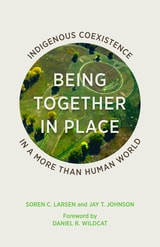
Being Together in Place
Indigenous Coexistence in a More Than Human WorldSoren C. Larsen
University of Minnesota Press, 2017
Being Together in Place explores the landscapes that convene Native and non-Native people into sustained and difficult negotiations over their radically different interests and concerns. Grounded in three sites—the Cheslatta-Carrier traditional territory in British Columbia; the Wakarusa Wetlands in northeastern Kansas; and the Waitangi Treaty Grounds in Aotearoa/New Zealand—this book highlights the challenging, tentative, and provisional work of coexistence around such contested spaces as wetlands, treaty grounds, fishing spots, recreation areas, cemeteries, heritage trails, and traditional village sites. At these sites, activists learn how to articulate and defend their intrinsic and life-supportive ways of being, particularly to those who are intent on damaging or destroying these places.
Using ethnographic research and a geographic perspective, Soren C. Larsen and Jay T. Johnson show how the communities in these regions challenge the power relations that structure the ongoing (post)colonial encounter in liberal democratic settler-states. Emerging from their conversations with activists was a distinctive sense that the places for which they cared had agency, a “call” that pulled them into dialogue, relationships, and action with human and nonhuman others. This being-together-in-place, they find, speaks in a powerful way to the vitalities of coexistence: where humans and nonhumans are working to decolonize their relationships; where reciprocal guardianship is being stitched back together in new and unanticipated ways; and where a new kind of “place thinking” is emerging on the borders of colonial power.
Berlusconi's Italy
Mapping Contemporary Italian PoliticsMichael E. Shin and John A. Agnew
Temple University Press, 2008

Beyond Inhabitation
Housing and Ordinary Desire at the EdgeMichele Lancione and AbdouMaliq Simone
Duke University Press, 2027
Blackland Prairies of the Gulf Coastal Plain
Nature, Culture, and SustainabilityEdited by Evan Peacock and Timothy Schauwecker
University of Alabama Press, 2003
Underscores the relevance of archaeological research in understanding long-term cultural change
Taking a holistic approach, this compilation gathers ecological, historical, and archaeological research written on the distinctive region of the Southeast called the Gulf coast blackland prairie. Ranging from the last glacial period to the present day, the case studies provide a broad picture of how the area has changed through time and been modified by humans, first with nomadic bands of Indians trailing the grazing animals and then by Euro-American settlers who farmed the rich agricultural area. Contemporary impacts include industrialization, aquaculture, population growth, land reclamation, and wildlife management.
It is believed that the Black Belt and the Great Plains were contiguous in the past and shared the same prairie vegetation, insects, and large fauna, such as bison. Swaths and patches of limestone-based soils still weave a biological corridor through what is now Alabama, Mississippi, Arkansas, Louisiana, and Texas. In analyzing this distinct grassland ecosystem, the essays compare both the mega and minute flora and fauna sustained by the land in the past and present; reveal what foods were harvested by early inhabitants, their gathering techniques, and diet changes over the 10,000-year period of native occupancy; survey the documents of early explorers for descriptions of the landform, its use, and the lives of inhabitants at the time of contact; and look at contemporary efforts to halt abuse and reverse damage to this unique and shrinking biome.
This book demonstrates that the blackland prairie has always been an important refuge for a teeming array of biological species, including humans. It will have wide scholarly appeal as well as general interest and will be welcomed by archaeologists, biologists, botanists, ecologists, historians, librarians, politicians, land managers, and national, state, and local administrators.
Blue Desert
Charles Bowden; Foreword by Francisco Cantú
University of Arizona Press, 2018
Bowden presents a view of the Southwest that measures how rapid growth takes its toll on the land. Writing with a reporter’s objectivity and a desert rat’s passion, Bowden offers us his trademarked craft and wit to take us into the streets as well as the desert to depict not a fragile environment but the unavoidable reality of abuse, exploitation, and human cruelty. Blue Desert shows us the darker side of development—where “the land always makes promises of aching beauty and the people always fail the land”—and defies us to ignore it.
In a thoughtful new foreword, Francisco Cantú writes, “In Blue Desert, we follow Bowden in the processes of becoming. We see the version of Bowden that he would likely most want us to remember—someone who did their best to be an honest witness, someone who was haunted by modernity and his place in it, someone who grappled with his demons by gazing deeply into the desert.” Blue Desert is a critical piece in the oeuvre of Charles Bowden, and it continues to remind readers of the cruelty and beauty of the world around us.
Boomtown Columbus
Ohio’s Sunbelt City and How Developers Got Their WayKevin R. Cox
The Ohio State University Press, 2021
How have development interests become entwined with government? How has a policy of annexation reformed the city’s map? Why have airline service and major league prestige lagged behind its status as a regional center? And what, if anything, makes this city with a reputation for being average stand apart? In Boomtown Columbus, Cox applies both scholarly expertise and his personal experience as a long-time resident of the city to look at the real-life costs of policy. The resulting narrative will fascinate not only locals but anyone with a stake in understanding American cities and a path toward urban livability for all.
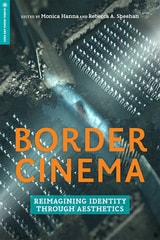
Border Cinema
Reimagining Identity through AestheticsEdited by Monica Hanna and Rebecca A. Sheehan
Rutgers University Press, 2019
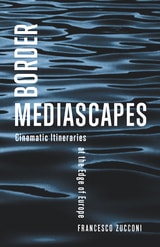
Border Mediascapes
Cinematic Itineraries at the Edge of EuropeFrancesco Zucconi
University of Minnesota Press, 2026
How the cinematic gaze reveals the hidden operations of border zones
Examining a variety of documentary films made along the borders of Europe since the turn of the twenty-first century, Border Mediascapes takes a cinematic eye to the technologies employed in governing spatial movement. Working at the intersections of social sciences, political theory, contemporary media, and cinema aesthetics, this book expands our understanding of the border as not just a static political boundary inscribed on a map but a complex, dynamic network of human and nonhuman agents.
Francesco Zucconi asserts that contemporary borders are environments defined by media: a perpetually shifting set of interactions between physical bodies and sensors, surveillance cameras, satellites, mapping programs, digital signage, and cellular devices. Analyzing documentaries filmed by or in collaboration with migrants, Border Mediascapes demonstrates how cinema can be used to reveal the otherwise unseen apparatuses that facilitate systematized practices of recognition, expulsion, and erasure.
As he details the ways specific border technologies measure and identify individuals as part of the larger project of territorial control, Zucconi illustrates the effectiveness of cinema for capturing the entanglement of geopolitics and biopolitics. Viewing the cinematic perspective as simultaneously analytical, critical, and complicit with the new technological frontier, Zucconi shows how the medium can deepen our understanding of borders as sites of power, resistance, and resilience.
Retail e-book files for this title are screen-reader friendly with images accompanied by short alt text and/or extended descriptions.
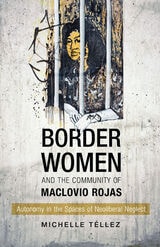
Border Women and the Community of Maclovio Rojas
Autonomy in the Spaces of Neoliberal NeglectMichelle Téllez
University of Arizona Press, 2021
Border Women and the Community of Maclovio Rojas tells the story of the community’s struggle to carve out space for survival and thriving in the shadows of the U.S.-Mexico geopolitical border. This ethnography by Michelle Téllez demonstrates the state’s neglect in providing social services and local infrastructure. This neglect exacerbates the structural violence endemic to the border region—a continuation of colonial systems of power on the urban, rural, and racialized poor. Téllez shows that in creating the community of Maclovio Rojas, residents have challenged prescriptive notions of nation and belonging. Through women’s active participation and leadership, a women’s political subjectivity has emerged—Maclovianas. These border women both contest and invoke their citizenship as they struggle to have their land rights recognized, and they transform traditional political roles into that of agency and responsibility.
This book highlights the U.S.-Mexico borderlands as a space of resistance, conviviality, agency, and creative community building where transformative politics can take place. It shows hope, struggle, and possibility in the context of gendered violences of racial capitalism on the Mexican side of the U.S.-Mexico border.

Bridges to Cuba/Puentes a Cuba
Ruth Behar, Editor
University of Michigan Press, 2015
Building Something Better
Environmental Crises and the Promise of Community ChangeStephanie A. Malin
Rutgers University Press, 2022
Sociologists Stephanie A. Malin and Meghan Elizbeth Kallman offer a clear, accessible volume that demonstrates the ways that communities adapt in the face of crises and explains that sociology can help us understand how and why they do this challenging work. Tackling neoliberalism head-on, these communities are making big changes by crafting distributive and regenerative systems that depart from capitalist approaches. The vivid case studies presented range from activist water protectors to hemp farmers to renewable energy cooperatives led by Indigenous peoples and nations. Alongside these studies, Malin and Kallman present incisive critiques of colonialism, extractive capitalism, and neoliberalism, while demonstrating how sociology’s own disciplinary traditions have been complicit with those ideologies—and must expand beyond them.
Showing that it is possible to challenge social inequality and environmental degradation by refusing to continue business-as-usual, Building Something Better offers both a call to action and a dose of hope in a time of crises.
Buying Time
Debt and Mobility in the Western Indian OceanThomas F. McDow
Ohio University Press, 2018
In Buying Time, Thomas F. McDow synthesizes Indian Ocean, Middle Eastern, and East African studies as well as economic and social history to explain how, in the nineteenth century, credit, mobility, and kinship knit together a vast interconnected Indian Ocean region. That vibrant and enormously influential swath extended from the desert fringes of Arabia to Zanzibar and the Swahili coast and on to the Congo River watershed.
In the half century before European colonization, Africans and Arabs from coasts and hinterlands used newfound sources of credit to seek out opportunities, establish new outposts in distant places, and maintain families in a rapidly changing economy. They used temporizing strategies to escape drought in Oman, join ivory caravans in the African interior, and build new settlements.
The key to McDow’s analysis is a previously unstudied trove of Arabic business deeds that show complex variations on the financial transactions that underwrote the trade economy across the region. The documents list names, genealogies, statuses, and clan names of a wide variety of people—Africans, Indians, and Arabs; men and women; free and slave—who bought, sold, and mortgaged property. Through unprecedented use of these sources, McDow moves the historical analysis of the Indian Ocean beyond connected port cities to reveal the roles of previously invisible people.