Results by title
102 books match the query 'Human body' and 10 start with b
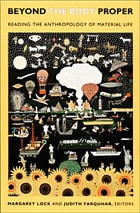
Beyond the Body Proper
Reading the Anthropology of Material LifeMargaret Lock and Judith Farquhar, eds.
Duke University Press, 2007
Beyond the Body Proper includes nine sections conceptually organized around themes such as everyday life, sex and gender, and science. Each section is preceded by interpretive commentary by the volume’s editors. Within the collection are articles and book excerpts focused on bodies using tools and participating in rituals, on bodies walking and eating, and on the female circumcision controversy, as well as pieces on medical classifications, spirit possession, the commodification of body parts, in vitro fertilization, and an artist/anatomist’s “plastination” of cadavers for display. Materialist, phenomenological, and feminist perspectives on embodiment appear along with writings on interpretations of pain and the changing meanings of sexual intercourse. Essays on these topics and many others challenge Eurocentric assumptions about the body as they speak to each other and to the most influential contemporary trends in the human sciences.
With selections by: Henry Abelove, Walter Benjamin, Janice Boddy, John Boswell, Judith Butler, Caroline Walker Bynum, Stuart Cosgrove, Michel de Certeau, Gilles Deleuze, Alice Domurat Dreger, Barbara Duden, Friedrich Engels, E. E. Evans-Pritchard, Judith Farquhar, Marcel Granet, Felix Guattari, Ian Hacking, Robert Hertz, Patricia Leyland Kaufert, Arthur Kleinman, Shigehisa Kuriyama, Jean Langford, Bruno Latour, Margaret Lock, Emily Martin, Karl Marx, Marcel Mauss, Maurice Merleau-Ponty, Nancy K. Miller, Lisa Jean Moore, John D. O’Neil, Aihwa Ong, Mariella Pandolfi, Susan Pedersen, Gregory M. Pflugfelder, Rayna Rapp, Nancy Scheper-Hughes, Kristofer Schipper, Matthew Schmidt, Peter Stallybrass, Michael Taussig, Charis Thompson, E.P. Thompson, Anna Lowenhaupt Tsing, Victor Turner, Terence Turner, Jose van Dijck, Keith Wailoo, Brad Weiss, Allon White
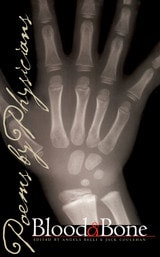
Blood and Bone
Poems by PhysiciansAngela Belli
University of Iowa Press, 1998
Bodies as Evidence
Security, Knowledge, and PowerMark Maguire, Ursula Rao, and Nils Zurawski, editors
Duke University Press, 2018
Contributors. Carolina Alonso-Bejarano, Gregory Feldman, Francisco J. Ferrándiz, Daniel M. Goldstein, Ieva Jusionyte, Amade M’charek, Mark Maguire, Joseph P. Masco, Ursula Rao, Antonius C. G. M. Robben, Joseba Zulaika, Nils Zurawski
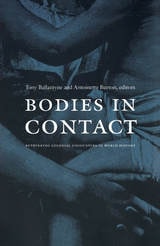
Bodies in Contact
Rethinking Colonial Encounters in World HistoryTony Ballantyne and Antoinette Burton, eds.
Duke University Press, 2005
Bodies in Contact brings together important scholarship on colonial gender studies gathered from journals around the world. Breaking with approaches to world history as the history of “the West and the rest,” the contributors offer a panoramic perspective. They examine aspects of imperial regimes including the Ottoman, Mughal, Soviet, British, Han, and Spanish, over a span of six hundred years—from the fifteenth century through the mid-twentieth. Discussing subjects as diverse as slavery and travel, ecclesiastical colonialism and military occupation, marriage and property, nationalism and football, immigration and temperance, Bodies in Contact puts women, gender, and sexuality at the center of the “master narratives” of imperialism and world history.
Contributors. Joseph S. Alter, Tony Ballantyne, Antoinette Burton, Elisa Camiscioli, Mary Ann Fay, Carter Vaughn Findley, Heidi Gengenbach, Shoshana Keller, Hyun Sook Kim, Mire Koikari, Siobhan Lambert-Hurley, Melani McAlister, Patrick McDevitt, Jennifer L. Morgan, Lucy Eldersveld Murphy, Rosalind O’Hanlon, Rebecca Overmyer-Velázquez, Fiona Paisley, Adele Perry, Sean Quinlan, Mrinalini Sinha, Emma Jinhua Teng, Julia C. Wells
Body Battlegrounds
Transgressions, Tensions, and TransformationsChris Bobel
Vanderbilt University Press, 2019
Body Parts of Empire
Visual Abjection, Filipino Images, and the American ArchiveNerissa S. Balce
University of Michigan Press, 2016
Rather than focusing on canonical American authors who wrote at the time of U.S. imperialism, this book examines abject texts—images of naked savages, corpses, clothed native elites, and uniformed American soldiers—as well as bodies of writing that document the goodwill and violence of American expansion in the Philippine colony. Contributing to the fields of American studies, Asian American studies, and gender studies, the book analyzes the actual archive of the Philippine-American War and how the racialization and sexualization of the Filipino colonial native have always been part of the cultures of America and U.S. imperialism. By focusing on the Filipino native as an abject body of the American imperial imaginary, this study offers a historical materialist optic for reading the cultures of Filipino America.
Body Thoughts
Andrew J. Strathern
University of Michigan Press, 1996
Body and Nation
The Global Realm of U.S. Body Politics in the Twentieth CenturyEmily S. Rosenberg and Shanon Fitzpatrick, eds.
Duke University Press, 2014
Contributors. Frank Costigliola, Janet M. Davis, Shanon Fitzpatrick, Paul A. Kramer, Shirley Jennifer Lim, Mary Ting Yi Lui, Natalia Molina, Brenda Gayle Plummer, Emily S. Rosenberg, Kristina Shull, Annessa C. Stagner, Marilyn B. Young
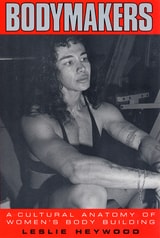
Bodymakers
A Cultural Anatomy of Women's Body BuildingLeslie Heywood
Rutgers University Press, 1998
"Bodymakers is most ambitious in terms of its engagement with feminist cultural criticism and its unconventional scope. Heywood comments on film, novels, magazine pictures, popular criticisms of feminism, the J. Crew catalog, [and] the concept of power feminism." --Gender and Society
"In this brilliantly insightful and immensely readable book, Leslie Heywood makes us think about women's body building in an entirely new way. She argues persuasively that, far from being an individualistic, apolitical act, it is a powerful form of resistance, empowering women to overcome their victim status and heal past abuse." --Myra Dinnerstein, University of Arizona
"Bodymakers has a power and an honesty that is unusual in a book with its theoretical sophistication." --Susan Bordo, author of Unbearable Weight and Twilight Zones: The Hidden Life of Cultural Images from Plato to O.J.
"With clarity, force, and passionate investment grounded in both theory and her own experience, Heywood understands that women can strengthen body, mind, and spirit through everyday practice. Her argument that body building is this kind of activist practice is as inspirational as it is poignant." --Joanna Frueh, author of Erotic Faculties
"Flexing her muscles through autobiographical, theoretical, and spectacular acts, Heywood insists that we read the muscular female body not as an 'extreme oddity' but as a 'form of activism' through which we can understand anew larger cultural issues and trends, including the American romance with individualism and the relationship of second and third wave feminisms. Muscular female bodies will never be read in the same way again." --Sidonie Smith, University of Michigan
Women with muscles are a recent phenomenon, so recent that, while generating a good deal of interest, their importance to the cultural landscape has yet to be acknowledged. Leslie Heywood looks at the sport and image of female body building as a metaphor for how women fare in our current political and cultural climate. She argues that the movement in women's body building from small, delicate bodies to large powerful ones and back again is directly connected to progress and backlash within the abortion debate, the ongoing struggle for race and gender equality, and the struggle to define "feminism" in the context of the nineties. She discusses female body building as activism, as an often effective response to abuse, race and masculinity in body building, and the contradictory ways that photographers treat female body builders. Engaging and accessible, Bodymakers reveals how female body builders find themselves both trapped and empowered by their sport.
Building Bodies
Moore, Pamela L
Rutgers University Press, 1997