Results by title
115 books match the query 'Hungary' and 5 start with b

Be Faithful Unto Death
Zsigmond Móricz
Central European University Press, 1996
Be Faithful unto Death is the moving story of a bright and sensitive schoolboy growing up in an old-established boarding school in the city of Debrecen in eastern Hungary. Misi, a dreamer and would-be writer, is falsely accused of stealing a winning lottery ticket. The torments through which he goes – and grows – are superbly described.
The novel is brimming with vivid detail from the provincial life that Móricz knew so well and shot through with a sense of the tragic fate of a newly truncated Hungary.
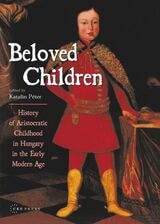
Beloved Children
History of Aristocratic Childhood in Hungary in the Early Modern AgeKatalin Peter
Central European University Press, 2001
Drawing on evidence from a wide collection of surviving family papers, Beloved Children is a valuable contribution to literature available concerning childhood history in pre-industrial Central Europe.
With the aid of detailed case studies, the volume illustrates every aspect of Hungarian childhood in the early modern age from a variety of contrasting perspectives—birth, care, education, marriage, orphanhood and death. The book also includes a unique portrayal of family life in the Hungarian aristocracy.
Beloved Children is a comprehensive study examining topics such as family intimacy, paternal and maternal attitudes, providing the reader with a valuable insight into a child’s life in Hungary during the sixteenth and seventeenth centuries.
Brilliance in Exile
The Diaspora of Hungarian Scientists from John von Neumann to Katalin KarikóIstván Hargittai
Central European University Press, 2023
By addressing the enigma of the exceptional success of Hungarian emigrant scientists and telling their life stories, Brilliance in Exile combines scholarly analysis with fascinating portrayals of uncommon personalities. István and Balazs Hargittai discuss the conditions that led to five different waves of emigration of scientists from the early twentieth century to the present. Although these exodes were driven by a broad variety of personal motivations, the attraction of an open society with inclusiveness, tolerance, and – needless to say – better circumstances for working and living, was the chief force drawing them abroad.
While emigration from East to West is a general phenomenon, this book explains why and how the emigration of Hungarian scientists is distinctive. The high number of Nobel Prizes among this group is only one indicator. Multicultural tolerance, a quickly emerging, considerably Jewish, urban middle class, and a very effective secondary school system were positive legacies of the Austro-Hungarian Monarchy. Multiple generations, shaped by these conditions, suffered from the increasingly exclusionist, intolerant, antisemitic, and economically stagnating environment, and chose to go elsewhere. “I would rather have roots than wings, but if I cannot have roots, I shall use wings," explained Leo Szilard, one of the fathers of the Atom Bomb.
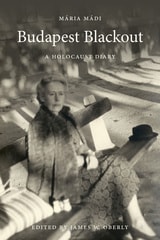
Budapest Blackout
A Holocaust Diaryby Máriá Mádi, edited by James W. Oberly
University of Wisconsin Press, 2023
Mádi’s family donated the entire collection of her diaries to the US Holocaust Memorial Museum. This edition transcribes a selection of Mádi’s writings focusing on the period of March 1944 to November 1945, from the Nazi invasion and occupation of Hungary, through the Battle of Budapest, to the ensuing Soviet occupation. While bearing witness to the catastrophe in Hungary, Mádi hid a Jewish family in her small flat from October 1944 to February 1945. She received a posthumous Righteous among Nations Medal from Yad Vashem, the World Holocaust Remembrance Center.
Editorial commentary by James W. Oberly situates Mádi’s observations, and a critical introduction by the Holocaust scholar András Lénárt outlines the wider sociopolitical context in which her diaries gain meaning.
Béla Tarr, the Time After
Jacques Rancière
University of Minnesota Press, 2013
Exploring the concept of time in the work of one of Europe’s greatest filmmakers
From Almanac of Fall (1984) to The Turin Horse (2011), renowned Hungarian filmmaker Béla Tarr has followed the collapse of the communist promise. The “time after” is not the uniform and morose time of those who no longer believe in anything. It is the time when we are less interested in histories and their successes or failures than we are in the delicate fabric of time from which they are carved. It is the time of pure material events against which belief will be measured for as long as life will sustain it.