Results by title
101 books match the query 'Identity (Psychology)' and 10 start with b

Bachelors of Science
Seventeenth Century Identity, Then and NowNaomi Zack
Temple University Press, 1996
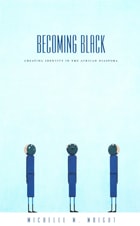
Becoming Black
Creating Identity in the African DiasporaMichelle M. Wright
Duke University Press, 2004
Wright argues that three nineteenth-century American and European works addressing race—Thomas Jefferson’s Notes on the State of Virginia, G. W. F. Hegel’s Philosophy of History, and Count Arthur de Gobineau’s Essay on the Inequality of the Human Races—were particularly influential in shaping twentieth-century ideas about Black subjectivity. She considers these treatises in depth and describes how the revolutionary Black thinkers W. E. B. Du Bois, Aimé Césaire, Léopold Sédar Senghor, and Frantz Fanon countered the theories they promulgated. She explains that while Du Bois, Césaire, Senghor, and Fanon rejected the racist ideologies of Jefferson, Hegel, and Gobineau, for the most part they did so within what remained a nationalist, patriarchal framework. Such persistent nationalist and sexist ideologies were later subverted, Wright shows, in the work of Black women writers including Carolyn Rodgers and Audre Lorde and, more recently, the British novelists Joan Riley, Naomi King, Jo Hodges, and Andrea Levy. By considering diasporic writing ranging from Du Bois to Lorde to the contemporary African novelists Simon Njami and Daniel Biyaoula, Wright reveals Black subjectivity as rich, varied, and always evolving.
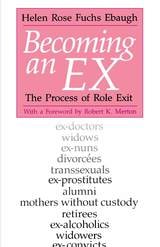
Becoming an Ex
The Process of Role ExitHelen Rose Fuchs Ebaugh
University of Chicago Press, 1988
Ebaugh is herself an ex, having left the life of a Catholic nun to become a wife, mother, and professor of sociology. Drawing on interviews with 185 people, Ebaugh explores a wide range of role changes, including ex-convicts, ex-alcoholics, divorced people, mothers without custody of their children, ex-doctors, ex-cops, retirees, ex-nuns, and—perhaps most dramatically—transsexuals. As this diverse sample reveals, Ebaugh focuses on voluntary exits from significant roles. What emerges are common stages of the role exit process—from disillusionment with a particular identity, to searching for alternative roles, to turning points that trigger a final decision to exit, and finally to the creation of an identify as an ex.
Becoming an Ex is a challenging and influential study that will be of great interest to sociologists, mental health counselors, members of self-help groups such as Alcoholics Anonymous and Parents Without Partners, those in corporate settings where turnover has widespread implications for the organization, and for anyone struggling through a role exit who is trying to establish a new sense of self.
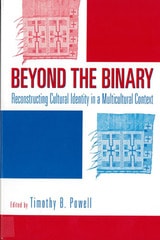
Beyond the Binary
Reconstructing Cultural Identity In a Multicultural ContextEdited by Timothy B. Powell
Rutgers University Press, 1999
"Beyond the Binary offers a coherently presented collection of uniformly strong essays that speak to what is perhaps the most widely discussed, contested and conflicted topic in the study of US culture. It joins the growing body of work that seeks to move beyond identity politics and racial essentialism to formulate racial identity as a more complex series of social, cultural and political gestures." -Priscilla Wald, author of Constituting Americans: Cultural Anxiety and Narrative Form and Constituting Americans
Cultural studies have reached a theoretical impasse. As scholars continue to topple the previously entrenched concept of Eurocentrism, this field has fragmented into works covering many separate cultural enclaves. In the first wave of this "post-Eurocentric" scholarship, a binary model ensued, using the designations of "Self" and "Other:" i.e., black/white, gay/straight. This model, however, also has found disfavor. As a result, recent scholarship has focused on a single group studied in isolation.
What is needed is a new critical phase of reconstruction that will bring discussion of these disparate cultural enclaves back into a more organized, critical sphere. Researchers must have the necessary conceptual tools so they can study the ways in which cultures overlap, intersect, or else violently conflict with one another.
Beyond the Binary: Reconstructing Cultural Identity in a Multicultural Context addresses this theoretical impasse by proposing new critical models that fully engage the dilemmas posed by multiculturalism. Rather than becoming entangled in the polarizing rhetoric of the culture wars, these essays are firmly grounded in the lived perplexities of specific historical moments. One piece, for example, considers the cultural identity of "freaks" exhibited in P. T. Barnum's circus, the contested place of hemophiliacs within Queer Nation, and "white" working-class musicians who proudly proclaim themselves to be "black lesbians."
Beyond the Binary is meant to be read in its entirety as a many-voiced narrative dedicated to bringing the divisions within cultural studies back into contact with one another. By doing so, Powell ushers in a new era of multicultural analysis that recognizes the historical existence of racism, yet also acknowledges the dynamic fluidity of cultural identity.
Bilingualism and Identity in Deaf Communities
Melanie Metzger
Gallaudet University Press, 2000
Is perception reality? Editor Melanie Metzger investigates the cultural perceptions by and of deaf people around the world in Bilingualism and Identity in Deaf Communities.
“All sociocultural groups offer possible solutions to the dilemma that a deaf child presents to the larger group,” write Claire Ramsey and Jose Antonio Noriega in their essay, “Ninos Milagrizados: Language Attitudes, Deaf Education, and Miracle Cures in Mexico.” In this case, Ramsey and Noriega analyze cultural attempts to “unify” deaf children with the rest of the community. Other contributors report similar phenomena in deaf communities in New Zealand, Nicaragua, and Spain, paying particular attention to how society’s view of deaf people affects how deaf people view themselves.
A second theme pervasive in this collection, akin to the questions of perception and identity, is the impact of bilingualism in deaf communities. Peter C. Hauser offers a study of an American child proficient in both ASL and Cued English while Annica Detthow analyzes “transliteration” between Spoken Swedish and Swedish Sign Language. Like its predecessors, this sixth volume of the Sociolinguistics in Deaf Communities series distinguishes itself by the depth and diversity of its research, making it a welcome addition to any scholar’s library.
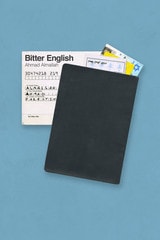
Bitter English
Ahmad Almallah
University of Chicago Press, 2019
Through finely crafted poems that utilize a plainspoken roughness to keep the reader slightly disoriented, Almallah replicates his own verbal and cultural experience of existing between languages and societies. There is a sense of displacement to these poems as Almallah recounts the amusing, sad, and perilous moments of day-to-day living in exile. At the heart of Bitter English is a sense of loss, both of home and of his mother, whose struggle with Alzheimer’s becomes a reflection of his own reality in exile. Filled with wit, humor, and sharp observations of the world, Bitter English brings a fresh poetic voice to the American immigrant experience.
Black Female Sexualities
Melancon, Trimiko
Rutgers University Press, 2015

Boys and Girls
Superheroes in the Doll CornerVivian Gussin Paley
University of Chicago Press, 1984
"I will admit my biases up front: having a three-year old daughter of my own made it impossible for this book to be anything but fun to read. I dare anyone who enjoys children not to enjoy this story about stories, this narrative about narratives."—Jerry Powell, Winterthur Portfolio
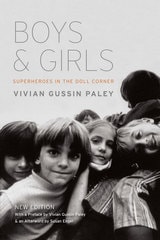
Boys and Girls
Superheroes in the Doll CornerVivian Gussin Paley
University of Chicago Press, 2014
For more than forty years, Boys and Girls has a classic account of the little-known world that young children create together when they play. Vivian Gussin Paley takes readers inside a kindergarten classroom to show them in detail how boys and girls play—and how, by playing and fantasizing in different ways, they work through complicated notions of gender roles and identity. The children’s own conversations, stories, playacting, and scuffles are interwoven with Paley’s observations and accounts of her vain attempts to alter their stereotyped play. In the decades since the book's original publication, play in kindergarten and early years of school has lost ground to structured teaching and even testing, which makes Paley's book, updated for a new era, more important than ever. To teach kids successfully, we must make space for play.
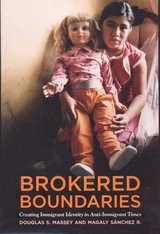
Brokered Boundaries
Immigrant Identity in Anti-Immigrant TimesDouglas S. Massey
Russell Sage Foundation, 2010