55 books match the query 'Individual Architects & Firms' and 6 start with b
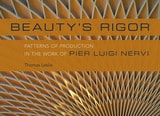
cover of Beauty's Rigor: Patterns of Production in the Work of Pier Luigi Nervi

Beauty's Rigor

Patterns of Production in the Work of Pier Luigi Nervi

Thomas Leslie

University of Illinois Press, 2017

Born in Sondrio, Italy, in 1891, Pier Luigi Nervi was a pioneer in the engineering and architecture of reinforced concrete. His buildings showed how the use of reinforced concrete expanded the possibilities of form and structure. His methods, meanwhile, ingrained his structures with patterns that came directly out of his economical, manual construction processes. The results were buildings that matched awe-inspiring spans with surprisingly human scale.

Beauty's Rigor offers a comprehensive overview of Nervi's long career. Drawing on the Nervi archives and a wealth of photographs and architectural drawings, Thomas Leslie explores celebrated buildings like Palazetto dello Sport built for the 1960 Rome Olympics, St. Mary's Cathedral in San Francisco, and the UNESCO headquarters in Paris. He also sheds new light on unbuilt projects such as the Pavilion of Italian Civilization for the Universal Exposition of Rome E42. What emerges is the first complete account of Nervi's contributions to modern architecture and his essential role in a revolution that realized concrete's potential to match grace with strength.
[more]
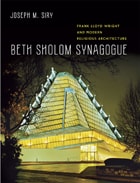
cover of Beth Sholom Synagogue: Frank Lloyd Wright and Modern Religious Architecture

Beth Sholom Synagogue

Frank Lloyd Wright and Modern Religious Architecture

Joseph M. Siry

University of Chicago Press, 2011

In a suburb just north of Philadelphia stands Beth Sholom Synagogue, Frank Lloyd Wright’s only synagogue and among his finest religious buildings. Designated a National Historic Landmark in 2007, Beth Sholom was one of Wright’s last completed projects, and for years it has been considered one of his greatest masterpieces.
But its full story has never been told. Beth Sholom Synagogue provides the first in-depth look at the synagogue’s conception and realization in relation to Wright’s other religious architecture. Beginning with his early career at Adler and Sullivan’s architectural firm in Chicago and his design for Unity Temple and ending with the larger works completed just before or soon after his death, Joseph M. Siry skillfully depicts Wright’s exploration of geometric forms and structural techniques in creating architecture for worshipping communities. Siry also examines Wright’s engagement with his clients, whose priorities stemmed from their denominational identity, and the effect this had on his designs—his client for Beth Sholom, Rabbi Mortimer Cohen, worked with Wright to anchor the building in the traditions of Judaism even as it symbolized the faith’s continuing life in postwar America. With each of his religious projects, Wright considered questions of social history and cultural identity as he advanced his program for an expressive, modern American architecture. His search to combine these agendas culminated in Beth Sholom, where the interplay of light, form, and space create a stunning and inspiring place of worship.
 
Filled with over three hundred illustrations, this remarkable book takes us deep inside the synagogue’s design, construction, and reception to bring us an illuminating portrait of the crowning achievement of this important aspect of Wright’s career.
[more]
cover of Buckminster Fuller: Anthology for the Millennium

Buckminster Fuller

Anthology for the Millennium

Edited by Thomas T. K. Zung

Southern Illinois University Press, 2014
Originally published as Buckminster Fuller: Anthology for the New Millennium, this popular anthology contains chapters from Fuller’s many books, with each chapter introduced by a notable figure such as Calvin Tomkins, Sir Harry Kroto, Lord Norman Foster, Arthur L. Loeb, Allegra Fuller Snyder, Very Rev. James Parks Morton, Shoji Sadao, and others. Thomas T. K. Zung has revised the book, adding vignettes and images not included in the first edition, to reflect a culture that has changed with time, much of that change predicted by Fuller.
[more]
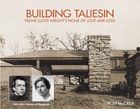
cover of Building Taliesin: Frank Lloyd Wright’s Home of Love and Loss

Building Taliesin

Frank Lloyd Wright’s Home of Love and Loss

Ron McCrea

Wisconsin Historical Society Press, 2012
Through letters, memoirs, contemporary documents, and a stunning assemblage of photographs - many of which have never before been published - author Ron McCrea tells the fascinating story of the building of Frank Lloyd Wright's Taliesin, which would be the architect's principal residence for the rest of his life. Photos taken by Wright's associates show rare views of Taliesin under construction and illustrate Wright's own recollections of the first summer there and the craftsmen who worked on the site.
 
The book also brings to life Wright’s "kindred spirit," "she for whom Taliesin had first taken form," Mamah Borthwick. Wright and Borthwick had each abandoned their families to be together, causing a scandal that reverberated far beyond Wright's beloved Wisconsin valley. The shocking murder and fire that took place at Taliesin in August 1914 brought this first phase of life at Taliesin to a tragic end.
[more]
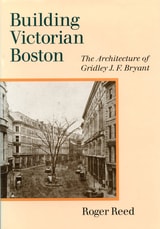
cover of Building Victorian Boston: The Architecture of Gridley J.F. Bryant

Building Victorian Boston

The Architecture of Gridley J.F. Bryant

Roger G. Reed

University of Massachusetts Press, 2007

Much of Boston's rich heritage of Victorian buildings dates from the mid-nineteenth century when Gridley James Fox Bryant (1816–1899) dominated the profession of architecture in the city. At that time, Boston was undergoing a transformation from a quaint post-colonial town to a rapidly expanding Victorian metropolis. Bryant led this transformation, providing an important link between the earlier architecture of Charles Bulfinch and Alexander Parris and the later work of such practitioners as H. H. Richardson and Peabody & Stearns.

In Building Victorian Boston, Roger Reed focuses on representative projects by Bryant, presenting them in a chronological narrative that both illuminates the trajectory of his career and creates a portrait of the profession of architecture during a defining period of New England history. Bryant designed more major buildings in Boston from 1840 to 1880 than any other architect. He also undertook commissions throughout New
England, especially in towns linked to Boston by newly constructed railroad lines. In many ways, his practice presaged aspects of modern architectural firms. His ability to work with a variety of designers, his expertise in construction management, and his exceptional talent for self-promotion all contributed to his success. Although by the time of his death his work was no longer fashionable, newspaper accounts noted the passing of the "Famed Bostonian" and "Great Builder" whose career had had such a dramatic impact on the face of the city.

For this volume, Reed has tracked down hundreds of Bryant's drawings as well as specifications, letters, newspaper articles, published renderings, and historical photographs. These materials are amply represented in this book, the definitive study of a quintessential Victorian architect.
[more]
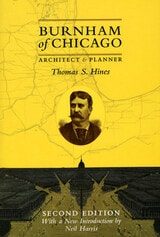
cover of Burnham of Chicago: Architect and Planner, Second Edition

Burnham of Chicago

Architect and Planner, Second Edition

Thomas S. Hines

University of Chicago Press, 2008

2009 marks the centennial of the influential Plan of Chicago. Designed by Daniel H. Burnham, coauthored by Edward Bennett and produced in collaboration with the Commercial Club of Chicago, the forward-thinking plan proposed many of the city’s most distinctive features, including its lakefront parks and roadways, the Magnificent Mile, and Navy Pier. As a result, by the time he died in 1912, Burnham was one of the most famous architects in America as well as an internationally renowned city planner. Thomas S. Hines’s book is at once both a biography of Burnham and a vivid portrait of the birth and growth of an American city. In commemoration of the historic anniversary of Burnham’s Plan, this edition of Burnham of Chicago includes a new introduction by American history scholar, Neil Harris.
           
“Indeed, the book as a whole is a model of the balanced portrait, sure of Burnham’s importance but always conscious of his failings.”—Paul Goldberger, New York Times Book Review

“In every sense this is the definitive biography.”—Harry Weese, Chicago Tribune
 
“Professor Hines has written what may prove to be an epoch-making book in the study of American civilization.”—Reyner Banham, Times Literary Supplement
 
[more]