Results by title
130 books match the query 'Indonesia' and 8 start with b
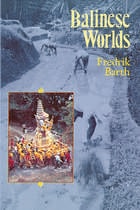
Balinese Worlds
Fredrik Barth
University of Chicago Press, 1993
In this detailed ethnography of the Northern district of Buleleng, Barth rejects mainstream anthropological generalizations of Bali as a cultural system of carefully articulated parts. Instead—drawing on many sources, including the sociology of knowledge, interactional analysis, postmodern thought, and his own exceptionally varied field experience—Barth presents a new model that actually generates variation. Barth's innovative analysis of Balinese life highlights both the constructive and the disorganizing effects of individual action, the constant flux of interpretation, and the powerful interaction of memory and social relationships, and knowledge as a cultural resource.
Balinese Worlds is a unique contribution not only to Balinese studies but also to the theory and methods of the anthropology of complex societies.
Beyond Decent Work
The Cultural Political Economy of Labour Struggles in IndonesiaFelix Hauf
Campus Verlag, 2016
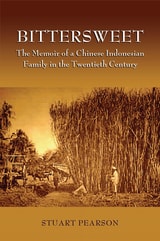
BitterSweet
The Memoir of a Chinese Indonesian Family in the Twentieth CenturyStuart Pearson
National University of Singapore Press, 2013
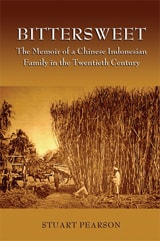
BitterSweet
The Memoir of a Chinese-Indonesian Family in the Twentieth CenturyStuart Pearson
Ohio University Press, 2008
BitterSweet is the account of one Chinese-Indonesian family whose story stretches over the generations as their fortunes waxed and waned through revolution, riots, war, depression, occupation, and finally emigration to yet another country—Australia.
BitterSweet offers a unique insight into a world rarely seen before. An Sudibjo’s memoir, written from a woman’s perspective, is a valuable resource for anyone studying Indonesian history or the Chinese Diaspora.
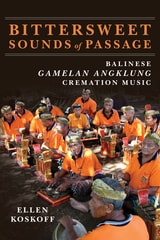
Bittersweet Sounds of Passage
Balinese Gamelan Angklung Cremation MusicEllen Koskoff
University of Illinois Press, 2025
Koskoff examines the history, cultural significance, and musical structures of contemporary gamelan angklung cremation music through the lens of three intertwined stories: existing scholarship on this music, written mostly by Western composers and scholars; the views of those performing and experiencing the music who regard it as dharma--ritual obligation, a basic concept in Balinese Hinduism; and the music itself, with a musical analysis focusing on changes in rasa--feeling, flavor and musical flow.
A journey inside a tradition, Bittersweet Sounds of Passage reveals the overlooked music of an important ritual in Balinese village life.
Breeds of Empire
The Invention of the Horse in Southeast Asia and Southern Africa 1500-1950Edited by Greg Bankoff and Sandra Swart
National University of Singapore Press, 2007
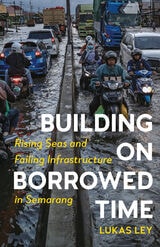
Building on Borrowed Time
Rising Seas and Failing Infrastructure in SemarangLukas Ley
University of Minnesota Press, 2021
A timely ethnography of how Indonesia’s coastal dwellers inhabit the “chronic present” of a slow-motion natural disaster
Ice caps are melting, seas are rising, and densely populated cities worldwide are threatened by floodwaters, especially in Southeast Asia. Building on Borrowed Time is a timely and powerful ethnography of how people in Semarang, Indonesia, on the north coast of Java, are dealing with this global warming–driven existential challenge. In addition to antiflooding infrastructure breaking down, vast areas of cities like Semarang and Jakarta are rapidly sinking, affecting the very foundations of urban life: toxic water oozes through the floors of houses, bridges are submerged, traffic is interrupted.
As Lukas Ley shows, the residents of Semarang are constantly engaged in maintaining their homes and streets, trying to live through a slow-motion disaster shaped by the interacting temporalities of infrastructural failure, ecological deterioration, and urban development. He casts this predicament through the temporal lens of a “meantime,” a managerial response that means a constant enduring of the present rather than progress toward a better future—a “chronic present.”
Building on Borrowed Time takes us to a place where a flood crisis has already arrived—where everyday residents are not waiting for the effects of climate change but are in fact already living with it—and shows that life in coastal Southeast Asia is defined not by the temporality of climate science but by the lived experience of tidal flooding.
Buried Histories
The Anticommunist Massacres of 1965–1966 in IndonesiaJohn Roosa
University of Wisconsin Press, 2022
Drawing upon years of research and interviews with survivors, Buried Histories is an impressive contribution to the literature on genocide and mass atrocity, crucially addressing the topics of media, military organization, economic interests, and resistance.