Results by title
59 books match the query 'Joseph, Gilbert M.' and 4 start with b
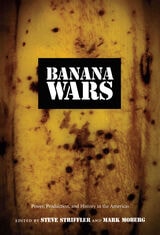
Banana Wars
Power, Production, and History in the AmericasSteve Striffler and Mark Moberg, eds.
Duke University Press, 2003
Bringing together the work of anthropologists, sociologists, economists, historians, and geographers, this collection reveals how the banana industry marshaled workers of differing nationalities, ethnicities, and languages and, in so doing, created unprecedented potential for conflict throughout Latin American and the Caribbean. The frequently abusive conditions that banana workers experienced, the contributors point out, gave rise to one of Latin America’s earliest and most militant labor movements. Responding to both the demands of workers’ organizations and the power of U.S. capital, Latin American governments were inevitably affected by banana production. Banana Wars explores how these governments sometimes asserted their sovereignty over foreign fruit companies, but more often became their willing accomplices. With several essays focusing on the operations of the extraordinarily powerful United Fruit Company, the collection also examines the strategies and reactions of the American and European corporations seeking to profit from the sale of bananas grown by people of different cultures working in varied agricultural and economic environments.
Contributors. Philippe Bourgois, Marcelo Bucheli, Dario Euraque, Cindy Forster, Lawrence Grossman, Mark Moberg, Laura T. Raynolds, Karla Slocum, John Soluri, Steve Striffler, Allen Wells
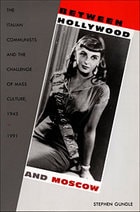
Between Hollywood and Moscow
The Italian Communists and the Challenge of Mass Culture, 1943-1991Stephen Gundle
Duke University Press, 2000
Gundle focuses on the theme of cultural policy, examining how the PCI’s political strategies incorporated cultural policies and activities that were intended to respond to the Americanization of daily life in Italy. In formulating this policy, Gundle contends, the Italian Communists were torn between loyalty to the alternative values generated by the Communist tradition and adaptation to the dominant influences of Italian modernization. This equilibrium eventually faltered because the attractive aspects of Americanization and pop culture proved more influential than the PCI’s intellectual and political traditions.
The first analysis in English of the cultural policies and activities of the PCI, this book will appeal to readers with an interest in modern Italy, the European left, political science, and media studies.
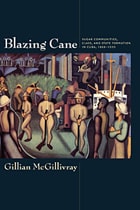
Blazing Cane
Sugar Communities, Class, and State Formation in Cuba, 1868–1959Gillian McGillivray
Duke University Press, 2009
Focusing on sugar communities in eastern and central Cuba, McGillivray recounts how farmers and workers pushed the Cuban government to move from exclusive to inclusive politics and back again. The revolutionary caudillo networks that formed between 1895 and 1898, the farmer alliances that coalesced in the 1920s, and the working-class groups of the 1930s affected both day-to-day local politics and larger state-building efforts. Not limiting her analysis to the island, McGillivray shows that twentieth-century Cuban history reflected broader trends in the Western Hemisphere, from modernity to popular nationalism to Cold War repression.
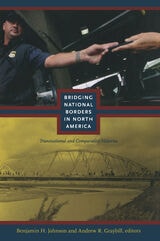
Bridging National Borders in North America
Transnational and Comparative HistoriesBenjamin H. Johnson and Andrew R. Graybill, eds.
Duke University Press, 2010
The contributors engage topics such as how mixed-race groups living on the peripheries of national societies dealt with the creation of borders in the nineteenth century, how medical inspections and public-health knowledge came to be used to differentiate among bodies, and how practices designed to channel livestock and prevent cattle smuggling became the model for regulating the movement of narcotics and undocumented people. They explore the ways that U.S. immigration authorities mediated between the desires for unimpeded boundary-crossings for day laborers, tourists, casual visitors, and businessmen, and the restrictions imposed by measures such as the Chinese Exclusion Act of 1882 and the 1924 Immigration Act. Turning to the realm of culture, they analyze the history of tourist travel to Mexico from the United States and depictions of the borderlands in early-twentieth-century Hollywood movies. The concluding essay suggests that historians have obscured non-national forms of territoriality and community that preceded the creation of national borders and sometimes persisted afterwards. This collection signals new directions for continental dialogue about issues such as state-building, national expansion, territoriality, and migration.
Contributors: Dominique Brégent-Heald, Catherine Cocks, Andrea Geiger, Miguel Ángel González Quiroga, Andrew R. Graybill, Michel Hogue, Benjamin H. Johnson, S. Deborah Kang, Carolyn Podruchny, Bethel Saler, Jennifer Seltz, Rachel St. John, Lissa Wadewitz
Published in cooperation with the William P. Clements Center for Southwest Studies, Southern Methodist University.