527 books match the query 'Labor' and 25 start with b
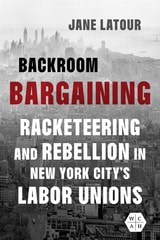
cover of Backroom Bargaining: Racketeering and Rebellion in New York City's Labor Unions

Backroom Bargaining

Racketeering and Rebellion in New York City's Labor Unions

Jane LaTour

University of Illinois Press, 2026
Organized crime figures and their minions honeycombed unions while leadership instituted nepotism, salary padding, and other practices that undermined the well-being of the rank and file. But in New York City, groups of union members and their legal allies waged a years-long struggle against corruption and for better working conditions. Jane LaTour combines rich oral histories with research to take readers into the construction sites, power plants, and Merchant Marine ships where the dramas played out. Dissidents risked their livelihoods for a variety of reasons, from practical concerns like job security and safety to larger ideas like union democracy. LaTour examines the factors that allowed unchecked corruption and kept unions from living up to their potential. But she also tells the eyewitness stories of solidarity and worker spirit that fueled the fight to retake labor power. A rare history of union corruption, Backroom Bargaining shines a light on worker campaigns to uphold fairness and equity in the workplace.
[more]
cover of Balancing Act: Motherhood, Marriage, and Employment Among American Women

Balancing Act

Motherhood, Marriage, and Employment Among American Women

Daphne Spain

Russell Sage Foundation, 1996
"A wonderful compendium of everything you always wanted to know about trends in women's roles—both in and out of the home. It is a balanced and data-rich assessment of how far women have come and how far they still have to go. "—Isabelle Sawhill, Urban Institute "Based primarily on the 1990 population census, Balancing Act reports on the current situation of American women and temporal and cross-national comparisons. Meticulously and clearly presented, the information in this book highlights changing behaviors, such as the growing incidence of childbearing to older women, and unmarried women in general, and a higher ratio of women's earnings to men's. The authors' thoughtful analysis of these and other factors involved in women's fin de siècle 'balancing act' make this an indispensable reference book and valuable classroom resource." —Louise A. Tilly, Michael E. Gellert Professor of History and Sociology, The New School for Social Research In Balancing Act, authors Daphne Spain and Suzanne Bianchi draw upon multiple census and survey sources to detail the shifting conditions under which women manage their roles as mothers, wives, and breadwinners. They chronicle the progress made in education—where female college enrollment now exceeds that of males—and the workforce, where women have entered a wider variety of occupations and are staying on the job longer, even after becoming wives and mothers. But despite progress, lower-paying service and clerical positions remain predominantly female, and although the salary gap between men and women has shrunk, women are still paid less. As women continue to establish a greater presence outside the home, many have delayed marriage and motherhood. Marked jumps in divorce and out-of-wedlock childbirth have given rise to significant numbers of female-headed households. Married women who work contribute more significantly than ever to the financial well-being of their families, yet evidence shows that they continue to perform most household chores. Balancing Act focuses on how American women juggle the simultaneous demands of caregiving and wage earning, and compares their options to those of women in other countries. The United States is the only industrialized nation without policies to support working mothers and their families—most tellingly in the absence of subsidized childcare services. Many women are forced to work in less rewarding part-time or traditionally female jobs that allow easy exit and re-entry, and as a consequence poverty is the single greatest danger facing American women. As the authors show, the risk of poverty varies significantly by race and ethnicity, with African Americans—most of whose children live in mother-only families—the most adversely affected. This volume contributes to the national dialogue about family policy, welfare reform, and responsibility for children by highlighting the pivotal roles women play at the intersection of family and work.
[more]
cover of Barons of Labor: The San Francisco Building Trades and Union Power in the Progressive Era

Barons of Labor

The San Francisco Building Trades and Union Power in the Progressive Era

Michael Kazin

University of Illinois Press, 1989
From the depression of the 1890s through World War I, construction tradesman held an important place in San Francisco's economic, political, and social life. Michael Kazin's award-winning study delves into how the city’s Building Trades Council (BTC) created, accumulated, used, and lost their power. He traces the rise of the BTC into a force that helped govern San Francisco, controlled its potential progress, and articulated an ideology that made sense of the changes sweeping the West and the country. Believing themselves the equals of officeholders and corporate managers, these working and retired craftsmen pursued and protected their own power while challenging conservatives and urban elites for the right to govern. What emerges is a long-overdue look at building trades as a force in labor history within the dramatic story of how the city's 25,000 building workers exercised power on the job site and within the halls of government, until the forces of reaction all but destroyed the BTC.
[more]
cover of Barriers to Reentry?: The Labor Market for Released Prisoners in Post-Industrial America

Barriers to Reentry?

The Labor Market for Released Prisoners in Post-Industrial America

Shawn D. Bushway

Russell Sage Foundation, 2007

With the introduction of more aggressive policing, prosecution, and sentencing since the late 1970s, the number of Americans in prison has increased dramatically. While many have credited these "get tough" policies with lowering violent crime rates, we are only just beginning to understand the broader costs of mass incarceration. In Barriers to Reentry? experts on labor markets and the criminal justice system investigate how imprisonment affects ex-offenders' employment prospects, and how the challenge of finding work after prison affects the likelihood that they will break the law again and return to prison. The authors examine the intersection of imprisonment and employment from many vantage points, including employer surveys, interviews with former prisoners, and state data on prison employment programs and post-incarceration employment rates. Ex-prisoners face many obstacles to re-entering the job market—from employers' fears of negligent hiring lawsuits to the lost opportunities for acquiring work experience while incarcerated. In a study of former prisoners, Becky Pettit and Christopher Lyons find that employment among this group was actually higher immediately after their release than before they were incarcerated, but that over time their employment rate dropped to their pre-imprisonment levels. Exploring the demand side of the equation, Harry Holzer, Steven Raphael, and Michael Stoll report on their survey of employers in Los Angeles about the hiring of former criminals, in which they find strong evidence of pervasive hiring discrimination against ex-prisoners. Devah Pager finds similar evidence of employer discrimination in an experiment in which Milwaukee employers were presented with applications for otherwise comparable jobseekers, some of whom had criminal records and some of whom did not. Such findings are particularly troubling in light of research by Steven Raphael and David Weiman which shows that ex-criminals are more likely to violate parole if they are unemployed. In a concluding chapter, Bruce Western warns that prison is becoming the norm for too many inner-city minority males; by preventing access to the labor market, mass incarceration is exacerbating inequality. Western argues that, ultimately, the most successful policies are those that keep young men out of prison in the first place. Promoting social justice and reducing recidivism both demand greater efforts to reintegrate former prisoners into the workforce. Barriers to Reentry? cogently underscores one of the major social costs of incarceration, and builds a compelling case for rethinking the way our country rehabilitates criminals.
[more]
cover of Becoming Transnational Youth Workers: Independent Mexican Teenage Migrants and Pathways of Survival and Social Mobility

Becoming Transnational Youth Workers

Independent Mexican Teenage Migrants and Pathways of Survival and Social Mobility

Isabel Martinez

Rutgers University Press, 2018
Becoming Transnational Youth Workers contests mainstream notions of adolescence with its study of a previously under-documented cross-section of Mexican immigrant youth. Preceding the latest wave of Central American children and teenagers now fleeing violence in their homelands, Isabel Martinez examines a group of unaccompanied Mexican teenage minors who emigrated to New York City in the early 2000s. As one of the consequences of intractable poverty in their homeland, these emigrant youth exhibit levels of agency and competence not usually assigned to children and teenage minors, and disrupt mainstream notions of what practices are appropriate at their ages. Leaving school and family in Mexico and financially supporting not only themselves through their work in New York City, but also their families back home, these youths are independent teenage migrants who, upon migration, wish to assume or resume autonomy and agency rather than dependence. This book also explores community and family understandings about survival and social mobility in an era of extreme global economic inequality.
[more]
cover of Becoming a Mighty Voice

Becoming a Mighty Voice

Daniel Cornfield

Russell Sage Foundation, 1989

American labor unions resemble private representative democracies, complete with formally constituted conventions and officer election procedures. Like other democratic institutions, unions have repeatedly experienced highly charged conflicts over the integration of ethnic minorities and women into leadership positions. In Becoming a Mighty Voice, Daniel B. Cornfield traces the 55-year history of the United Furniture Workers of America (UFWA), describing the emergence of new social groups into union leadership and the conditions that encouraged or inhibited those changes. This vivid case history explores leadership change during eras of union growth, stability, and decline, not simply during isolated episodes of factionalism. Cornfield demonstrates that despite the strong forces perpetuating existing union hierarchies, leadership turnover is just as likely as leadership stagnation. He also shows that factors external to the union may influence leadership change; periods of turnover in the UFWA leadership reflected employer efforts to find cheap, non-union labor, as well as union efforts to unionize workers. When unions are threatened by intensified conflict with employers and when entrenched high status groups within the union are obliged to recruit members of lower socioeconomic status, then new social groups are likely to be integrated into union leadership. Becoming a Mighty Voice develops a theory of leadership change that will be of interest to many engaged in the labor, civil rights, and women's movements as well as to sociologists or historians of work, gender, and race, and to students of political and organizational behavior.
[more]
cover of Being Rita Hayworth: Labor, Identity, and Hollywood Stardom

Being Rita Hayworth

Labor, Identity, and Hollywood Stardom

McLean, Adrienne L

Rutgers University Press, 2004

Who was Rita Hayworth? Born Margarita Carmen Cansino, she spent her life subjected to others' definitions of her, no matter how hard she worked to claim her own identity. Although there have been many "revelations" about her life and career, Adrienne McLean's book is the first to show that such disclosures were part of a constructed image from the outset.

McLean explores Hayworth's participation in the creation of her star persona, particularly through her work as a dancer-a subject ignored by most film scholars. The passive love goddess, as it turns out, had a unique appeal to other women who, like her, found it extraordinarily difficult to negotiate the competing demands of family, domesticity, and professional work outside the home. Being Rita Hayworth also considers the ways in which the actress has been treated by film scholarship over the years to accomplish its own goals, sometimes at her expense. Several of Hayworth's best-known star vehicles-among them Gilda (1946), Down to Earth (1947), The Lady from Shanghai (1948), and Affair in Trinidad (1952)- are discussed in depth.

[more]
cover of Between Women: Domestics and Their Employers

Between Women

Domestics and Their Employers

Judith Rollins

Temple University Press, 1987
[more]
cover of Beyond Constraint: Middle/Passages of Blackness and Indigeneity in the Radical Tradition

Beyond Constraint

Middle/Passages of Blackness and Indigeneity in the Radical Tradition

Shona N. Jackson

Duke University Press, 2024
In Beyond Constraint, Shona N. Jackson offers a new approach to labour and its analysis by demonstrating the fundamental relation between black and Indigenous People’s sovereign, free, and coerced labour in the Americas. Through the writings of Cedric Robinson, Walter Rodney, C. L. R. James, and Sylvia Wynter, Jackson confronts the elision of Indigenous People’s labour in the black radical tradition. She argues that this elision is an effect of the structural relation of antiblackness to anti-indigeneity through which native and black bodies are arranged on either side of a split between unproductive labour and productive work necessary for capital accumulation and for how we read capital in political economic critique. This division between labour and work forces the radical tradition to sustain the break between black and Indigenous peoples as part of its critical strategies of liberation. To address this impasse, Jackson reads the tradition against the grain for openings to indigeneity and a method for recovering lost labours.
[more]
cover of Beyond Equality: Labor and the Radical Republicans, 1862-1872

Beyond Equality

Labor and the Radical Republicans, 1862-1872

David Montgomery

University of Illinois Press, 1981

"For anyone who believes that there was no important labor movement before Roosevelt, or before Gompers, or before the Knights of Labor, this well-documented work should prove a shocker. And for those who look to the past for enlightenment to guide us through our troubled tomorrows, this book is a reservoir of historic information and insights." -- New Leader
"Beyond Equality is a masterpiece. . . . A book of bold and brilliant originality, it is now shaping the perspective of a new generation of graduate students." -- David Brion Davis, author of The Problem of Slavery in Western Culture
 
[more]
cover of Beyond the Boycott: Labor Rights, Human Rights, and Transnational Activism

Beyond the Boycott

Labor Rights, Human Rights, and Transnational Activism

Gay W. Seidman

Russell Sage Foundation, 2007
As the world economy becomes increasingly integrated, companies can shift production to wherever wages are lowest and unions weakest. How can workers defend their rights in an era of mobile capital? With national governments forced to compete for foreign investment by rolling back legal protections for workers, fair trade advocates are enlisting consumers to put market pressure on companies to treat their workers fairly. In Beyond the Boycott, sociologist Gay Seidman asks whether this non-governmental approach can reverse the "race to the bottom" in global labor standards. Beyond the Boycott examines three campaigns in which activists successfully used the threat of a consumer boycott to pressure companies to accept voluntary codes of conduct and independent monitoring of  work sites. The voluntary Sullivan Code required American corporations operating in apartheid-era South Africa to improve treatment of their workers;  in India, the Rugmark inspection team provides 'social labels' for  handknotted carpets made without child labor; and in Guatemala,  COVERCO monitors conditions in factories producing clothing under contract for major American brands. Seidman compares these cases to explore the ingredients of successful campaigns, as well as the inherent limitations facing voluntary monitoring schemes. Despite activists' emphasis on educating individual consumers to support ethical companies, Seidman finds that, in practice, they have been most successful when they mobilized institutions—such as universities, churches, and shareholder organizations. Moreover, although activists tend to dismiss states' capabilities, all three cases involved governmental threats of trade sanctions against companies and countries with poor labor records. Finally, Seidman  points to an intractable difficulty of independent workplace monitoring: since consumers rarely distinguish between monitoring schemes and labels, companies can hand pick monitoring organizations, selecting those with the lowest standards for working conditions and the least aggressive inspections. Transnational consumer movements can increase the bargaining power of the global workforce, Seidman argues, but they cannot replace national governments or local campaigns to expand the meaning of citizenship. As trade and capital move across borders in growing volume and with greater speed, civil society and human rights movements are also becoming more global. Highly original and thought-provoking, Beyond the Boycott vividly depicts the contemporary movement to humanize globalization—its present and its possible future. A Volume in the American Sociological Association's Rose Series in Sociology
[more]
cover of Beyond the Typewriter: Gender, Class, and the Origins of Modern American Office Work, 1900-1930

Beyond the Typewriter

Gender, Class, and the Origins of Modern American Office Work, 1900-1930

Sharon Hartman Strom

University of Illinois Press, 1992

In the early twentieth century, office jobs allowed increasing numbers of women a new option for careers. Sharon Hartman Strom's detailed account of early office working conditions and practices draws on archival and anecdotal data to analyze women office workers' ambitions. She also explores how the influences of scientific management, personnel management, and secondary vocational education affected office workplaces and hierarchies.
[more]
cover of Biblical Porn: Affect, Labor, and Pastor Mark Driscoll's Evangelical Empire

Biblical Porn

Affect, Labor, and Pastor Mark Driscoll's Evangelical Empire

Jessica Johnson

Duke University Press, 2018
Between 1996 and 2014, Mark Driscoll's Mars Hill Church multiplied from its base in Seattle into fifteen facilities spread across five states with 13,000 attendees. When it closed, the church was beset by scandal, with former attendees testifying to spiritual abuse, emotional manipulation, and financial exploitation. In Biblical Porn Jessica Johnson examines how Mars Hill's congregants became entangled in processes of religious conviction. Johnson shows how they were affectively recruited into sexualized and militarized dynamics of power through the mobilization of what she calls "biblical porn"—the affective labor of communicating, promoting, and embodying Driscoll's teaching on biblical masculinity, femininity, and sexuality, which simultaneously worked as a marketing strategy, social imaginary, and biopolitical instrument. Johnson theorizes religious conviction as a social process through which Mars Hill's congregants circulated and amplified feelings of hope, joy, shame, and paranoia as affective value that the church capitalized on to grow at all costs.
[more]
cover of Blaming Teachers: Professionalization Policies and the Failure of Reform in American History

Blaming Teachers

Professionalization Policies and the Failure of Reform in American History

Diana D'Amico Pawlewicz

Rutgers University Press, 2020

Winner of the 2021 Society of Professors of Education Outstanding Book Award

Historically, Americans of all stripes have concurred that teachers were essential to the success of the public schools and nation. However, they have also concurred that public school teachers were to blame for the failures of the schools and identified professionalization as a panacea.
 
In Blaming Teachers, Diana D'Amico Pawlewicz reveals that historical professionalization reforms subverted public school teachers’ professional legitimacy. Superficially, professionalism connotes authority, expertise, and status. Professionalization for teachers never unfolded this way; rather, it was a policy process fueled by blame where others identified teachers’ shortcomings. Policymakers, school leaders, and others understood professionalization measures for teachers as efficient ways to bolster the growing bureaucratic order of the public schools through regulation and standardization. Beginning in the mid-nineteenth century with the rise of municipal public school systems and reaching into the 1980s, Blaming Teachers traces the history of professionalization policies and the discourses of blame that sustained them.
[more]
cover of Blood, Sweat, and Fear: Violence at Work in the North American Auto Industry, 1960-80

Blood, Sweat, and Fear

Violence at Work in the North American Auto Industry, 1960-80

Jeremy Milloy

University of Illinois Press, 2017

Going postal. We hear the chilling phrase and think of the rogue employee who snaps. But Blood, Sweat, and Fear shows that on-the-job bloodshed never occurs in isolation. Using violence as a lens, Jeremy Milloy provides fresh insights into the everyday workings of capitalism, class conflict, race, and gender in the United States and Canada. The result is a study that reveals the workplace as a battleground--one that saw a late-century paradigm shift from the collective violence of strikes and riots to the individualized violence of assaults and shootings.

Explosive and original, Blood, Sweat, and Fear brings historical perspective to contemporary debates about North American workplace violence.
[more]
cover of Bodies of Work: Civic Display and Labor in Industrial Pittsburgh

Bodies of Work

Civic Display and Labor in Industrial Pittsburgh

Edward Slavishak

Duke University Press, 2008

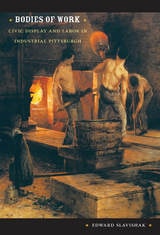
By the end of the nineteenth century, Pittsburgh emerged as a major manufacturing center in the United States. Its rise as a leading producer of steel, glass, and coal was fueled by machine technology and mass immigration, developments that fundamentally changed the industrial workplace. Because Pittsburgh’s major industries were almost exclusively male and renowned for their physical demands, the male working body came to symbolize multiple often contradictory narratives about strength and vulnerability, mastery and exploitation. In Bodies of Work, Edward Slavishak explores how Pittsburgh and the working body were symbolically linked in civic celebrations, the research of social scientists, the criticisms of labor reformers, advertisements, and workers’ self-representations. Combining labor and cultural history with visual culture studies, he chronicles a heated contest to define Pittsburgh’s essential character at the turn of the twentieth century, and he describes how that contest was conducted largely through the production of competing images.

Slavishak focuses on the workers whose bodies came to epitomize Pittsburgh, the men engaged in the arduous physical labor demanded by the city’s metals, glass, and coal industries. At the same time, he emphasizes how conceptions of Pittsburgh as quintessentially male limited representations of women in the industrial workplace. The threat of injury or violence loomed large for industrial workers at the turn of the twentieth century, and it recurs throughout Bodies of Work: in the marketing of artificial limbs, statistical assessments of the physical toll of industrial capitalism, clashes between labor and management, the introduction of workplace safety procedures, and the development of a statewide workmen’s compensation system.
[more]
cover of Border as Method, or, the Multiplication of Labor

Border as Method, or, the Multiplication of Labor

Sandro Mezzadra and Brett Neilson

Duke University Press, 2013
Far from creating a borderless world, contemporary globalization has generated a proliferation of borders. In Border as Method, Sandro Mezzadra and Brett Neilson chart this proliferation, investigating its implications for migratory movements, capitalist transformations, and political life. They explore the atmospheric violence that surrounds borderlands and border struggles across various geographical scales, illustrating their theoretical arguments with illuminating case studies drawn from Europe, Asia, the Pacific, the Americas, and elsewhere. Mezzadra and Neilson approach the border not only as a research object but also as an epistemic framework. Their use of the border as method enables new perspectives on the crisis and transformations of the nation-state, as well as powerful reassessments of political concepts such as citizenship and sovereignty.
[more]
cover of Both Hands Tied: Welfare Reform and the Race to the Bottom in the Low-Wage Labor Market

Both Hands Tied

Welfare Reform and the Race to the Bottom in the Low-Wage Labor Market

Jane L. Collins and Victoria Mayer

University of Chicago Press, 2010

Both Hands Tied studies the working poor in the United States, focusing in particular on the relation between welfare and low-wage earnings among working mothers. Grounded in the experience of thirty-three women living in Milwaukee and Racine, Wisconsin, it tells the story of their struggle to balance child care and wage-earning in poorly paying and often state-funded jobs with inflexible schedules—and the moments when these jobs failed them and they turned to the state for additional aid.

Jane L. Collins and Victoria Mayer here examine the situations of these women in light of the 1996 national Personal Responsibility and Work Opportunity Reconciliation Act and other like-minded reforms—laws that ended the entitlement to welfare for those in need and provided an incentive for them to return to work. Arguing that this reform came at a time of gendered change in the labor force and profound shifts in the responsibilities of family, firms, and the state, Both Hands Tied provides a stark but poignant portrait of how welfare reform afflicted poor, single-parent families, ultimately eroding the participants’ economic rights and affecting their ability to care for themselves and their children.

[more]
cover of Breaking Babe Ruth: Baseball's Campaign Against Its Biggest Star

Breaking Babe Ruth

Baseball's Campaign Against Its Biggest Star

Edmund F. Wehrle

University of Missouri Press, 2025
Rather than as a Falstaffian figure of limited intellect, Edmund Wehrle reveals Babe Ruth as an ambitious, independent operator, one not afraid to challenge baseball’s draconian labor system. To the baseball establishment, Ruth’s immense popularity represented opportunity, but his rebelliousness and potential to overturn the status quo presented a threat. After a decades-long campaign waged by baseball to contain and discredit him, the Babe, frustrated and struggling with injuries and illness, grew more acquiescent, but the image of Ruth that baseball perpetuated still informs how many people remember Babe Ruth to this day. This new perspective, approaching Ruth more seriously and placing his life in fuller context, is long overdue.
[more]
cover of Broken Promise: The Subversion Of U.S. Labor Relations

Broken Promise

The Subversion Of U.S. Labor Relations

James A. Gross

Temple University Press, 2003

The Wagner Act of 1935 (later the Wagner-Taft-Hartley Act of 1947) was intended to democratize vast numbers of American workplaces: the federal government was to encourage worker organization and the substitution of collective bargaining for employers' unilateral determination of vital work-place matters. Yet this system of industrial democracy was never realized; the promise was "broken." In this rare inside look at the process of government regulation over the last forty-five years, James A. Gross analyzes why the promise of the policy was never fulfilled.

Gross looks at how the National Labor Relations Board's (NLRB) policy-making has been influenced by the President, the Congress, the Supreme Court, public opinion, resistance by organized employers, the political and economic strategies of organized labor, and the ideological dispositions of NLRB appointees. This book provides the historical perspective needed for a reevaluation of national labor policy. It delineates where we are now, how we got here, and what fundamental questions must be addressed if policy-makers are to make changes consistent with the underlying principles of democracy.
[more]
cover of Building a Social Contract: Modern Workers' Houses in Early-Twentieth Century Detroit

Building a Social Contract

Modern Workers' Houses in Early-Twentieth Century Detroit

McCulloch, Michael

Temple University Press, 2023

The dream of the modern worker’s house emerged in early twentieth-century America as wage earners gained access to new, larger, and better-equipped dwellings. Building a Social Contract is a cogent history of the houses those workers dreamed of and labored for. Michael McCulloch chronicles the efforts of employers, government agencies, and the building industry who, along with workers themselves, produced an unprecedented boom in housing construction that peaked in the mid-1920s.

Through oral histories, letters, photographs, and period fiction, McCulloch traces wage earners’ agency in negotiating a new implicit social contract, one that rewarded hard work with upward mobility in modern houses. This promise reflected workers’ increased bargaining power but, at the same time, left them increasingly vulnerable to layoffs.

Building a Social Contract focuses on Detroit, the quintessential city of the era, where migrant workers came and were Americanized, and real estate agents and the speculative housebuilding industry thrived. The Motor City epitomized the struggle of Black workers in this period, who sought better lives through industrial labor but struggled to translate their wages into housing security amid racist segregation and violence. When Depression-era unemployment created an eviction crisis, the social contract unraveled, and workers rose up—at the polls and in the streets—to create a labor movement that reshaped American capitalism for decades.

Today, the lessons McCulloch provides from early twentieth-century Detroit are a necessary reminder that wages are not enough, and only working-class political power can secure affordable housing.
[more]
cover of Building the King’s Highway: Labor, Society, and Family on Mexico’s Caminos Reales, 1757-1804

Building the King’s Highway

Labor, Society, and Family on Mexico’s Caminos Reales, 1757-1804

Bruce A. Castleman

University of Arizona Press, 2005

The importance of the silver trade to the Spanish colonial effort is well documented, as it opened up an exchange of goods with Europe and Asia. Lesser known is the story of the roads on which this trade moved and the people responsible for building them.

Focusing on the camino real linking Mexico City and the port of Veracruz, Bruce Castleman has written a social history of road construction laborers in late Bourbon Mexico. He has drawn on employment and census records to study a major shift in methods used by the Spanish colonial regime to mobilize the supply of unskilled labor—and concomitant changes in the identities those laborers asserted for themselves.

Through a close analysis of wages actually paid to named individuals from one week to the next, Castleman opens a new window on Mexican history. In the 1760s, a free-wage labor regime replaced a draft-labor system, and by examining records of road construction he traces both this transformation and its implications. During this time, free-wage artisans saw their earnings reduced, and they were pushed into the labor pool, and Castleman reveals how a shift occurred in the way that laborers identified themselves as the Spanish casta system of racial classification became increasingly fluid.

In his study, Castleman introduces some of the principle players of eighteenth-century Mexico, from viceroys to tobacco planters to military engineers. He then fleshes out the lives of working persons, drawing on a complete set of construction records from the construction of the Puente de Escamela at Orizaba to forge a collective biography that considers their existences apart from the workplace. By linking census and employment records, he uncovers a host of social indicators such as marriage preference, family structure, and differences over time in how the caste system was used to classify people according to ancestry.

As Castleman shows, roads did not so much link Mexico to the global economy as forge regional markets within New Spain, and his work provides an astute analysis of struggles between the Bourbon colonial state, the important consulados of Mexico City and Veracruz, and more localized interests over road policy. More important, Building the King’s Highway provides a valuable new perspective on people’s lives as it advances our understanding of labor in late colonial Latin America.
[more]
cover of Building the Metropolis: Architecture, Construction, and Labor in New York City, 1880–1935

Building the Metropolis

Architecture, Construction, and Labor in New York City, 1880–1935

Alexander Wood

University of Chicago Press, 2025

A sweeping history of New York that chronicles the construction of one of the world’s great cities.
 
Between the 1880s and the 1930s, New York City experienced explosive growth as nearly a million buildings, dozens of bridges and tunnels, hundreds of miles of subway lines, and thousands of miles of streets were erected to meet the needs of an ever-swelling population. This landscape—jagged with skyscrapers, rattling with the sound of mass transit, alive with people—made the city world-famous.
 
Building the Metropolis offers a revelatory look at this era of urban development by asking, “Who built New York, and how?” Focusing on the work of architects, builders, and construction workers, Alexander Wood chronicles the physical process of the city’s rapid expansion. New York’s towering buildings and busy thoroughfares aren’t just stylish or structural marvels, Wood shows, but the direct result of the many colorful personalities who worked in one of the city’s largest industries. This development boom drew on the resources of the whole community and required money, political will, creative vision, entrepreneurial drive, skilled workmanship, and hard physical labor. Wood shows this to be an even larger story as well. As cities became nodes in a regional, national, and global economy, the business of construction became an important motor of economic, political, and social development. While they held drastically different views on the course of urban growth, machine politicians, reformers, and radicals alike were all committed to city building on an epic scale.
 
Drawing on resources that include city archives and the records of architecture firms, construction companies, and labor unions, Building the Metropolis tells the story of New York in a way that’s epic, lively, and utterly original.
[more]
cover of Building the Metropolis: Architecture, Construction, and Labor in New York City, 1880–1935

Building the Metropolis

Architecture, Construction, and Labor in New York City, 1880–1935

Alexander Wood

University of Chicago Press, 2025

This is an auto-narrated audiobook version of this book.

A sweeping history of New York that chronicles the construction of one of the world’s great cities.

 
Between the 1880s and the 1930s, New York City experienced explosive growth as nearly a million buildings, dozens of bridges and tunnels, hundreds of miles of subway lines, and thousands of miles of streets were erected to meet the needs of an ever-swelling population. This landscape—jagged with skyscrapers, rattling with the sound of mass transit, alive with people—made the city world-famous.
 
Building the Metropolis offers a revelatory look at this era of urban development by asking, “Who built New York, and how?” Focusing on the work of architects, builders, and construction workers, Alexander Wood chronicles the physical process of the city’s rapid expansion. New York’s towering buildings and busy thoroughfares aren’t just stylish or structural marvels, Wood shows, but the direct result of the many colorful personalities who worked in one of the city’s largest industries. This development boom drew on the resources of the whole community and required money, political will, creative vision, entrepreneurial drive, skilled workmanship, and hard physical labor. Wood shows this to be an even larger story as well. As cities became nodes in a regional, national, and global economy, the business of construction became an important motor of economic, political, and social development. While they held drastically different views on the course of urban growth, machine politicians, reformers, and radicals alike were all committed to city building on an epic scale.
 
Drawing on resources that include city archives and the records of architecture firms, construction companies, and labor unions, Building the Metropolis tells the story of New York in a way that’s epic, lively, and utterly original.
[more]
cover of By the Sweat of the Brow: Literature and Labor in Antebellum America

By the Sweat of the Brow

Literature and Labor in Antebellum America

Nicholas K. Bromell

University of Chicago Press, 1993

The spread of industrialism, the emergence of professionalism, and the challenge to slavery fueled an anxious debate about the meaning and value of work in antebellum America.

In chapters on Thoreau, Melville, Hawthorne, Rebecca Harding Davis, Susan Warner, Harriet Beecher Stowe, and Frederick Douglass, Nicholas Bromell argues that American writers generally sensed a deep affinity between the mental labor of writing and such bodily labors as blacksmithing, house building, housework, mothering, and farming. Combining literary and social history, canonical and noncanonical texts, primary source material, and contemporary theory, Bromell establishes work as an important subject of cultural criticism.
[more]