Results by title
118 books match the query 'Land tenure' and 7 start with b
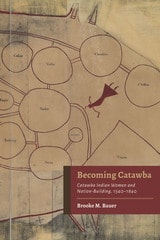
Becoming Catawba
Catawba Indian Women and Nation-Building, 1540–1840Brooke M. Bauer
University of Alabama Press, 2023
WINNER OF THE ANNE B. & JAMES B. MCMILLAN PRIZE IN SOUTHERN HISTORY
WINNER OF THE ERMINIE WHEELER-VOEGELIN BOOK AWARD
WINNER OF THE BERSHIRE CONFERENCE OF WOMEN HISTORIANS BOOK AWARD
WINNER OF THE GEORGE C. ROGERS, JR. AWARD FROM THE SOUTH CAROLINA HISTORICAL SOCIETY
The story of Catawba women who experienced sweeping changes to their world but held onto traditional customs to create and preserve a Catawba identity and build a nation.
Brooke M. Bauer’s Becoming Catawba: Catawba Indian Women and Nation-Building, 1540–1840 is the first book-length study of the role Catawba women played in creating and preserving a cohesive tribal identity over three centuries of colonization and cultural turmoil. Bauer, a citizen of the Catawba Indian Nation of South Carolina, weaves ethnohistorical methodologies, family history, cultural context, and the Catawba language together to generate an internal perspective on the Catawbas’ history and heritage in the area now known as the Carolina Piedmont.
This unique and important study examines the lives and legacies of women who executed complex decision-making and diplomacy to navigate shifting frameworks of kinship, land ownership, and cultural production in dealings with colonial encroachments, white settlers, and Euro-American legal systems and governments from the mid-sixteenth century to the early nineteenth century. Personified in the figure of Sally New River, a Catawba cultural leader to whom 500 remaining acres of occupied tribal lands were deeded on behalf of the community in 1796 and which she managed until her death in 1821, Bauer reveals how women worked to ensure the survival of the Catawba people and their Catawba identity, an effort that resulted in a unified nation.
Bauer’s approach is primarily ethnohistorical, although it draws on a number of interdisciplinary strategies. In particular, Bauer uses “upstreaming,” a critical strategy that moves toward the period under study by using present-day community members’ connections to historical knowledge—for example, family histories and oral traditions—to interpret primary-source data. Additionally, Bauer employs archaeological data and material culture as a means of performing feminist recuperation, filling the gaps and silences left by the records, newspapers, and historical accounts as primarily written by and for white men. Ultimately, Becoming Catawba effects a welcome intervention at the intersections of Native, women’s, and Southern history, expanding the diversity and modes of experience in the fraught, multifaceted cultural environment of the early American South.
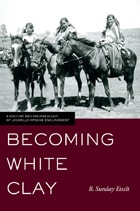
Becoming White Clay
A History and Archaeology of Jicarilla Apache EnclavementB. Sunday Eiselt
University of Utah Press, 2012
The story of one of the longest-lived and most successful nomadic enclaves in North America provides a rare glimpse into the material expressions of Apache self-determination and survival. For nearly 200 years the Jicarilla Apache of New Mexico thrived in the interstices of Pueblo and Spanish settlements following their expulsion from the Plains. Critical to their success was their ability to extend key aspects of Plains-Pueblo exchange to Indian and mixed-blood communities on the fringes of colonial rule. More than other nomadic tribes, the Jicarilla played an enormous role in holding together the social fabric of New Mexican villages after the fall of the Spanish Empire.
This comprehensive study by Sunday Eiselt begins with the great Athapaskan migration out of Canada during prehis-toric times and ends with the forced settlement of the Jicarilla on the Dulce reservation in the 1880s. Eiselt combines archaeological and ethnohistorical data in an examination of Jicarilla strategies for self-preservation. She reveals the ideological and political imperatives of “belonging” that shaped their interactions with local communities and the state and that enabled them to avoid reservation life well into the 1880s. Throughout their long history, Jicarilla identity remained intact, distinctive, and discernable even as life on the reservation disrupted the intimate connections that once existed with their Hispanic and Pueblo neighbors.
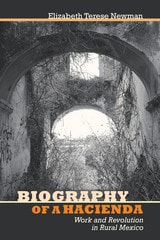
Biography of a Hacienda
Work and Revolution in Rural MexicoElizabeth Terese Newman
University of Arizona Press, 2014
Biography of a Hacienda is a many-voiced reconstruction of events leading up to the Mexican Revolution and the legacy that remains to the present day. Drawing on ethnohistorical, archaeological, and ethnographic data, Elizabeth Terese Newman creates a fascinating model of the interplay between the great events of the Revolution and the lives of everyday people.
In 1910 the Mexican Revolution erupted out of a century of tension surrounding land ownership and control over labor. During the previous century, the elite ruling classes acquired ever-increasingly large tracts of land while peasants saw their subsistence and community independence vanish. Rural working conditions became so oppressive that many resorted to armed rebellion. After the war, new efforts were made to promote agrarian reform, and many of Mexico’s rural poor were awarded the land they had farmed for generations.
Weaving together fiction, memoir, and data from her fieldwork, Newman reconstructs life at the Hacienda San Miguel Acocotla, a site located near a remote village in the Valley of Atlixco, Puebla, Mexico. Exploring people’s daily lives and how they affected the buildup to the Revolution and subsequent agrarian reforms, the author draws on nearly a decade of interdisciplinary study of the Hacienda Acocotla and its descendant community. Newman’s archaeological research recovered information about the lives of indigenous people living and working there in the one hundred years leading up to the Mexican Revolution.
Newman shows how women were central to starting the revolt, and she adds their voices to the master narrative. Biography of a Hacienda concludes with a thoughtful discussion of the contribution of the agrarian revolution to Mexico’s history and whether it has succeeded or simply transformed rural Mexico into a new “global hacienda system.”
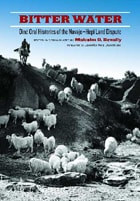
Bitter Water
Diné Oral Histories of the Navajo-Hopi Land DisputeEdited and Translated by Malcolm D. Benally; Foreword by Jennifer Nez Denetdale
University of Arizona Press, 2011
Bitter Water presents the narratives of four Diné women who have resisted removal but who have watched as their communities and lifeways have changed dramatically. The book, based on 25 hours of filmed personal testimony, features the women’s candid discussions of their efforts to carry on a traditional way of life in a contemporary world that includes relocation and partitioned lands; encroaching Western values and culture; and devastating mineral extraction and development in the Black Mesa region of Arizona. Though their accounts are framed by insightful writings by both Benally and Diné historian Jennifer Nez Denetdale, Benally lets the stories of the four women elders speak for themselves.
Scholars, media, and other outsiders have all told their versions of this story, but this is the first book that centers on the stories of women who have lived it—in their own words in Navajo as well as the English translation. The result is a living history of a contested cultural landscape and the unique worldview of women determined to maintain their traditions and lifeways, which are so intimately connected to the land. This book is more than a collection of stories, poetry, and prose. It is a chronicle of resistance as spoken from the hearts of those who have lived it.

Black Property Owners in the South, 1790-1915
Loren Schweninger
University of Illinois Press, 1990
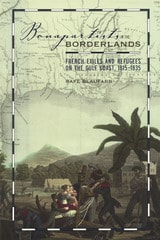
Bonapartists in the Borderlands
French Exiles and Refugees on the Gulf Coast, 1815-1835Rafe Blaufarb
University of Alabama Press, 2005
Bonapartists in the Borderlands debunks the standard account of the Vine and Olive Colony, which stresses the failure of aristocratic, luxury-loving French to tame the wilderness. Rafe Blaufarb recounts how Napoleonic exiles and French refugees from Europe and the Caribbean joined forces with Latin American insurgents, Gulf pirates, and international adventurers to seek their fortune in the Gulf borderlands. The US Congress welcomed the French and granted them a capacious tract of rich Black Belt land near Demopolis, Alabama, on the condition that they would establish a Mediterranean-style Vine and Olive colony.
Blaufard shows that it was not a lack of grit that caused the enterprise to fail. Rather, the Napoleonic officers involved in the colony sold their land shares to speculators to finance an even more perilous adventure—invading the Texas borderlands contested by Spain and the US. Their departure left the Vine and Olive colony in the hands of French refugees from the Haitian slave revolt. They soon abandoned vine cultivation and fused with the neighboring communities of Anglo-American slaveholding cotton planters and speculators.
Rafe Blaufarb examines the underlying motivations and aims that inspired this endeavor and details the nitty-gritty politics, economics, and backroom bargaining that resulted in the settlement. He employs a wide variety of local, national, and international resources: from documents held by the Alabama State Archives, Marengo County court records, and French-language newspapers published in America to material from the War Ministry Archives at Vincennes, the Diplomatic Archives at the Quai d’Orasy, and the French National Archives.
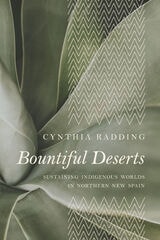
Bountiful Deserts
Sustaining Indigenous Worlds in Northern New SpainCynthia Radding
University of Arizona Press, 2022
Common understandings drawn from biblical references, literature, and art portray deserts as barren places that are far from God and spiritual sustenance. In our own time, attention focuses on the rigors of climate change in arid lands and the perils of the desert in the northern Mexican borderlands for migrants seeking shelter and a new life.
Bountiful Deserts foregrounds the knowledge of Indigenous peoples in the arid lands of northwestern Mexico, for whom the desert was anything but barren or empty. Instead, they nurtured and harvested the desert as a bountiful and sacred space. Drawing together historical texts and oral testimonies, archaeology, and natural history, author Cynthia Radding develops the relationships between people and plants and the ways that Indigenous people sustained their worlds before European contact through the changes set in motion by Spanish encounters, highlighting the long process of colonial conflicts and adaptations over more than two centuries. This work reveals the spiritual power of deserts by weaving together the cultural practices of historical peoples and contemporary living communities, centered especially on the Yaqui/Yoeme and Mayo/Yoreme.
Radding uses the tools of history, anthropology, geography, and ecology to paint an expansive picture of Indigenous worlds before and during colonial encounters. She re-creates the Indigenous worlds in both their spiritual and material realms, bringing together the analytical dimension of scientific research and the wisdom of oral traditions in its exploration of different kinds of knowledge about the natural world.
Published in cooperation with the William P. Clements Center for Southwest Studies, Southern Methodist University