Results by title
460 books match the query 'Law and legislation' and 17 start with b

Barbs, Bullets, and Blood
The 1880s Texas barbed Wire WarsHarold D. Jobes
University of North Texas Press, 2025
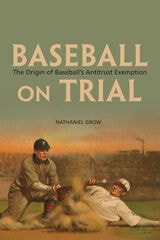
Baseball on Trial
The Origin of Baseball's Antitrust ExemptionNathaniel Grow
University of Illinois Press, 2014
Currently a billion dollar enterprise, professional baseball teams crisscross the country while the games are broadcast via radio, television, and internet coast to coast. The sheer scope of this activity would seem to embody the phrase "interstate commerce." Yet baseball is the only professional sport--indeed the sole industry--in the United States that currently benefits from a judicially constructed antitrust immunity. How could this be?
Drawing upon recently released documents from the National Baseball Hall of Fame, Grow analyzes how the Supreme Court reached this seemingly peculiar result by tracing the Federal Baseball litigation from its roots in 1914 to its resolution in 1922, in the process uncovering significant new details about the proceedings. Grow observes that while interstate commerce was measured at the time by the exchange of tangible goods, baseball teams in the 1910s merely provided live entertainment to their fans, while radio was a fledgling technology that had little impact on the sport. The book ultimately concludes that, despite the frequent criticism of the opinion, the Supreme Court's decision was consistent with the conditions and legal climate of the early twentieth century.

Battered Women In The Courtroom
The Power of Judicial ResponsesUniversity Press of New England, 1999
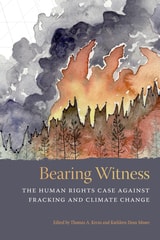
Bearing Witness
The Human Rights Case Against Fracking and Climate ChangeThomas A. Kerns
Oregon State University Press, 2021
On May 14, 2018, a respected international human-rights court, the Rome-based Permanent Peoples’ Tribunal, began a week-long hearing on the impacts of fracking and climate change on human and Earth rights. In its advisory opinion, the Tribunal ruled that fracking systematically violates substantive and procedural human rights; that governments are complicit in the rights violations; and that to protect human rights and the climate, the practice of fracking should be banned.
The case makes history. It revokes the social license of extreme-extraction industries by connecting environmental destruction to human-rights violations. It affirms that climate change, and the extraction techniques that fuel it, directly violate deeply and broadly accepted moral norms encoded in the Universal Declaration of Human Rights.
Bearing Witness maps a promising new direction in the ongoing struggle to protect the planet from climate chaos. It tells the story of this landmark case through carefully curated court materials, including searing eye-witness testimony, groundbreaking legal testimony, and the Tribunal’s advisory opinion. Essays by leading climate writers such as Winona LaDuke, Robin Wall Kimmerer, and Sandra Steingraber and legal experts such as John Knox, Mary Wood, and Anna Grear give context to the controversy. Framing essays by the editors, experts on climate ethics and human rights, demonstrate that a human-rights focus is a powerful, transformative new tool to address the climate crisis.
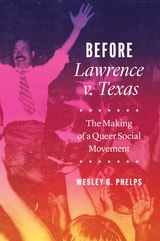
Before Lawrence v. Texas
The Making of a Queer Social MovementWesley G. Phelps
University of Texas Press, 2022
2024 Coral Horton Tullis Memorial Prize, Texas State Historical Association
2024 Award of Merit, The Philosophical Society of Texas Nonfiction Book Prize
The grassroots queer activism and legal challenges that led to a landmark Supreme Court decision in favor of gay and lesbian equality.
In 2003 the US Supreme Court overturned anti-sodomy laws across the country, ruling in Lawrence v. Texas that the Constitution protects private consensual sex between adults. To some, the decision seemed to come like lightning from above, altering the landscape of America’s sexual politics all at once. In actuality, many years of work and organizing led up to the legal case, and the landmark ruling might never have happened were it not for the passionate struggle of Texans who rejected their state’s discriminatory laws.
Before Lawrence v. Texas tells the story of the long, troubled, and ultimately hopeful road to constitutional change. Wesley G. Phelps describes the achievements, setbacks, and unlikely alliances along the way. Over the course of decades, and at great risk to themselves, gay and lesbian Texans and their supporters launched political campaigns and legal challenges, laying the groundwork for Lawrence. Phelps shares the personal experiences of the people and couples who contributed to the legal strategy that ultimately overturned the state’s discriminatory law. Even when their individual court cases were unsuccessful, justice seekers and activists collectively influenced public opinion by insisting that their voices be heard. Nine Supreme Court justices ruled, but it was grassroots politics that vindicated the ideal of equality under the law.

Belonging in an Adopted World
Race, Identity, and Transnational AdoptionBarbara Yngvesson
University of Chicago Press, 2010
Since the early 1990s, transnational adoptions have increased at an astonishing rate, not only in the United States, but worldwide. In Belonging in an Adopted World, Barbara Yngvesson offers a penetrating exploration of the consequences and implications of this unprecedented movement of children, usually from poor nations to the affluent West. Yngvesson illuminates how the politics of adoption policy has profoundly affected the families, nations, and children involved in this new form of social and economic migration.
Starting from the transformation of the abandoned child into an adoptable resource for nations that give and receive children in adoption, this volume examines the ramifications of such gifts, especially for families created through adoption and later, the adopted adults themselves. Bolstered by an account of the author’s own experience as an adoptive parent, and fully attuned to the contradictions of race that shape our complex forms of family, Belonging in an Adopted World explores the fictions that sustain adoptive kinship, ultimately exposing the vulnerability and contingency behind all human identity.
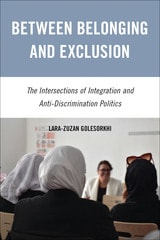
Between Belonging and Exclusion
The Intersections of Integration and Anti-Discrimination PoliticsLara-Zuzan Golesorkhi
Temple University Press, 2026
Integration and discrimination are two of the most salient yet contradictory forces shaping contemporary European politics. In Between Belonging and Exclusion Lara-Zuzan Golesorkhi asserts that this tension exists because integration politics do not facilitate non-discrimination, nor do they address experiences of discrimination. She draws on interviews with refugees and other key actors in integration politics to examine the barriers hindering refugee women’s labor market participation in Germany.
Golesorkhi introduces four explanatory tropes that reveal how and why integration efforts have often fallen short. She examines the power relations and limitations in migration governance as well as the identity narratives of Germanness/Europeanness, and the gendered and racialized mechanisms of “othering” that contribute to discrimination.
Between Belonging and Exclusion delineates what Germany and the EU “get wrong” about integration and anti-discrimination as it outlines conceptual and practical suggestions for expanding the terms of inclusion.
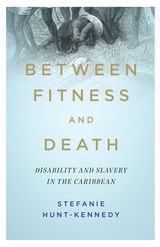
Between Fitness and Death
Disability and Slavery in the CaribbeanStefanie Hunt-Kennedy
University of Illinois Press, 2020
Stefanie Hunt-Kennedy provides a three-pronged analysis of disability in the context of Atlantic slavery. First, she examines the connections of enslavement and representations of disability and the parallel development of English anti-black racism. From there, she moves from realms of representation to reality in order to illuminate the physical, emotional, and psychological impairments inflicted by slavery and endured by the enslaved. Finally, she looks at slave law as a system of enforced disablement.
Audacious and powerful, Between Fitness and Death is a groundbreaking journey into the entwined histories of racism and ableism.
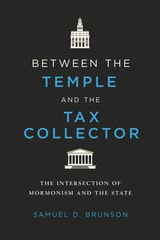
Between the Temple and the Tax Collector
The Intersection of Mormonism and the StateSamuel D. Brunson
University of Illinois Press, 2025
The founding and development of the Church of Jesus Christ of Latter-day Saints run parallel to the rise of the modern tax system and administrative state. Samuel D. Brunson looks at the relationships between the Church and various federal, state, local, and international tax regimes.
The church and its members engage with the state as taxpayers and as members of a faith exempt from taxes. As Brunson shows, LDS members and the Church have at various times enacted, enforced, and collected taxes while also challenging taxes in the courts and politics. Brunson delves into the ways LDS members used their status as taxpayers to affirm themselves as citizens and how outsiders have attacked the Church’s tax-exempt status to delegitimize it. Throughout, Brunson uses the daily interactions between the Latter-day Saints and taxation to explain important and inevitable holes in the wall between church and state.
Enlightening and informed, Between the Temple and the Tax Collector provides general readers and experts alike with a new perspective on a fundamental issue.
Beyond Busing
Reflections on Urban Segregation, the Courts, and Equal OpportunityPaul R. Dimond
University of Michigan Press, 2005
A compelling insider's account of the fight for educational desegregation, from one of its most dedicated and outspoken heroes. A new afterword explains the author's controversial belief that the moment for litigating educational equality has passed, clear-sightedly critiquing his own courtroom strategies and the courts' responses, before closing with an assessment of the economic and social changes that he feels have already moved us "beyond busing."
"An extraordinarily informative and thoughtful book describing the process of bringing Brown [v. Board of Education] North and the impact this process had upon national attitudes toward desegregation."
--Drew S. Days III, Yale Law Journal
"An original analysis of a tough subject. A must-read for all who care about opportunity for all our children."
--Donna E. Shalala, President, University of Miami
"Paul Dimond remains a passionate and caring voice for inner-city students, whether in his advocacy of school desegregation, school choice plans, or school finance reform. He illuminates these issues as one who participated in the major education cases and as a perceptive scholar."
--Mark Yudof, Chancellor, The University of Texas System
"A must-read for anyone who wants to understand America's continued failure to give inner-city children a quality education or to do something about it!"
--Sheryll Cashin, Author of The Failures of Integration: How Race and Class Are Undermining the American Dream
"Dimond is particularly good at relating his slice of legal history to the broader developments of the 1970s, and his occasional remarks about trial tactics are amusing and instructive. Dimond's
honesty about both his successes and failures makes his book required reading for civil rights lawyers."
--Lawrence T. Gresser, Michigan Law Review
"A fascinating first-hand account of 1970s northern school desegregation decisions."
--Neal E. Devins, American Bar Foundation Research Journal
"Dimond reminds the liberal reader of the promise that lies in the empowerment of ordinary families to choose their own schools."
--John E. Coons, Professor of Law, Emeritus, University of California, Berkeley
Paul R. Dimond is counsel to Miller, Canfield, Paddock and Stone, Michigan's largest law firm; chairman of McKinley, a national commercial real estate investment and management firm; and chairman or member of the board of trustees of numerous education, community, and civic organizations. He spent four years as President Clinton's Special Assistant for Economic Policy.

Beyond Control
Medical Power and Abortion LawSally Sheldon
Pluto Press, 1997
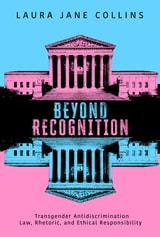
Beyond Recognition
Transgender Antidiscrimination Law, Rhetoric, and Ethical ResponsibilityCollins, Laura Jane
University of Alabama Press, 2026
A bold and original analysis of how the complexity of legal struggles over transgender rights is shaped not only by politics but by a deeper cultural anxiety about the meaning of sex itself.
Beyond Recognition: Transgender Antidiscrimination Law, Rhetoric, and Ethical Responsibility is a timely analysis that challenges the idea of transgender antidiscrimination law as a simple matter of inclusion or exclusion. Far from treating the law as a straightforward recognition project, Laura Jane Collins employs a rhetorically responsive approach that reveals how legal systems both reflect and shape our deepest uncertainties about sex, identity, and justice.
Through close readings of Title VII case law, state-level legislation such as California’s Fair Employment and Housing Act, and legislative debates surrounding bathroom access and trans rights, Collins exposes the deep-seated anxieties driving contemporary legal debates. While courts, policymakers, and advocates struggle to construct legal protections, the very act of defining sex within the law exposes law’s limitations.
Rather than condemning the law’s failures or romanticizing its liberatory potential, Collins calls for a more self-reflective, ethically engaged response. She argues that our demand for legal clarity often conceals a broader discomfort with ambiguity—and that the law’s so-called shortcomings may in fact reflect our own refusal to confront the complexity of sex as a category and system of power.
A vital contribution to scholarship in law and rhetoric, gender studies, and critical legal theory, Beyond Recognition invites a deeper reckoning with both legal frameworks and personal responsibility. It offers a compelling perspective on the evolving landscape of transgender rights and the cultural anxieties that continue to shape it.
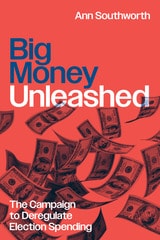
Big Money Unleashed
The Campaign to Deregulate Election SpendingAnn Southworth
University of Chicago Press, 2023
The story of how the First Amendment became an obstacle to campaign finance regulation—a history that began much earlier than most imagine.
Americans across party lines believe that public policy is rigged in favor of those who wield big money in elections. Yet, legislators are restricted in addressing these concerns by a series of Supreme Court decisions finding that campaign finance regulations violate the First Amendment.
Big Money Unleashed argues that our current impasse is the result of a long-term process involving many players. Naturally, the justices played critical roles—but so did the attorneys who hatched the theories necessary to support the legal doctrine, the legal advocacy groups that advanced those arguments, the wealthy patrons who financed these efforts, and the networks through which they coordinated strategy and held the Court accountable.
Drawing from interviews, public records, and archival materials, Big Money Unleashed chronicles how these players borrowed a litigation strategy pioneered by the NAACP to dismantle racial segregation and used it to advance a very different type of cause.

Blood on Their Hands
How Greedy Companies, Inept Bureaucracy, and Bad Science Killed Thousands of HemophiliacsWeinberg, Eric
Rutgers University Press, 2017
Blood on Their Hands is an inspiring, firsthand account of the legal battles fought on behalf of hemophiliacs who were unwittingly infected with tainted blood. As part of the team behind the key class action litigation filed by the infected, young New Jersey lawyer Eric Weinberg was faced with a daunting task: to prove the negligence of a powerful, well-connected global industry worth billions. Weinberg and journalist Donna Shaw tell the dramatic story of how idealistic attorneys and their heroic, mortally-ill clients fought to achieve justice and prevent further infections. A stunning exposé of one of the American medical system’s most shameful debacles, Blood on Their Hands is a rousing reminder that, through perseverance, the victims of corporate greed can sometimes achieve great victory.
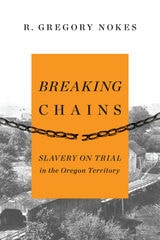
Breaking Chains
Slavery on Trial in the Oregon TerritoryR. Gregory Nokes
Oregon State University Press, 2013
In Breaking Chains, R. Gregory Nokes tells the story of the only slavery case adjudicated in Oregon’s pre-Civil War courts—Holmes v. Ford. Through the lens of this landmark case, Nokes explores the historical context of racism in Oregon and the West, reminding readers that there actually were slaves in Oregon, though relatively few in number.
Drawing on the court record, Nokes offers an intimate account of the relationship between a slave and his master from the slave’s point of view. He also explores the experiences of other slaves in early Oregon, examining attitudes toward race and revealing contradictions in the state’s history. Oregon was the only free state admitted to the union with a voter-approved constitutional clause banning African Americans and, despite the prohibition of slavery in the state, many in Oregon tolerated it and supported politicians who advocated for slavery, including Oregon’s first territorial governor.
Breaking Chains sheds light on a somber part of Oregon’s history, bringing the story of slavery in Oregon to a broader audience. The book will appeal to readers interested in Pacific Northwest history and in the history of slavery in the United States.

Building a New Legal Order for the Oceans
Tommy Koh
National University of Singapore Press, 2019
In this book, Koh fully explains the many new concepts of international law that arose from UNCLOS III, such as the Exclusive Economic Zone, Archipelagic State, Straits Used for International Navigation, Transit Passage, Archipelagic Sealane Passage, and the Common Heritage of Mankind. He also discusses current threats to maritime security and explains the intricacies of the disputes in the South China Sea. Koh asks What can be learned from the success of UNCLOS? How can we build on that success and manage the new tensions that arise in the Law of the Sea? There is no better guide to this aspect of international law than Koh.
Bullets and Fire
Lynching and Authority in Arkansas, 1840-1950Guy Lancaster
University of Arkansas Press, 2017
Among the topics discussed are the lynching of slaves, the Arkansas Council of the Association of Southern Women for the Prevention of Lynching, the 1927 lynching of John Carter in Little Rock, and the state’s long opposition to a federal anti-lynching law.
Throughout, the work reveals how the phenomenon of lynching—as the means by which a system of white supremacy reified itself, with its perpetrators rarely punished and its defenders never condemned—served to construct authority in Arkansas. Bullets and Fire will add depth to the growing body of literature on American lynching and integrate a deeper understanding of this violence into Arkansas history.