Results by title
276 books match the query 'Legal History' and 9 start with b

Bad News Travels Fast
The Telegraph, Libel, and Press Freedom in the Progressive EraPatrick C. File
University of Massachusetts Press, 2019
This largely forgotten era in the development of American libel law provides crucial historical context for contemporary debates about the news media, public discourse, and the role of a free press. File argues that the legal thinking surrounding these cases laid the groundwork for the more friendly libel standards the press now enjoys and helped to establish today's regulations of press freedom amid the promise and peril of high-speed communication technology.
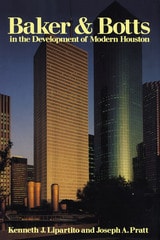
Baker & Botts in the Development of Modern Houston
By Kenneth J. Lipartito and Joseph A. Pratt
University of Texas Press, 1991
As counsel for Pennzoil's successful effort to recover billions of dollars in damages from Texaco over the acquisition of Getty Oil Company, the Baker & Botts law firm of Houston, Texas, achieved wide public recognition in the 1980s. But among its peers in the legal and corporate worlds, Baker & Botts has for more than a century held a preeminent position, handling the legal affairs of such blue-chip clients as the Southern Pacific Railroad, Houston Lighting & Power Company, Rice University, Texas Commerce Bank, and Tenneco. In this study, Kenneth J. Lipartito and Joseph A. Pratt chronicle the history of Baker & Botts, placing particular emphasis on the firm's role in Houston's economic development.
Founded in 1840, Baker & Botts literally grew up with Houston. The authors chart its evolution from a nineteenth-century regional firm that represented eastern-based corporations moving into Texas to a twentieth-century national firm with clients throughout the world. They honestly discuss the criticisms that Baker & Botts has faced as an advocate of big business. But they also identify the important impact that corporate law firms of this type have on business reorganization and government regulation. As the authors demonstrate in this case study, law firms throughout the twentieth century have helped to shape public policy in these critical areas.
Always prominent in the community, and with prominent connections (former Secretary of State James A. Baker III is the great-grandson of the original Baker), the Baker & Botts law firm belongs in any history of the development of Houston and the Southwest.
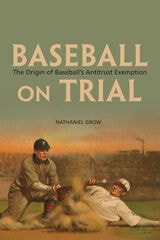
Baseball on Trial
The Origin of Baseball's Antitrust ExemptionNathaniel Grow
University of Illinois Press, 2014
Currently a billion dollar enterprise, professional baseball teams crisscross the country while the games are broadcast via radio, television, and internet coast to coast. The sheer scope of this activity would seem to embody the phrase "interstate commerce." Yet baseball is the only professional sport--indeed the sole industry--in the United States that currently benefits from a judicially constructed antitrust immunity. How could this be?
Drawing upon recently released documents from the National Baseball Hall of Fame, Grow analyzes how the Supreme Court reached this seemingly peculiar result by tracing the Federal Baseball litigation from its roots in 1914 to its resolution in 1922, in the process uncovering significant new details about the proceedings. Grow observes that while interstate commerce was measured at the time by the exchange of tangible goods, baseball teams in the 1910s merely provided live entertainment to their fans, while radio was a fledgling technology that had little impact on the sport. The book ultimately concludes that, despite the frequent criticism of the opinion, the Supreme Court's decision was consistent with the conditions and legal climate of the early twentieth century.

Biblical Judgments
New Legal Readings in the Hebrew BibleDaphne Barak-Erez
University of Michigan Press, 2024
Rather than offering a historical study, Barak-Erez draws upon famous court decisions from around the world to root her analysis in modern law. Organized by subject matter, Biblical Judgments analyzes how the themes of law and government, judging and judges, human rights and social justice, criminal law, private law, and family and inheritance law are presented through a number of different stories. In recounting the compelling narratives of the Hebrew Bible, Biblical Judgments exposes their inherent legal tensions and what we can learn about legal dilemmas today.

Black Lawyers, White Courts
The Soul of South African LawKenneth S. Broun
Ohio University Press, 2000
In the struggle against apartheid, one often overlooked group of crusaders was the coterie of black lawyers who overcame the Byzantine system that the government established oftentimes explicitly to block the paths of its black citizens from achieving justice.
Now, in their own voices, we have the narratives of many of those lawyers as recounted in a series of oral interviews. Black Lawyers, White Courts is their story and the anti-apartheid story that has before now gone untold.
Professor Kenneth Broun conducted interviews with twenty-seven black South African lawyers. They were asked to tell about their lives, including their family backgrounds, education, careers, and their visions for the future. In many instances they also discussed their years in prison or exile, or under house arrest. Most told of both education and careers interrupted because of the ongoing struggle.
The story of the professional achievements of black lawyers in South Africa—indeed their very survival—provides an example of the triumph of individuals and, ultimately, of the law. Black Lawyers, White Courts is about South Africa, and about black professionals in that country, but the lessons its protagonists teach extend far beyond circumstances, geography, or race.
Broken Contract
A Memoir of Harvard Law SchoolRichard D. Kahlenberg
University of Massachusetts Press, 1999
In 1986, 70 percent of the first-year class of Harvard Law School wanted to pursue careers in public-interest law. Ten years later, the same percentage of this class was pursuing careers in private corporate firms. How is it that these students began their careers interested in using law as a vehicle for social change, but ended up in those very law firms most resistant to change? How are law students able to reconcile liberal politics with careers in corporate law?
Richard D. Kahlenberg's Broken Contract serves to warn prospective law students on the transformation that happens during the second and third years. His memoir explores the intense competitiveness and insidious pressure leading to jobs that are lucrative, prestigious, and challenging, but ultimately unsatisfying.
Though Broken Contract doesn't seek to convince every law student to go into public service, Kahlenberg means to challenge and restructure our social institutions to make it easier to follow our impulses toward good instead of toward the goods.
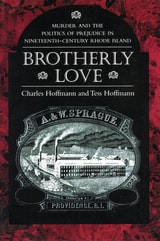
Brotherly Love
Murder and the Politics of Prejudice in Nineteenth-Century Rhode IslandCharles Hoffmann
University of Massachusetts Press, 1993
Brotherly Love is a graphic reconstruction of the crime, its social and economic background, and the subsequent trials. The story reveals the antagonism between native-born Yankees, who commanded great power, and the growing number of Irish Catholic immigrants, most of whom worked in the textile mills. Indeed, the economic, political, and religious dimensions of the conflict are all evident in the trials.
The authors argue persuasively that the Gordons were victims of bigotry and circumstantial evidence, serving as convenient scapegoats to appease a community outraged over the murder of its wealthiest citizen. In telling the story of this notorious case, Brotherly Love reveals the politics of prejudice in nineteenth-century New England as played out in community and courtroom.
Building a Revolutionary State
The Legal Transformation of New York, 1776-1783Howard Pashman
University of Chicago Press, 2018
Building a Revolutionary State looks closely at one state, New York, to understand the broader question of how legal structures emerged from an insurgency. By examining law as New Yorkers experienced it in daily life during the war, Pashman reconstructs a world of revolutionary law that prevailed during America’s transition to independence. In doing so, Pashman explores a central paradox of the revolutionary era: aggressive enforcement of partisan property rules actually had stabilizing effects that allowed insurgents to build legal institutions that enjoyed popular support. Tracing the transformation from revolutionary disorder to legal order, Building a New Revolutionary State gives us a radically fresh way to understand the emergence of new states.
Buying Time
Debt and Mobility in the Western Indian OceanThomas F. McDow
Ohio University Press, 2018
In Buying Time, Thomas F. McDow synthesizes Indian Ocean, Middle Eastern, and East African studies as well as economic and social history to explain how, in the nineteenth century, credit, mobility, and kinship knit together a vast interconnected Indian Ocean region. That vibrant and enormously influential swath extended from the desert fringes of Arabia to Zanzibar and the Swahili coast and on to the Congo River watershed.
In the half century before European colonization, Africans and Arabs from coasts and hinterlands used newfound sources of credit to seek out opportunities, establish new outposts in distant places, and maintain families in a rapidly changing economy. They used temporizing strategies to escape drought in Oman, join ivory caravans in the African interior, and build new settlements.
The key to McDow’s analysis is a previously unstudied trove of Arabic business deeds that show complex variations on the financial transactions that underwrote the trade economy across the region. The documents list names, genealogies, statuses, and clan names of a wide variety of people—Africans, Indians, and Arabs; men and women; free and slave—who bought, sold, and mortgaged property. Through unprecedented use of these sources, McDow moves the historical analysis of the Indian Ocean beyond connected port cities to reveal the roles of previously invisible people.