Results by title
78 books match the query 'Light' and 4 start with b
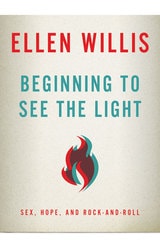
Beginning to See the Light
Sex, Hope, and Rock-and-RollEllen Willis
University of Minnesota Press, 2012
From the New Yorker’s inimitable first pop music critic comes this pioneering collection of essays by a conscientious writer whose political realm is both radical and rational, and whose prime preoccupations are with rock ’n’ roll, sexuality, and above all, freedom. Here Ellen Willis assuredly captures the thrill of music, the disdain of authoritarian culture, and the rebellious spirit of the ’60s and ’70s.
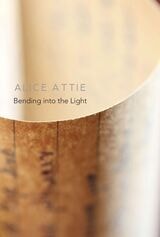
Bending into the Light
Alice Attie
Seagull Books, 2023
The poems in Alice Attie’s new volume, Bending into the Light, are poised on an ever-shifting threshold where words “up and down, side to side” appear as “figures in the distance approaching, each a declaration, each persisting”. Beings, things, ideas, present or vanishing, flow through the vessel of language wherein each exudes “its own aura, its own being, its own disappearance.” Attie’s voice is intricate and intimate, shaping and reshaping the space of being and the space of non-being. These contemplative poems, interspersed with a few haunting photographs and artworks, extol, and mourn, melding the quotidian with the philosophical where we are formed and transformed in the profound knowledge that “the voice has no center.”
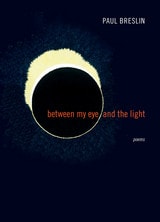
Between My Eye and the Light
PoemsPaul Breslin
Northwestern University Press, 2015
“Hole torn in the language, / How shall we speak?” The first lines of the first poem in Paul Breslin’s artful second collection of poetry demand an answer, of both poet and reader, to the seemingly unspeakable tragedies of modern life. Between My Eye and the Light forms a beautifully insistent exercise in the power of language to engage experiences both mundane and profound. Breslin queries far-flung corners of experience for answers, engaging childhood, his longtime home of Chicago, small moments of life, and encounters with artists such Rainer Maria Rilke and Derek Walcott. The poems even query the volume’s opening question, How shall we speak? While pat answers elude us, poetry acts as a bulwark against cliché and cynicism, strengthening those who have the courage to question and explore.
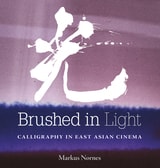
Brushed in Light
Calligraphy in East Asian CinemaMarkus Nornes
University of Michigan Press, 2021
Drawing on a millennia of calligraphy theory and history, Brushed in Light examines how the brushed word appears in films and in film cultures of Korea, Japan, Taiwan, Hong Kong, and PRC cinemas. This includes silent era intertitles, subtitles, title frames, letters, graffiti, end titles, and props. Markus Nornes also looks at the role of calligraphy in film culture at large, from gifts to correspondence to advertising. The book begins with a historical dimension, tracking how calligraphy is initially used in early cinema and how it is continually rearticulated by transforming conventions and the integration of new technologies. These chapters ask how calligraphy creates new meaning in cinema and demonstrate how calligraphy, cinematography, and acting work together in a single film. The last part of the book moves to other regions of theory. Nornes explores the cinematization of the handwritten word and explores how calligraphers understand their own work.