Results by title
163 books match the query 'Living' and 5 start with b
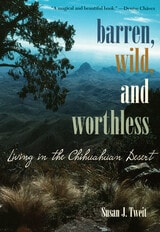
Barren, Wild, and Worthless
Living in the Chihuahuan DesertSusan J. Tweit
University of Arizona Press, 2003
Appearing barren and most definitely wild, the Chihuahuan Desert of northern Mexico and the southwestern United States may look worthless to some, but for Susan Tweit it is an inspiration. In this collection of seven elegant personal essays, she explores undiscovered facets of this seemingly hostile environment. With eloquence, passion, and insight, she describes and reflects on the relationship between the land, history, and people and makes this underappreciated region less barren for those who would share her journeys.
[more]
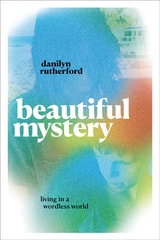
Beautiful Mystery
Living in a Wordless WorldDanilyn Rutherford
Duke University Press, 2025
When Danilyn Rutherford and her husband Craig noticed that their six-month-old daughter Millie wasn’t making eye contact, they took her to their pediatrician. And an optometrist. Then a neurologist. Later, to a team of physical and occupational therapists. None of the doctors could give Millie a diagnosis, but it was clear that her brain was not developing at the rate it should. At an age when some children take their first steps, Millie had the cognitive ability and motor skills of a three-month-old. Three years later, Craig died suddenly of a heart attack and Danilyn found herself on the precipice of her anthropology career as a widow and single mother, still trying to solve the puzzle posed by Millie’s inaccessible mind.
Now in her twenties, Millie has never been able to express herself verbally, but she has a thriving social environment rooted in the people around her and in things her companions and family can see, hear, smell, and feel. Life in Millie’s world is far richer than might be immediately evident to those who think and communicate in conventional ways.
Beautiful Mystery explores what it means to be a person in the spaces between what we can and cannot say, and how we can fight to care for those we love when they don’t have the language to fight for themselves. Through her unique lens as a mother and an anthropologist, Rutherford tells the story of arriving in Millie’s world, what she found there, and how Millie showed her that words aren’t always what makes us human. Enlightening and deeply felt, Beautiful Mystery proves that you don’t have to understand someone to love them—a lesson that, if we all learned it, might allow us to live together in a fractured world.
[more]

Beethoven for a Later Age
Living with the String QuartetsEdward Dusinberre
University of Chicago Press, 2016
Beethoven’s sixteen string quartets are some of the most extraordinary and challenging pieces of music ever written. Originally composed and performed between 1798 and 1826, they have inspired artists of all kinds—not only musicians—and have been subject to endless reinterpretation. But what is it like to personally take up the challenge of these compositions, not only as a musician, but as a member of a quartet, where each player has ideas about style and expression? To answer this question, Edward Dusinberre, first violinist of the renowned Takács Quartet, offers a rare peek inside the workings of his ensemble, while providing an insightful history of the compositions and their performance.
Founded in Hungary in 1975 and now based in Boulder, Colorado, the Takács is one of the world’s preeminent string quartets, and performances of Beethoven have been at the center of their work together for over forty years. Using the history of both the Takács Quartet and the Beethoven quartets as a foundation, Beethoven for a Later Age provides a backstage look at the daily life of a quartet, showing the necessary creative tension between individual and group and how four people can at the same time forge a lasting artistic connection and enjoy making music together over decades. The key, Dusinberre reveals, to a quartet crafting its own sound is in balancing continuity with change and experimentation—a theme that lies at the heart of Beethoven’s remarkable compositions. In an accessible style, suitable for novices and chamber music enthusiasts alike, Dusinberre illuminates the variety and contradictions of Beethoven's quartets, which were composed against the turbulent backdrop of the Napoleonic Wars and their aftermath, and he brings the technical aspects of the music to life.
Beethoven for a Later Age vividly shows that creative engagement with Beethoven’s radical and brilliant quartets continues to be as stimulating now as it was for its first performers and audiences. Musicians and music lovers will be intrigued by Dusinberre’s exploration of the close collaboration at the heart of any great performance.
[more]
Between the Living and the Dead
A Perspective on Witches and Seers in the Early Modern AgeÉva Pócs
Central European University Press, 1998
Éva Pócs, one of the most highly respected scholars of historical anthropology, has undertaken extensive research on the history of folk beliefs connected with communication and the supernatural sphere. In this book, she examines the relics of European shamanism in early modern sources, and the techniques and belief-systems of mediators found in the records of witchcraft trials from the sixteenth to the eighteenth century. The book explores the various communication systems known to early modern Hungarians, describes the role of these systems in everyday village life, and shows how they were connected to contemporary European systems, as well as new types of mediators and systems which function right up to the twentieth century. Representing a major contribution to the most up-to-date international research, Eva Pócs draws on significant East European material and literature not previously co-ordinated with that from the West.
[more]
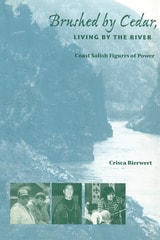
Brushed by Cedar, Living by the River
Coast Salish Figures of PowerCrisca Bierwert
University of Arizona Press, 1999
A brilliant, experimental ethnography, Brushed by Cedar is destined to change the way anthropologists write about the people they befriend.
Crisca Bierwert has created a fresh poststructural ethnography that offers new insights into Coast Salish cultures. Arguing against the existence of a master narrative, she presents her understanding of these Native American peoples of Washington state and British Columbia, Canada, through poetic bricolage, offering the reader a pastiche of rich cultural images. Bierwert employs postmodern literary and social analyses to examine many aspects of Salish culture: legends and their storytellers; domestic violence; longhouse ceremonies; the importance and power of place; and disputes over fishing rights. Her reflections overlap as a dialogue would, weaving throughout the book significant threads of Salish knowledge and creating a nonauthoritative text that nonetheless speaks knowingly.
This book represents the future of contemporary anthropology. Unlike traditional ethnography, it makes no attempt to portray a complete picture of the Coast Salish. Instead, Bierwert utilizes a critical and diffuse approach that defies colonial, syncretic, and hegemonic structures and applies advanced literary theory to the creation of ethnography.
Brushed by Cedar is an important guideline for anyone who writes about other cultures and will be expecially useful to classes in the methodology and history of ethnography, as well as to scholars specializing in Native American studies or oral literatures.
[more]