Results by title
120 books match the query 'Marketing' and 8 start with b

Barbie's Queer Accessories
Erica Rand
Duke University Press, 1995
Rand begins by focusing on the production and marketing of Barbie, starting in 1959, including Mattel’s numerous tie-ins and spin-offs. These variations, which include the much-promoted multiethnic Barbies and the controversial Earring Magic Ken, helped make the doll one of the most profitable toys on the market. In lively chapters based on extensive interviews, the author discusses adult testimony from both Barbie "survivors" and enthusiasts and explores how memories of the doll fit into women’s lives. Finally, Rand looks at cultural reappropriations of Barbie by artists, collectors, and especially lesbians and gay men, and considers resistance to Barbie as a form of social and political activism.
Illustrated with photographs of various interpretations and alterations of Barbie, this book encompasses both Barbie glorification and abjection as it testifies to the irrefutably compelling qualities of this bestselling toy. Anyone who has played with Barbie—or, more importantly, thought or worried about playing with Barbie—will find this book fascinating.

Blueprint for Your Library Marketing Plan
A Guide to Help You Survive and ThrivePatricia H. Fisher
American Library Association, 2006
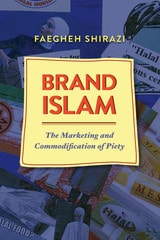
Brand Islam
The Marketing and Commodification of PietyBy Faegheh Shirazi
University of Texas Press, 2016
From food products to fashions and cosmetics to children’s toys, a wide range of commodities today are being marketed as “halal” (permitted, lawful) or “Islamic” to Muslim consumers both in the West and in Muslim-majority nations. However, many of these products are not authentically Islamic or halal, and their producers have not necessarily created them to honor religious practice or sentiment. Instead, most “halal” commodities are profit-driven, and they exploit the rise of a new Islamic economic paradigm, “Brand Islam,” as a clever marketing tool.
Brand Islam investigates the rise of this highly lucrative marketing strategy and the resulting growth in consumer loyalty to goods and services identified as Islamic. Faegheh Shirazi explores the reasons why consumers buy Islam-branded products, including conspicuous piety or a longing to identify with a larger Muslim community, especially for those Muslims who live in Western countries, and how this phenomenon is affecting the religious, cultural, and economic lives of Muslim consumers. She demonstrates that Brand Islam has actually enabled a new type of global networking, joining product and service sectors together in a huge conglomerate that some are referring to as the Interland. A timely and original contribution to Muslim cultural studies, Brand Islam reveals how and why the growth of consumerism, global communications, and the Westernization of many Islamic countries are all driving the commercialization of Islam.
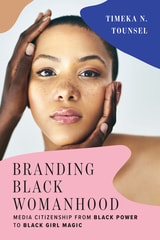
Branding Black Womanhood
Media Citizenship from Black Power to Black Girl MagicTimeka N. Tounsel
Rutgers University Press, 2022
Beginning with the inception of the Essence brand in the late 1960s, Timeka N. Tounsel examines the individuals and institutions that have reconfigured Black women’s empowerment as a business enterprise. Ultimately, these commercial gatekeepers have constructed an image economy that operates as both a sacred space for Black women and an easy hunting ground for their dollars.
Breakthrough Branding
Positioning Your Library to Survive and ThriveKent Jackson
American Library Association, 2013

Brokers and Bureaucrats
Building Market Institutions in RussiaTimothy Frye
University of Michigan Press, 2000
Building a Buzz
Libraries & Word-of-Mouth MarketingPeggy Barber
American Library Association, 2010
Buying and Believing
Sri Lankan Advertising and Consumers in a Transnational WorldSteven Kemper
University of Chicago Press, 2001
Drawing upon fieldwork conducted over thirty years, Kemper examines the Sri Lankan advertising industry to show how executives draw on their skills as folk ethnographers to "Sri Lankanize" commodities and practices to make them locally desirable, essentially producing new forms of Sri Lankan culture. Addressing many of the most pressing agendas of contemporary anthropology, Buying and Becoming breaks new ground in studies of culture and globalization.