Results by title
308 books match the query 'Memory' and 9 start with b
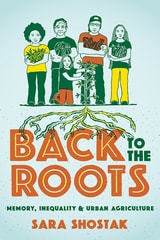
Back to the Roots
Memory, Inequality, and Urban AgricultureSara Shostak
Rutgers University Press, 2021
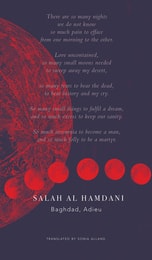
Baghdad, Adieu
Selected Poems of Memory and ExileSalah Al Hamdani
Seagull Books, 2018
This landmark collection gathers thirty-five years of his writings, from his first volume in Arabic, Memory of Embers, to his latest collection, written originally in French, For You I Dream. It offers English-language readers their first substantial overview of Al Hamdani’s work, fired by the fight against injustice and shot through with longing for the home to which he can never return.
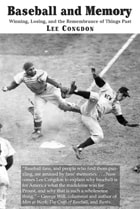
Baseball and Memory
Winning, Losing, and the Remembrance of Things PastLee Congdon
St. Augustine's Press, 2011
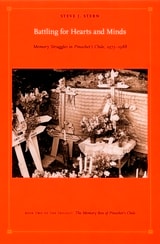
Battling for Hearts and Minds
Memory Struggles in Pinochet's Chile, 1973–1988Steve J. Stern
Duke University Press, 2006
In the 1970s, Chilean dissidents were lonely “voices in the wilderness” insisting that state terror and its victims be recognized and remembered. By the 1980s, the dissent had spread, catalyzing a mass movement of individuals who revived public dialogue by taking to the streets, creating alternative media, and demanding democracy and human rights. Despite long odds and discouraging defeats, people of conscience—victims of the dictatorship, priests, youth, women, workers, and others—overcame fear and succeeded in creating truthful public memories of state atrocities. Recounting both their efforts and those of the regime’s supporters to win the battle for Chileans’ hearts and minds, Stern shows how profoundly the struggle to create memories, to tell history, matters.
Battling for Hearts and Minds is the second volume in the trilogy The Memory Box of Pinochet’s Chile. The third book will examine Chileans’ efforts to achieve democracy while reckoning with Pinochet’s legacy.
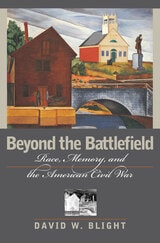
Beyond the Battlefield
Race, Memory, and the American Civil WarDavid W. Blight
University of Massachusetts Press, 2002
The book as a whole demonstrates several ways to probe the history of memory, to understand how and why groups of Americans have constructed versions of the past in the service of contemporary social needs. Topics range from the writing and thought of Frederick Douglass and W.E.B. Du Bois to a comparison of Abraham Lincoln and Douglass on the level of language and memory. The volume also includes a compelling study of the values of a single Union soldier, an analysis of Ken Burns's PBS series The Civil War, and a retrospective treatment of the distinguished African American historian Nathan I. Huggins.
Taken together, these lucidly written pieces offer a thoroughgoing assessment of the stakes of Civil War memory and their consequences for American race relations. Beyond the Battlefield demonstrates not only why we should preserve and study our Civil War battlefields, but also why we should lift our vision above those landscapes and ponder all the unfinished questions of healing and justice, of racial harmony and disharmony, that still bedevil our society and our historical imagination.
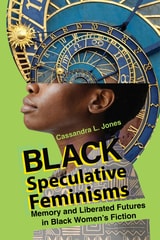
Black Speculative Feminisms
Memory and Liberated Futures in Black Women's FictionCassandra L. Jones
The Ohio State University Press, 2024
Blue Roses
Tennessee Williams, Memory, and the Queer ArchiveDaniel Ciba
University of Iowa Press, 2026

Boundaries of Repair
Memory, Emotion, and Mobility across Timor-Leste and IndonesiaVictoria Sakti
National University of Singapore Press, 2026
A study of Timorese communities that offers a human perspective on post-conflict reconciliation.
Violent conflict may end in a kind of peace. But reconciliation processes do not always work, let alone bring healing. How are families and communities to rebuild their lives when old divisions, pain, and memories still linger? Centering on social repair, this beautifully crafted study explores how families and communities in Timor-Leste and exile communities in Indonesia live with the enduring consequences of political violence, forced separation, and displacement after twenty-four years of Indonesian occupation.
Following relationships across borders and between generations, Boundaries of Repair shows how ruptures in kinship and community life reverberate across time and space, and even between the living and the dead. Rather than treating repair as a state-driven undertaking, the book reveals social repair as an uneven, fragile, and ongoing process, sustained through everyday care practices, memory work, emotional labor, and creative acts of negotiation in contexts marked by impunity and unresolved loss.
By foregrounding what it means to live with damage that cannot be fully repaired, the book challenges dominant assumptions about justice, healing, and closure. It offers a powerful account of how people renegotiate relationships, boundaries, and belonging amid traces of violence, contributing new insights to debates on post-conflict recovery, memory, displacement, and the limits of reconciliation.
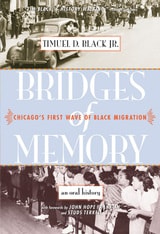
Bridges of Memory
Chicago's First Wave of Black MigrationTimuel D. Black Jr.
Northwestern University Press, 2005
Co-published with the DuSable Museum of African American History
Recipient of 2007 The Hyde Park Historical Society Paul Cornell Award
A collection of interviews with African Americans who came to Chicago from the South. In their first great migration to Chicago that began during World War I, African Americans came from the South seeking a better life--and fleeing a Jim Crow system of racial prejudice, discrimination, and segregation. What they found was much less than what they'd hoped for, but it was much better than what they'd come from--and in the process they set in motion vast changes not only in Chicago but also in the whole fabric of American society. This book, the first of three volumes, revisits this momentous chapter in American history with those who lived it.
Oral history of the first order, Bridges of Memory lets us hear the voices of those who left social, political, and economic oppression for political freedom and opportunity such as they'd never known--and for new forms of prejudice and segregation. These children and grandchildren of ex-slaves found work in the stockyards and steel mills of Chicago, settled and started small businesses in the "Black Belt" on the South Side, and brought forth the jazz, blues, and gospel music that the city is now known for. Historian Timuel D. Black, Jr., himself the son of first-generation migrants to Chicago, interviews a wide cross-section of African Americans whose remarks and reflections touch on issues ranging from fascism to Jim Crow segregation to the origin of the blues. Their recollections comprise a vivid record of a neighborhood, a city, a society, and a people undergoing dramatic and unprecedented changes.