Results by title
59 books match the query 'Methods' and 5 start with b
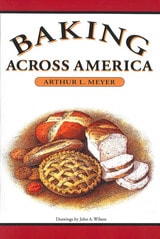
Baking across America
By Arthur L. Meyer
University of Texas Press, 1998
Whether it's a slice of warm bread and butter, a Thanksgiving pumpkin pie, or a piece of cake, baked goods have been among America's favorite comfort foods ever since the Pilgrims arrived. From the days of hand mixing and baking on the hearth to today's use of food processors and electric ranges, American cooks have created an amazing variety of breads and baked goods that are as distinctive as the cultures from which we came.
Spanning colonial times to the present and every region of the United States, this book is a comprehensive guide to baking in America. Certified master baker Arthur L. Meyer brings together some 700 kitchen-tested recipes for America's favorite breads, pies, cakes, and cookies. Compiled from almost 300 regional cookbooks dating from the 1890s to the 1980s, these are the authentic recipes for the traditional baked goods of every part of our country. In these pages, you'll find regional specialties such as Appalachian Buttermilk Cracklin' Bread and Hawaiian Pineapple-Macadamia Bread, as well as old family recipes.
In addition to the recipes, Meyer offers a fascinating overview of the history of baking in America, complete with descriptions of early breads, pies, cakes, and cookies. Whether you're a home or professional baker, a food historian, or someone who just enjoys reading cookbooks, you're sure to find lots of tasty treats here. Let Baking across America become your basic source for all the baked goodies Americans love to eat.
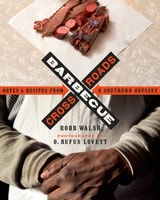
Barbecue Crossroads
Notes and Recipes from a Southern OdysseyBy Robb Walsh
University of Texas Press, 2013
In stories, recipes, and photographs, James Beard Award–winning writer Robb Walsh and acclaimed documentary photographer O. Rufus Lovett take us on a barbecue odyssey from East Texas to the Carolinas and back. In Barbecue Crossroads, we meet the pitmasters who still use old-fashioned wood-fired pits, and we sample some of their succulent pork shoulders, whole hogs, savory beef, sausage, mutton, and even some barbecued baloney. Recipes for these and the side dishes, sauces, and desserts that come with them are painstakingly recorded and tested.
But Barbecue Crossroads is more than a cookbook; it is a trip back to the roots of our oldest artisan food tradition and a look at how Southern culture is changing. Walsh and Lovett trace the lineage of Southern barbecue backwards through time as they travel across a part of the country where slow-cooked meat has long been part of everyday life. What they find is not one story, but many. They visit legendary joints that don’t live up to their reputations—and discover unknown places that deserve more attention. They tell us why the corporatizing of agriculture is making it difficult for pitmasters to afford hickory wood or find whole hogs that fit on a pit.
Walsh and Lovett also remind us of myriad ways that race weaves in and out of the barbecue story, from African American cooking techniques and recipes to the tastes of migrant farmworkers who ate their barbecue in meat markets, gas stations, and convenience stores because they weren’t welcome in restaurants. The authors also expose the ways that barbecue competitions and TV shows are undermining traditional barbecue culture. And they predict that the revival of the community barbecue tradition may well be its salvation.
Barbecue
The History of an American InstitutionRobert F. Moss
University of Alabama Press, 2010
The history of barbecue in the United States has until now remained virtually untold. Barbecue has a long, rich history—a history that could be found only through scattered references in old letters, journals, newspapers, diaries, and travel narratives until this book was written.
Barbecue
The History of an American Institution, Revised and Expanded Second EditionRobert F. Moss
University of Alabama Press, 2020
The definitive history of an iconic American food, with new chapters, sidebars, and updated historical accounts.
Expert Robert F. Moss researched hundreds of sources—newspapers, letters, journals, diaries, and travel narratives—to document the origins and evolution of barbecue from its origins among Native Americans to its present status as an icon of American culture. In this definitive guide, he maps out the development of the rich array of regional barbecue styles, chronicles the rise of barbecue restaurants, and profiles the famed pitmasters who made the tradition what it is today.
Barbecue is the story not just of a dish but also of a social institution that helped shape many regional cultures of the United States. The history begins with British colonists’ adoption of barbecuing techniques from Native Americans in the 17th and 18th centuries, moves to barbecue’s establishment as the preeminent form of public celebration in the 19th century, and is carried through to barbecue’s ubiquitous standing today.
From the very beginning, barbecues were powerful social magnets, drawing together people from a wide range of classes and geographic backgrounds. Barbecue played a key role in three centuries of American history, both reflecting and influencing the direction of an evolving society. By tracing the story of barbecue from its origins to today, Barbecue: The History of an American Institution traces the very thread of American social history.
Moss has made significant updates in this new edition, offering a wealth of new historical research, sources, illustrations, and anecdotes.

Battery State Estimation
Methods and modelsShunli Wang
The Institution of Engineering and Technology, 2022