Results by title
157 books match the query 'Mexican-American Border Region' and 32 start with b
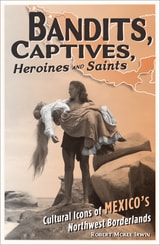
Bandits, Captives, Heroines, and Saints
Cultural Icons of Mexico’s Northwest BorderlandsRobert McKee Irwin
University of Minnesota Press, 2007
Bandits, Captives, Heroines, and Saints investigates cultural icons of the late nineteenth century from Mexico’s largely unstudied northwest borderlands, present-day Sonora, Baja California, and western Chihuahua. Robert McKee Irwin looks at popular figures such as Joaquín Murrieta, the gold rush social bandit; Lola Casanova, the anti-Malinche, whose marriage to a Seri Indian symbolized a forbidden form of mestizaje; and la Santa de Cabora, a young faith healer who inspired armed insurgencies and was exiled to Arizona.
Cultural icons such as Murrieta, Lola Casanova, and la Santa de Cabora are products of intercultural dialogue, Irwin reveals, and their characterizations are unstable. They remain relevant for generations because there is no consensus regarding their meanings, and they are weapons in struggles of representation in the borderlands. The figures studied here are especially malleable, he argues, because they are marginalized from the mainstream of historiography.
A timely analysis, Bandits, Captives, Heroines, and Saints challenges current paradigms of border studies and presents a rich understanding of the ways in which cultural icons influence people’s minds and lives.
Robert McKee Irwin is associate professor of Spanish at the University of California, Davis, and the author of Mexican Masculinities (Minnesota, 2003).
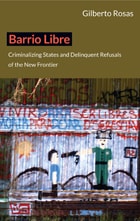
Barrio Libre
Criminalizing States and Delinquent Refusals of the New FrontierGilberto Rosas
Duke University Press, 2012
Rosas argues that although these youths participate in the victimization of others, they should not be demonized. They are complexly and adversely situated. The effects of NAFTA have forced many of them, as well as other Mexicans, to migrate to Nogales. Moving fluidly with the youths through the spaces that they inhabit and control, he shows how the militarization of the border actually destabilized the region and led Barrio Libre to turn to increasingly violent activities, including drug trafficking. By focusing on these youths and their delinquency, Rosas demonstrates how capitalism and criminality shape perceptions and experiences of race, sovereignty, and resistance along the US-Mexico border.
Batos, Bolillos, Pochos, and Pelados
Class and Culture on the South Texas BorderBy Chad Richardson and Michael J. Pisani
University of Texas Press, 2017
A classic account of life on the Texas-Mexico border, Batos, Bolillos, Pochos, and Pelados offers the fullest portrait currently available of the people of the South Texas/Northern Mexico borderlands. First published in 1999, the book is now extensively revised and updated throughout to cover developments since 2000, including undocumented immigration, the drug wars, race relations, growing social inequality, and the socioeconomic gap between Latinos and the rest of American society—issues of vital and continuing national importance.
An outgrowth of the Borderlife Research Project conducted at the University of Texas Rio Grande Valley, Batos, Bolillos, Pochos, and Pelados uses the voices of several hundred Valley residents, collected by embedded student researchers and backed by the findings of sociological surveys, to describe the lives of migrant farmworkers, colonia residents, undocumented domestic servants, maquiladora workers, and Mexican street children. Likewise, it explores social, racial, and ethnic relations in South Texas among groups such as Latinos, Mexican immigrants, wealthy Mexican visitors, Anglo residents or tourists, and Asian and African American residents of South Texas. With this firsthand material and an explanatory focus that utilizes and applies social-science theoretical concepts, the book thoroughly addresses the future composition and integration of Latinos into the society and culture of the United States.
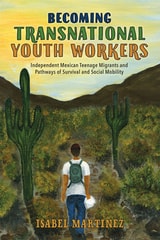
Becoming Transnational Youth Workers
Independent Mexican Teenage Migrants and Pathways of Survival and Social MobilityIsabel Martinez
Rutgers University Press, 2018
Big Bend National Park
Mexico, the United States, and a Borderland EcosystemMichael Welsh
University of Nevada Press, 2021
Big Bend National Park explores the cultural and diplomatic history of this transborder region that was designated a national park on the US side and the site of a long-hoped-for “international peace park” on the other. Michael Welsh demonstrates the challenges faced and lessons learned by both the US and Mexico as they struggled against political and environmental vicissitudes in their attempts to realize the creation of a shared frontier.
Geopolitical and environmental conflicts such as Cold War fears, immigration, the war on drugs, international water rights, and more stringent American border security measures after 9/11 all hindered relations between the two countries. But more recently, renewed cooperation and ongoing diplomatic relations have led to new developments. Mexican park personnel began assisting American officials with efforts to re-wild the American side of the river with animal species that had been eliminated, and the Obama administration relaxed some post-9/11 restrictions, allowing American visitors to cross over to the Mexican park and its nearby towns.
The ambition of developing a park for peace has yet to materialize, even as individuals and their governments continue to work toward an accord. Big Bend National Park provides a greater understanding of this complex borderland and hopes to help fulfill the aspiration of creating a shared ecosystem and the dream of a park for peace.
Binational Commons
Institutional Development and Governance on the U.S.-Mexico BorderEdited by Tony Payan and Pamela L. Cruz
University of Arizona Press, 2020
This volume addresses the most pertinent binational issues and how they are dealt with by both countries. In this important and timely volume, experts tackle the important problem of cross-border governance by an examination of formal and informal institutions, networks, processes, and mechanisms. Contributors also discuss various social, political, and economic actors and agencies that make up the increasingly complex governance space that is the U.S.-Mexico border.
Binational Commons focuses on whether the institutions that presently govern the U.S.-Mexico transborder space are effective in providing solutions to difficult binational problems as they manifest themselves in the borderlands. Critical for policy-making now and into the future, this volume addresses key binational issues. It explores where there are strong levels of institutional governance development, where it is failing, how governance mechanisms have evolved over time, and what can be done to improve it to meet the needs of the U.S.-Mexico borderlands in the next decades.
Contributors
Silvia M. Chavez-Baray
Kimberly Collins
Irasema Coronado
Guadalupe Correa-Cabrera
Pamela L. Cruz
Adrián Duhalt
James Gerber
Manuel A. Gutiérrez
Víctor Daniel Jurado Flores
Evan D. McCormick
Jorge Eduardo Mendoza Cota
Miriam S. Monroy
Eva M. Moya
Stephen Mumme
Tony Payan
Carla Pederzini Villarreal
Sergio Peña
Octavio Rodríguez Ferreira
Cecilia Sarabia Ríos
Kathleen Staudt

Bookmarks
A Companion Text for Like Water for ChocolateJanet Giannotti
University of Michigan Press, 1999
A Companion TextforLike Water for Chocolate is made up of six units, each covering two chapters in the novel. Every unit contains a preview section, free writing exercises, a short glossary (to help with Spanish words), comprehension quizzes, vocabulary exercises and summarizing exercises, a section devoted to response journals, and topics for discussion. The "Beyond the Novel" section includes facts about U.S. and Mexican history and folk tales. Illustrations throughout the book help to engage students and offer visual support for reading comprehension.
Border Afterlives
Migrant Deaths, Forensic Investigations, and the Politics of HauntingGabriella Soto
University of Arizona Press, 2026
Drawing on over a decade of ethnographic, participatory, and community-engaged research, author Gabriella Soto examines the postmortem journeys of these migrants through the fragmented infrastructure of medicolegal death investigation in the U.S. Southwest. She reveals how the state’s deterrence-based border policies not only generate death but also fail to provide adequate care for the dead. Soto argues that these deaths should be understood as structural homicides and that the forensic neglect they face is a form of ongoing violence.
Moving between the practical and the philosophical, Soto asks what it means to care for the dead and what society owes to those who die in its name. Through the lens of haunting, she explores how the dead continue to shape the living, not as objects of horror but as moral agents whose presence demands justice. Border Afterlives offers a border-scale comparative account of forensic practices, critiques the limits of “best practices” in under-resourced systems, and calls for a reimagining of forensic humanitarianism grounded in reciprocity and dignity, beyond human rights. This is a book that insists on remembering the dead.
Border Bandits
Hollywood on the Southern FrontierBy Camilla Fojas
University of Texas Press, 2008
The southern frontier is one of the most emotionally charged zones in the United States, second only to its historical predecessor and partner, the western frontier. Though they span many genres, border films share common themes, trace the mood swings of public policy, and shape our cultural agenda.
In this examination, Camilla Fojas studies how major Hollywood films exploit the border between Mexico and the United States to tell a story about U.S. dominance in the American hemisphere. She charts the shift from the mythos of the open western frontier to that of the embattled southern frontier by offering in-depth analyses of particular border films, from post-World War II Westerns to drug-trafficking films to contemporary Latino/a cinema, within their historical and political contexts.
Fojas argues that Hollywood border films do important social work by offering a cinematic space through which viewers can manage traumatic and undesirable histories and ultimately reaffirm core "American" values. At the same time, these border narratives delineate opposing values and ideas.
Latino border films offer a critical vantage onto these topics; they challenge the presumptions of U.S. nationalism and subsequent cultural attitudes about immigrants and immigration, and often critically reconstruct their Hollywood kin.
By analyzing films such as Duel in the Sun, The Wild Bunch, El Norte, The Border, Traffic, and Brokeback Mountain, Fojas demands that we reexamine the powerful mythology of the Hollywood borderlands. This detailed scrutiny recognizes that these films are part of a national narrative comprised of many texts and symbols that create the myth of the United States as capital of the Americas.
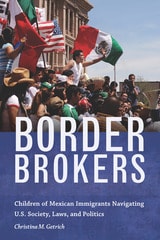
Border Brokers
Children of Mexican Immigrants Navigating U.S. Society, Laws, and PoliticsChristina M. Getrich
University of Arizona Press, 2019
Based on ethnographic fieldwork in San Diego over more than a decade, Border Brokers documents the continuing deleterious effects of U.S. immigration policies and enforcement practices on a group of now young adults and their families. In the first book-length longitudinal study of mixed-status families, Christina M. Getrich provides an on-the-ground portrayal of these young adults’ lives from their own perspectives and in their own words.
More importantly, Getrich identifies how these individuals have developed resiliency and agency beginning in their teens to improve circumstances for immigrant communities. Despite the significant constraints their families face, these children have emerged into adulthood as grounded and skilled brokers who effectively use their local knowledge bases, life skills honed in their families, and transborder competencies. Refuting the notion of their failure to assimilate, she highlights the mature, engaged citizenship they model as they transition to adulthood to be perhaps their most enduring contribution to creating a better U.S. society.
An accessible ethnography rooted in the everyday, this book portrays the complexity of life in the U.S.-Mexico borderlands. It offers important insights for anthropologists, educators, policy-makers, and activists working on immigration and social justice issues.
Border Confluences
Borderland Narratives from the Mexican War to the PresentRosemary A. King
University of Arizona Press, 2004
Border Contraband
A History of Smuggling across the Rio GrandeBy George T. Díaz
University of Texas Press, 2015
Border Dilemmas
Racial and National Uncertainties in New Mexico, 1848–1912Anthony Mora
Duke University Press, 2011
Border Economies
Cities Bridging the U.S.-Mexico DivideJames Gerber
University of Arizona Press, 2024
Enormous legal cross-border flows of people, goods, and finance are embedded in the region’s history and prompted by the need to respond to new opportunities and challenges that originate on the other side. In Border Economies James Gerber examines how the interactivity and sensitivity of communities to conditions across the border differentiates them from communities in the interiors of Mexico and the United States. Gerber explains what makes the region not only unique but uniquely interesting.
In Border Economies readers who want to understand the conditions that make the border controversial but also want to go beyond shallow political narratives will find an in-depth exploration of the economic forces shaping the region and an antidote to common prejudices and misunderstandings.
Border Identifications
Narratives of Religion, Gender, and Class on the U.S.-Mexico BorderBy Pablo Vila
University of Texas Press, 2005
From poets to sociologists, many people who write about life on the U.S.-Mexico border use terms such as "border crossing" and "hybridity" which suggest that a unified culture—neither Mexican nor American, but an amalgamation of both—has arisen in the borderlands. But talking to people who actually live on either side of the border reveals no single commonly shared sense of identity, as Pablo Vila demonstrated in his book Crossing Borders, Reinforcing Borders: Social Categories, Metaphors, and Narrative Identities on the U.S.-Mexico Frontier. Instead, people living near the border, like people everywhere, base their sense of identity on a constellation of interacting factors that includes regional identity, but also nationality, ethnicity, and race.
In this book, Vila continues the exploration of identities he began in Crossing Borders, Reinforcing Borders by looking at how religion, gender, and class also affect people's identifications of self and "others" among Mexican nationals, Mexican immigrants, Mexican Americans, Anglos, and African Americans in the Cuidad Juárez-El Paso area. Among the many fascinating issues he raises are how the perception that "all Mexicans are Catholic" affects Mexican Protestants and Pentecostals; how the discourse about proper gender roles may feed the violence against women that has made Juárez the "women's murder capital of the world"; and why class consciousness is paradoxically absent in a region with great disparities of wealth. His research underscores the complexity of the process of social identification and confirms that the idealized notion of "hybridity" is only partially adequate to define people's identity on the U.S.-Mexico border.
Border Land, Border Water
A History of Construction on the US-Mexico DivideBy C. J. Alvarez
University of Texas Press, 2019
Winner, Abbott Lowell Cummings Award, Vernacular Architecture Forum, 2020
Winner, Elisabeth Blair MacDougall Book Award, Society of Architectural Historians, 2021
From the boundary surveys of the 1850s to the ever-expanding fences and highway networks of the twenty-first century, Border Land, Border Water examines the history of the construction projects that have shaped the region where the United States and Mexico meet.
Tracing the accretion of ports of entry, boundary markers, transportation networks, fences and barriers, surveillance infrastructure, and dams and other river engineering projects, C. J. Alvarez advances a broad chronological narrative that captures the full life cycle of border building. He explains how initial groundbreaking in the nineteenth century transitioned to unbridled faith in the capacity to control the movement of people, goods, and water through the use of physical structures. By the 1960s, however, the built environment of the border began to display increasingly obvious systemic flaws. More often than not, Alvarez shows, federal agencies in both countries responded with more construction—“compensatory building” designed to mitigate unsustainable policies relating to immigration, black markets, and the natural world. Border Land, Border Water reframes our understanding of how the border has come to look and function as it does and is essential to current debates about the future of the US-Mexico divide.
Border Odyssey
Travels along the U.S./Mexico DivideBy Charles D. Thompson, Jr.
University of Texas Press, 2015
“We were trying to change the vision and the conversation about border fears.”
Border Odyssey takes us on a drive toward understanding the U.S./Mexico divide: all 1,969 miles—from Boca Chica to Tijuana—pressing on with the useful fiction of a map.
“We needed to go to the place where countless innocent people had been kicked, cussed, spit on, arrested, detained, trafficked, and killed. It would become clear that the border, la frontera, was more multifaceted and profound than anything we could have invented about it from afar.”
Along the journey, five centuries of cultural history (indigenous, French, Spanish, Mexican, African American, colonist, and U.S.), wars, and legislation unfold. And through observation, conversation, and meditation, Border Odyssey scopes the stories of the people and towns on both sides.
“Stories are the opposite of walls: they demand release, retelling, showing, connecting, each image chipping away at boundaries. Walls are full stops. But stories are like commas, always making possible the next clause.”
Among the terrain traversed: walls and more walls, unexpected roadblocks and patrol officers; a golf course (you could drive a ball across the border); a Civil War battlefield (you could camp there); the southernmost plantation in the United States; a hand-drawn ferry, a road-runner tracked desert, and a breathtaking national park; barbed wire, bridges, and a trucking-trade thoroughfare; ghosts with guns; obscured, unmarked, and unpaved roads; a Catholic priest and his dogs, artwork, icons, and political cartoons; a sheriff and a chain-smoking mayor; a Tex-Mex eatery empty of customers and a B&B shuttering its doors; murder-laden newspaper headlines at breakfast; the kindness of the border-crossing underground; and too many elderly, impoverished, ex-U.S. farmworkers, braceros, lined up to have Thompson take their photograph.
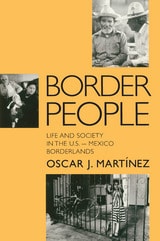
Border People
Life and Society in the U.S.-Mexico BorderlandsOscar J. Martínez
University of Arizona Press, 1994
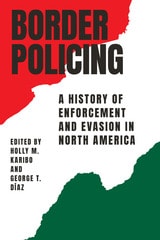
Border Policing
A History of Enforcement and Evasion in North AmericaEdited by Holly M. Karibo and George T. Díaz
University of Texas Press, 2020
An interdisciplinary group of borderlands scholars provide the first expansive comparative history of the way North American borders have been policed—and transgressed—over the past two centuries.
An extensive history examining how North American nations have tried (and often failed) to police their borders, Border Policing presents diverse scholarly perspectives on attempts to regulate people and goods at borders, as well as on the ways that individuals and communities have navigated, contested, and evaded such regulation.
The contributors explore these power dynamics though a series of case studies on subjects ranging from competing allegiances at the northeastern border during the War of 1812 to struggles over Indian sovereignty and from the effects of the Mexican Revolution to the experiences of smugglers along the Rio Grande during Prohibition. Later chapters stretch into the twenty-first century and consider immigration enforcement, drug trafficking, and representations of border policing in reality television. Together, the contributors explore the powerful ways in which federal authorities impose political agendas on borderlands and how local border residents and regions interact with, and push back against, such agendas. With its rich mix of political, legal, social, and cultural history, this collection provides new insights into the distinct realities that have shaped the international borders of North America.
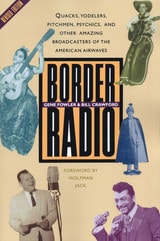
Border Radio
Quacks, Yodelers, Pitchmen, Psychics, and Other Amazing Broadcasters of the American Airwaves, Revised EditionBy Gene Fowler and Bill Crawford
University of Texas Press, 2002
Before the Internet brought the world together, there was border radio. These mega-watt "border blaster" stations, set up just across the Mexican border to evade U.S. regulations, beamed programming across the United States and as far away as South America, Japan, and Western Europe.
This book traces the eventful history of border radio from its founding in the 1930s by "goat-gland doctor" J. R. Brinkley to the glory days of Wolfman Jack in the 1960s. Along the way, it shows how border broadcasters pioneered direct sales advertising, helped prove the power of electronic media as a political tool, aided in spreading the popularity of country music, rhythm and blues, and rock, and laid the foundations for today's electronic church. The authors have revised the text to include even more first-hand information and a larger selection of photographs.
Border Rhetorics
Citizenship and Identity on the US-Mexico FrontierEdited by D. Robert DeChaine
University of Alabama Press, 2012
Undertakes a wide-ranging examination of the US-Mexico border as it functions in the rhetorical production of civic unity in the United States
A “border” is a powerful and versatile concept, variously invoked as the delineation of geographical territories, as a judicial marker of citizenship, and as an ideological trope for defining inclusion and exclusion. It has implications for both the empowerment and subjugation of any given populace. Both real and imagined, the border separates a zone of physical and symbolic exchange whose geographical, political, economic, and cultural interactions bear profoundly on popular understandings and experiences of citizenship and identity.
The border’s rhetorical significance is nowhere more apparent, nor its effects more concentrated, than on the frontier between the United States and Mexico. Often understood as an unruly boundary in dire need of containment from the ravages of criminals, illegal aliens, and other undesirable threats to the national body, this geopolitical locus exemplifies how normative constructions of “proper”; border relations reinforce definitions of US citizenship, which in turn can lead to anxiety, unrest, and violence centered around the struggle to define what it means to be a member of a national political community.
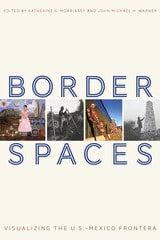
Border Spaces
Visualizing the U.S.-Mexico FronteraEdited by Katherine G. Morrissey and John-Michael H. Warner
University of Arizona Press, 2018
In Border Spaces, Katherine G. Morrissey, John-Michael H. Warner, and other essayists build on the insights of border dwellers, or fronterizos, and draw on two interrelated fields—border art history and border studies. The editors engage in a conversation on the physical landscape of the border and its representations through time, art, and architecture.
The volume is divided into two linked sections—one on border histories of built environments and the second on border art histories. Each section begins with a “conversation” essay—co-authored by two leading interdisciplinary scholars in the relevant fields—that weaves together the book’s thematic questions with the ideas and essays to follow.
Border Spaces is prompted by art and grounded in an academy ready to consider the connections between art, land, and people in a binational region.
Contributors
Maribel Alvarez
Geraldo Luján Cadava
Amelia Malagamba-Ansótegui
Mary E. Mendoza
Sarah J. Moore
Katherine G. Morrissey
Margaret Regan
Rebecca M. Schreiber
Ila N. Sheren
Samuel Truett
John-Michael H. Warner
Border Tunnels
A Media Theory of the U.S.-Mexico UndergroundJuan Llamas-Rodriguez
University of Minnesota Press, 2023
A comparative media analysis of the representation of the U.S.–Mexico border
Border tunnels at the U.S.–Mexico border are ubiquitous in news, movies, and television, yet, because they remain hidden and inaccessible, the public can encounter them only through media. Analyzing the technologies, institutional politics, narrative tropes, and aesthetic decisions that go into showing border tunnels across multiple forms of media, Juan Llamas-Rodriguez argues that we cannot properly address border issues without attending to—and fully understanding—the fraught relationship between their representation and reality.
Llamas-Rodriguez reveals that every media text about border tunnels, whether meant for entertainment, cable news, video games, or speculative design, implicitly takes a position on the politics of the border. The examples laid out in Border Tunnels will teach readers how to look differently at the border as it is commonly presented in various forms of media, from ABC’s Nightline and CNN’s Anderson Cooper 360º to reality TV, propaganda videos, and even digital effects in Hollywood action films. Llamas-Rodriguez examines how creative decisions in the production, promotion, and distribution of these media texts either emphasize or downplay issues such as border security, racial dynamics of migration, and sustainability of the borderlands.
Focusing on tunnels to show how media representations can influence all kinds of audiences—even those physically near the border—Border Tunnels helps us make sense of this pressing social issue, ultimately advancing understanding of the U.S.–Mexico border in all of its complexity and precariousness.
Border Visions
Mexican Cultures of the Southwest United StatesCarlos G. Vélez-Ibáñez
University of Arizona Press, 1996
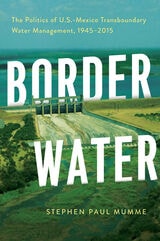
Border Water
The Politics of U.S.-Mexico Transboundary Water Management, 1945–2015Stephen Paul Mumme
University of Arizona Press, 2023
The international boundary between the United States and Mexico spans more than 1,900 miles. Along much of this international border, water is what separates one country from the other. Border Water provides a historical account of the development of governance related to transboundary and border water resources between the United States and Mexico in the last seventy years.
This work examines the phases and pivot points in the development of U.S.-Mexico border water resources and reviews the theoretical approaches and explanation that impart a better understanding of these events. Author Stephen Paul Mumme, a leading expert in water policy and border studies, describes three important periods in the chronology of transboundary water management. First, Mumme examines the 1944 Water Treaty, the establishment of the International Boundary and Water Commission (IBWC) in 1945, and early transborder politics between the two governments. Next, he describes the early 1970s and the rise of environmentalism. In this period, pollution and salinization of the Colorado River Delta come into focus. Mumme shows how new actors, now including environmentalists and municipalities, broadened and strengthened the treaty’s applications in transboundary water management. The third period of transborder interaction described covers the opening and restricting of borders due to NAFTA and then 9/11.
Border Water places transboundary water management in the frame of the larger binational relationship, offering a comprehensive history of transnational water management between the United States and Mexico. As we move into the next century of transnational water management, this important work offers critical insights into lessons learned and charts a path for the future.
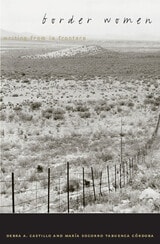
Border Women
Writing From La FronteraDebra A. Castillo
University of Minnesota Press, 2002
The first study to foreground writing by women who live at the U.S.-Mexico Border.
It is a peculiar fact that U.S.-Mexico border theory is dominated by those who write about, not from, the border. By looking at the work of women writers from both sides of the border, Debra A. Castillo and María-Socorro Tabuenca Córdoba open border studies to a truly transnational analysis while bringing questions of gender to the fore.
Border Women rethinks border theory by emphasizing women writers whose work—in Spanish, English, or a mixture of the two languages—calls into question accepted notions of border identities. These writers include those who are already well recognized internationally (Helena María Viramontes, Sheila and Sandra Ortiz Taylor, and María Novaro); those who have become part of the Chicano canon (Norma Cantú, Alicia Gaspar de Alba, and Demetria Martínez); along with some of the lesser-known, yet most exciting, women’s voices from the Mexican border (Rosario Sanmiguel, Rosina Conde, and Regina Swain).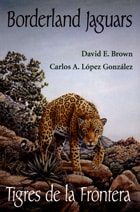
Borderland Jaguars
Tigres de la FronteraDavid E. Brown
University of Utah Press, 2001
"What is it about these borderland cats which has so fired up people? Scarcity combined with beauty explains some of the appeal. So does the animal’s legendary strength and power as befits its role as the region’s top predator. The jaguar’s neotropical origins also add to its mystique...But there is something more. That such a large cat is out there somewhere...invokes the depths of our imagination. Nor does it matter one whit that the chance of any one individual actually seeing one is almost nil. The thought of such a cat’s presence is enough in itself."—from the book
In 1996 a rancher hunting mountain lions just north of the Arizona-Mexico border treed a jaguar. Instead of reaching for a rifle, the rancher went for his camera. Later that year another party photographed a jaguar in Arizona’s Baboquivari Mountains. These compelling photographs sparked public interest in jaguars and have resulted in calls for listing jaguars as an endangered species.
Borderland Jaguars documents the human-jaguar contact in the Southwest and presents jaguar folklore from both sides of the border. But the book is primarily a natural history of the jaguar, and discusses its distribution, habitats, and hunting and breeding characteristics before concluding with a section on the status and management of borderland jaguars, and a proposed conservation plan. Written in an engaging style, and replete with a wealth of photographs, Borderland Jaguars is a wonderful introduction to this elusive resident of the Southwest.
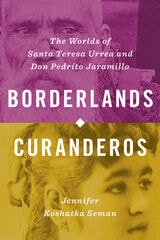
Borderlands Curanderos
The Worlds of Santa Teresa Urrea and Don Pedrito JaramilloBy Jennifer Koshatka Seman
University of Texas Press, 2021
2022 Americo Paredes Award, Center for Mexican American Studies at South Texas College
A historical exploration of the worlds and healing practices of two curanderos (faith healers) who attracted thousands, rallied their communities, and challenged institutional powers.
Santa Teresa Urrea and Don Pedrito Jaramillo were curanderos—faith healers—who, in the late nineteenth and early twentieth centuries, worked outside the realm of "professional medicine," seemingly beyond the reach of the church, state, or certified health practitioners whose profession was still in its infancy. Urrea healed Mexicans, Indigenous people, and Anglos in northwestern Mexico and cities throughout the US Southwest, while Jaramillo conducted his healing practice in the South Texas Rio Grande Valley, healing Tejanos, Mexicans, and Indigenous people there. Jennifer Koshatka Seman takes us inside the intimate worlds of both "living saints," demonstrating how their effective healing—curanderismo—made them part of the larger turn-of-the century worlds they lived in as they attracted thousands of followers, validated folk practices, and contributed to a modernizing world along the US-Mexico border.
While she healed, Urrea spoke of a Mexico in which one did not have to obey unjust laws or confess one's sins to Catholic priests. Jaramillo restored and fed drought-stricken Tejanos when the state and modern medicine could not meet their needs. Then, in 1890, Urrea was expelled from Mexico. Within a decade, Jaramillo was investigated as a fraud by the American Medical Association and the US Post Office. Borderlands Curanderos argues that it is not only state and professional institutions that build and maintain communities, nations, and national identities but also those less obviously powerful.
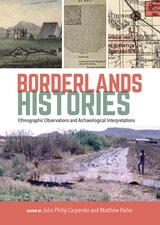
Borderlands Histories
Ethnographic Observations and Archaeological InterpretationsEdited by John Philip Carpenter and Matthew Pailes
University of Utah Press, 2021
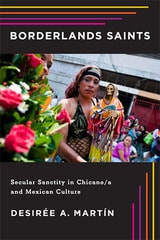
Borderlands Saints
Secular Sanctity in Chicano/a and Mexican CultureMartín, Desirée A
Rutgers University Press, 2013
Winner of the 2014 Latina/o Studies Section - LASA Outstanding Book Award
In Borderlands Saints, Desirée A. Martín examines the rise and fall of popular saints and saint-like figures in the borderlands of the United States and Mexico. Focusing specifically on Teresa Urrea (La Santa de Cabora), Pancho Villa, César Chávez, Subcomandante Marcos, and Santa Muerte, she traces the intersections of these figures, their devotees, artistic representations, and dominant institutions with an eye for the ways in which such unofficial saints mirror traditional spiritual practices and serve specific cultural needs.
Popular spirituality of this kind engages the use and exchange of relics, faith healing, pilgrimages, and spirit possession, exemplifying the contradictions between high and popular culture, human and divine, and secular and sacred. Martín focuses upon a wide range of Mexican and Chicano/a cultural works drawn from the nineteenth century to the present, covering such diverse genres as the novel, the communiqué, drama, the essay or crónica, film, and contemporary digital media. She argues that spiritual practice is often represented as narrative, while narrative—whether literary, historical, visual, or oral—may modify or even function as devotional practice.
Both Sides of the Border
A Scattering of Texas FolkloreFrancis Edward Abernethy
University of North Texas Press, 2004
Bridging National Borders in North America
Transnational and Comparative HistoriesBenjamin H. Johnson and Andrew R. Graybill, eds.
Duke University Press, 2010
The contributors engage topics such as how mixed-race groups living on the peripheries of national societies dealt with the creation of borders in the nineteenth century, how medical inspections and public-health knowledge came to be used to differentiate among bodies, and how practices designed to channel livestock and prevent cattle smuggling became the model for regulating the movement of narcotics and undocumented people. They explore the ways that U.S. immigration authorities mediated between the desires for unimpeded boundary-crossings for day laborers, tourists, casual visitors, and businessmen, and the restrictions imposed by measures such as the Chinese Exclusion Act of 1882 and the 1924 Immigration Act. Turning to the realm of culture, they analyze the history of tourist travel to Mexico from the United States and depictions of the borderlands in early-twentieth-century Hollywood movies. The concluding essay suggests that historians have obscured non-national forms of territoriality and community that preceded the creation of national borders and sometimes persisted afterwards. This collection signals new directions for continental dialogue about issues such as state-building, national expansion, territoriality, and migration.
Contributors: Dominique Brégent-Heald, Catherine Cocks, Andrea Geiger, Miguel Ángel González Quiroga, Andrew R. Graybill, Michel Hogue, Benjamin H. Johnson, S. Deborah Kang, Carolyn Podruchny, Bethel Saler, Jennifer Seltz, Rachel St. John, Lissa Wadewitz
Published in cooperation with the William P. Clements Center for Southwest Studies, Southern Methodist University.