187 books match the query 'Minorities' and 5 start with b
cover of Becoming New Yorkers: Ethnographies of the New Second Generation

Becoming New Yorkers

Ethnographies of the New Second Generation

Philip Kasinitz

Russell Sage Foundation, 2004
More than half of New Yorkers under the age of eighteen are the children of immigrants. This second generation shares with previous waves of immigrant youth the experience of attempting to reconcile their cultural heritage with American society. In Becoming New Yorkers, noted social scientists Philip Kasinitz, John Mollenkopf, and Mary Waters bring together in-depth ethnographies of some of New York's largest immigrant populations to assess the experience of the new second generation and to explore the ways in which they are changing the fabric of American culture. Becoming New Yorkers looks at the experience of specific immigrant groups, with regard to education, jobs, and community life. Exploring immigrant education, Nancy López shows how teachers' low expectations of Dominican males often translate into lower graduation rates for boys than for girls. In the labor market, Dae Young Kim finds that Koreans, young and old alike, believe the second generation should use the opportunities provided by their parents' small business success to pursue less arduous, more rewarding work than their parents. Analyzing civic life, Amy Forester profiles how the high-ranking members of a predominantly black labor union, who came of age fighting for civil rights in the 1960s, adjust to an increasingly large Caribbean membership that sees the leaders not as pioneers but as the old-guard establishment. In a revealing look at how the second-generation views itself, Sherry Ann Butterfield and Aviva Zeltzer-Zubida point out that black West Indian and Russian Jewish immigrants often must choose whether to identify themselves alongside those with similar skin color or to differentiate themselves from both native blacks and whites based on their unique heritage. Like many other groups studied here, these two groups experience race as a fluid, situational category that matters in some contexts but is irrelevant in others. As immigrants move out of gateway cities and into the rest of the country, America will increasingly look like the multicultural society vividly described in Becoming New Yorkers. This insightful work paints a vibrant picture of the experience of second generation Americans as they adjust to American society and help to shape its future.
[more]
cover of Beyond Discrimination: Racial Inequality in a Post-Racist Era

Beyond Discrimination

Racial Inequality in a Post-Racist Era

Fredrick C. Harris

Russell Sage Foundation, 2013
Nearly a half century after the civil rights movement, racial inequality remains a defining feature of American life. Along a wide range of social and economic dimensions, African Americans consistently lag behind whites. This troubling divide has persisted even as many of the obvious barriers to equality, such as state-sanctioned segregation and overt racial hostility, have markedly declined. How then can we explain the stubborn persistence of racial inequality? In Beyond Discrimination: Racial Inequality in a Post-Racist Era, a diverse group of scholars provides a more precise understanding of when and how racial inequality can occur without its most common antecedents, prejudice and discrimination. Beyond Discrimination focuses on the often hidden political, economic and historical mechanisms that now sustain the black-white divide in America. The first set of chapters examines the historical legacies that have shaped contemporary race relations. Desmond King reviews the civil rights movement to pinpoint why racial inequality became an especially salient issue in American politics. He argues that while the civil rights protests led the federal government to enforce certain political rights, such as the right to vote, addressing racial inequities in housing, education, and income never became a national priority. The volume then considers the impact of racial attitudes in American society and institutions. Phillip Goff outlines promising new collaborations between police departments and social scientists that will improve the measurement of racial bias in policing. The book finally focuses on the structural processes that perpetuate racial inequality. Devin Fergus discusses an obscure set of tax and insurance policies that, without being overtly racially drawn, penalizes residents of minority neighborhoods and imposes an economic handicap on poor blacks and Latinos. Naa Oyo Kwate shows how apparently neutral and apolitical market forces concentrate fast food and alcohol advertising in minority urban neighborhoods to the detriment of the health of the community. As it addresses the most pressing arenas of racial inequality, from education and employment to criminal justice and health, Beyond Discrimination exposes the unequal consequences of the ordinary workings of American society. It offers promising pathways for future research on the growing complexity of race relations in the United States.
[more]
cover of Body and Soul: The Black Panther Party and the Fight against Medical Discrimination

Body and Soul

The Black Panther Party and the Fight against Medical Discrimination

Alondra Nelson

University of Minnesota Press, 2013

Between its founding in 1966 and its formal end in 1980, the Black Panther Party blazed a distinctive trail in American political culture. The Black Panthers are most often remembered for their revolutionary rhetoric and militant action. Here Alondra Nelson deftly recovers an indispensable but lesser-known aspect of the organization’s broader struggle for social justice: health care. The Black Panther Party’s health activism—its network of free health clinics, its campaign to raise awareness about genetic disease, and its challenges to medical discrimination—was an expression of its founding political philosophy and also a recognition that poor blacks were both underserved by mainstream medicine and overexposed to its harms.

Drawing on extensive historical research as well as interviews with former members of the Black Panther Party, Nelson argues that the Party’s focus on health care was both practical and ideological. Building on a long tradition of medical self-sufficiency among African Americans, the Panthers’ People’s Free Medical Clinics administered basic preventive care, tested for lead poisoning and hypertension, and helped with housing, employment, and social services. In 1971, the party launched a campaign to address sickle-cell anemia. In addition to establishing screening programs and educational outreach efforts, it exposed the racial biases of the medical system that had largely ignored sickle-cell anemia, a disease that predominantly affected people of African descent.

The Black Panther Party’s understanding of health as a basic human right and its engagement with the social implications of genetics anticipated current debates about the politics of health and race. That legacy—and that struggle—continues today in the commitment of health activists and the fight for universal health care.
[more]
cover of Bridgeport's Socialist New Deal, 1915-36

Bridgeport's Socialist New Deal, 1915-36

Cecelia Bucki

University of Illinois Press, 2001

In November 1933, the Socialist Party of Bridgeport, Connecticut put slate roofer Jasper McLevy in the mayor's seat and nearly won control of the city council. Cecelia Bucki explores how labor gained first a foothold and then a stronghold in local politics as broad debates pitted previously unengaged working-class citizens against local business leaders and traditional party elites. 

In the heat of the Great Depression, the skilled union craftsmen who made up the bulk of the city's Socialist Party filled a political void created by the crumbling of mainstream parties, the disintegration of traditional modes of ethnic politics, and the city's acute fiscal crisis. In time, however, legislative measures and compromise politics blunted the progressive agenda. The local party split from the Socialist Party of America and became narrowly focused and reformist while still serving as the voice of the working class. 

A portrait of a stunning moment in American politics, Bridgeport's Socialist New Deal, 1915-36 offers a fascinating look at the volatility of politics in the early years of the Great Depression.
[more]
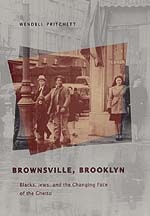
cover of Brownsville, Brooklyn: Blacks, Jews, and the Changing Face of the Ghetto

Brownsville, Brooklyn

Blacks, Jews, and the Changing Face of the Ghetto

Wendell E. Pritchett

University of Chicago Press, 2001

From its founding in the late 1800s through the 1950s, Brownsville, a section of eastern Brooklyn, was a white, predominantly Jewish, working-class neighborhood. The famous New York district nurtured the aspirations of thousands of upwardly mobile Americans while the infamous gangsters of Murder, Incorporated controlled its streets. But during the 1960s, Brownsville was stigmatized as a black and Latino ghetto, a neighborhood with one of the city's highest crime rates. Home to the largest concentration of public housing units in the city, Brownsville came to be viewed as emblematic of urban decline. And yet, at the same time, the neighborhood still supported a wide variety of grass-roots movements for social change.

The story of these two different, but in many ways similar, Brownsvilles is compellingly told in this probing new work. Focusing on the interaction of Brownsville residents with New York's political and institutional elites, Wendell Pritchett shows how the profound economic and social changes of post-World War II America affected the area. He covers a number of pivotal episodes in Brownsville's history as well: the rise and fall of interracial organizations, the struggles to deal with deteriorating housing, and the battles over local schools that culminated in the famous 1968 Teachers Strike. Far from just a cautionary tale of failed policies and institutional neglect, the story of Brownsville's transformation, he finds, is one of mutual struggle and frustrated cooperation among whites, blacks, and Latinos.

Ultimately, Brownsville, Brooklyn reminds us how working-class neighborhoods have played, and continue to play, a central role in American history. It is a story that needs to be read by all those concerned with the many challenges facing America's cities today.
[more]