Results by title
210 books match the query 'Missouri' and 7 start with b

Becoming Laura Ingalls Wilder
The Woman behind the LegendJohn E. Miller
University of Missouri Press, 2005
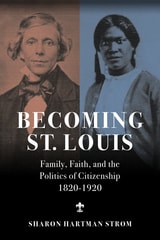
Becoming St. Louis
Family, Faith, and the Politics of Citizenship, 1820-1920Sharon Hartman Strom
University of Illinois Press, 2025
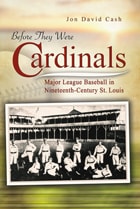
Before They Were Cardinals
Major League Baseball in Nineteenth-Century St. LouisJon David Cash
University of Missouri Press, 2002
Mark McGwire, Ozzie Smith, Lou Brock. These famous Cardinals are known by baseball fans around the world. But who and what were the predecessors of these modern-day players and their team? In Before They Were Cardinals, Jon David Cash examines the infancy of major-league baseball in St. Louis during the last quarter of the nineteenth century. His in-depth analysis begins with an exploration of the factors that motivated civic leaders to form the city's first major-league ball club. Cash delves into the economic trade rivalry between Chicago and St. Louis and examines how St. Louis's attempt to compete with Chicago led to the formation of the St. Louis Brown Stockings in 1875. He then explains why, three years later, despite its initial success, St. Louis baseball quickly vanished from the big-league map.
St. Louis baseball was revived with the arrival of German immigrant saloon owner Chris Von der Ahe. Cash explains how Von der Ahe, originally only interested in concession rights, purchased a controlling interest in the Brown Stockings. His riveting account follows the team after Von der Ahe's purchase, from the formation of the American Association, to its merger in 1891 with the rival National League. He chronicles Von der Ahe's monetary downturn, and the club's decline as well, following the merger.
Before They Were Cardinals provides vivid portraits of the ball players and the participants involved in the baseball war between the National League and the American Association. Cash points out significant differences, such as Sunday games and beer sales, between the two Leagues. In addition, excerpts taken from Chicago and St. Louis newspapers make the on-field contests and off-field rivalries come alive. Cash concludes this lively historical narrative with an appendix that traces the issue of race in baseball during this period.
The excesses of modern-day baseball—players jumping contracts or holding out for more money, gambling on games, and drinking to excess; owners stealing players and breaking agreements—were all present in the nineteenth-century sport. Players were seen then, as they are now, as an embodiment of their community. This timely treatment of a fascinating period in St. Louis baseball history will appeal to both baseball aficionados and those who want to understand the history of baseball itself.

Beneath Missouri Skies
Pat Metheny in Kansas City, 1964-1972Carolyn Glenn Brewer
University of North Texas Press, 2021
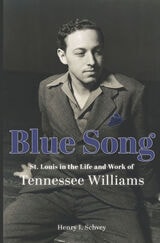
Blue Song
St. Louis in the Life and Work of Tennessee WilliamsHenry I. Schvey
University of Missouri Press, 2022
The question of this paradox lies at the heart of this book, an attempt not so much to correct the record about Williams’s well-chronicled dislike of the city, but rather to reveal how the city was absolutely indispensable to his formation and development both as a person and artist. Unlike the prevailing scholarly narrative that suggests that Williams discovered himself artistically and sexually in the deep South and New Orleans, Blue Song reveals that Williams remained emotionally tethered to St. Louis for a host of reasons for the rest of his life.
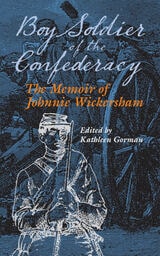
Boy Soldier of the Confederacy
The Memoir of Johnnie WickershamEdited by Kathleen Gorman
Southern Illinois University Press, 2006
Johnnie Wickersham was fourteen when he ran away from his Missouri home to fight for the Confederacy. Fifty years after the war, he wrote his memoir at the request of family and friends and distributed it privately in 1915. Boy Soldier of the Confederacy: The Memoir of Johnnie Wickersham offers not only a rare look into the Civil War through the eyes of a child but also a coming-of-age story.
Edited by Kathleen Gorman, the volume presents a new introduction and annotations that explain how the war was glorified over time, the harsh realities suppressed in the nation’s collective memory. Gorman describes a man who nostalgically remembers the boy he once was. She maintains that the older Wickersham who put pen to paper decades later likely glorified and embellished the experience, accepting a polished interpretation of his own past.
Wickersham recounts that during his first skirmish he was "wild with the ecstasy of it all" and notes that he was "too young to appreciate the danger." The memoir traces his participation in an October 1861 Confederate charge against Springfield, Missouri; his fight at the battle of Pea Ridge in March 1862; his stay at a plantation he calls Fairyland; and the battle of Corinth.
The volume details Wickersham’s assignment as an orderly for General Sterling Price, his capture at Vicksburg in 1863, his parole, and later his service with General John Bell Hood for the 1864 fighting around Atlanta. Wickersham also describes the Confederate surrender in New Orleans, the reconciliation of the North and the South, and his own return and reunification with his family.
While Gorman’s incisive introduction and annotations allow readers to consider how memories can be affected by the passage of time, Wickersham’s boy-turned-soldier tale offers readers an engaging narrative, detailing the perceptions of a child on the cusp of adulthood during a turbulent period in our nation’s history.
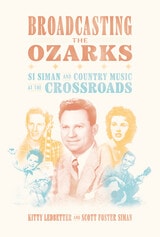
Broadcasting the Ozarks
Si Siman and Country Music at the CrossroadsKitty Ledbetter
University of Arkansas Press, 2024
“It’s good to see Si Siman and the Ozark Jubilee get their due in Broadcasting the Ozarks.”
—Willie Nelson
Broadcasting the Ozarks explores the vibrant country music scene that emerged in Springfield, Missouri, in the 1930s and thrived for half a century. Central to this history is the Ozark Jubilee (1955–60), the first regularly broadcast live country music show on network television. Dubbed the “king of the televised barn dances,” the show introduced the Ozarks to viewers across America and put Springfield in the running with Nashville for dominance of the country music industry—with the Jubilee’s producer, Si Siman, at the helm.
Siman’s life story is almost as remarkable as the show he produced. He was booking Tommy Dorsey, Ella Fitzgerald, and Glenn Miller during the mid-1930s while still a high school student and produced nationally syndicated country music radio shows in the decades that followed. Siman was a promotional genius with an ear for talent, a persuasive gift for gab, and the energy and persistence to make things happen for many future Country Music Hall of Famers, including Chet Atkins, Porter Wagoner, the Browns, and Brenda Lee. Following the Jubilee’s five-year run, Siman had a hand in some of the greatest hits of the twentieth century as a music publisher, collaborating with such songwriters as rockabilly legend and fellow Springfieldian Ronnie Self, who wrote Brenda Lee’s signature hit, “I’m Sorry,” and Wayne Carson, who wrote Willie Nelson’s “Always on My Mind.” Although Siman had numerous opportunities to find success in bigger cities, he chose to do it all from his hometown in the Ozarks.