Results by title
92 books match the query 'Multiculturalism' and 5 start with b
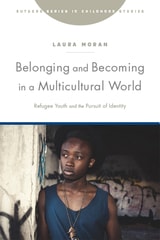
Belonging and Becoming in a Multicultural World
Refugee Youth and the Pursuit of IdentityLaura Moran
Rutgers University Press, 2020
Children and youth are front and center in the context of global mass migration and the social discord around questions of multicultural inclusion that it often ignites. Imprecise portrayals of their inclination to either embrace diversity or to incite racism are used to exemplify both the success and failures of the multicultural project. In the context of young people’s heightened politicization, Open Access volume Belonging and Becoming in a Multicultural World shifts the focus to a group of Sudanese and Karen refugee youth’s own insights, explanations and practices as they attempt to create a sense of identity and belonging in Australia. These young people engage race, racism and national identity in creative and unexpected ways as they are confronted with the social and moral implications of multiculturalism.
Download open access ebook.
Download open access ebook.
[more]
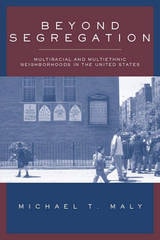
Beyond Segregation
Multiracial And Multiethnic NeighborhoodsMichael T. Maly
Temple University Press, 2005
At a time when cities appear to be fragmenting mosaics of ethnic enclaves, it is reassuring to know there are still stable multicultural neighborhoods. Beyond Segregation offers a tour of some of America's best known multiethnic neighborhoods: Uptown in Chicago, Jackson Heights (Queens), and San Antonio-Fruitvale in Oakland. Readers will learn the history of the neighborhoods and develop an understanding of the people that reside in them, the reasons they stay, and the work it takes to maintain each neighborhood as an affordable, integrated place to live.
[more]

Beyond White Picket Fences
Evolution of an American TownCatherine Simpson Bueker
Russell Sage Foundation, 2025
Wellesley, Massachusetts has long been considered the archetypal New England WASP community. However, as new groups moved in over the 20th and 21st centuries, Wellesley has undergone slow but consistent change, transforming into a more demographically diverse and multilayered town. In Beyond White Picket Fences, sociologist Catherine Simpson Bueker explores how Wellesley has been shaped—and continues to be shaped—by its diversity.
Drawing on interviews, archival data, and participant observations, Bueker examines how Italian, Jewish, and Chinese newcomers influenced and were influenced by the established Wellesley community. She examines the ways in which immigrant and ethnic groups assimilate, retain their cultural backgrounds, and respond to discrimination, sometimes simultaneously, and, in doing so, alter the mainstream. Some new residents responded to Wellesley by assimilating to it. They developed relationships with long-term resident neighbors, volunteered in their children’s schools, and ran for elected positions. In adapting themselves to their new community, however, they also influenced it by virtue of their distinct cultural backgrounds.
Other new residents worked to preserve their cultures by establishing ethnic-specific organizations, lobbying to have new holidays incorporated into the calendar, and hewing to their own ethnic culinary traditions. Their efforts also influenced the established community. When newcomers attempted to retain their culture by requesting ethnic-specific food items be stocked at the local grocery store, opening ethic restaurants, or renting space for a new organization, for example, they impacted the established community. New individuals and groups also responded to experiences of hostility and discrimination. Italian residents fought against attempts at school redistricting targeting them in the 1930s, Jewish residents pushed back against housing discrimination in the 1950s and 1960s, and Chinese residents responded to anti-Asian incidents in the wake of the COVID-19 pandemic in 2020. These groups had to engage with the larger community to rectify these injustices. Some of the changes in Wellesley have come about with little recognition or response, others have been met with resistance and anger. Whether the changes are subtle or obvious and whether new groups are embraced or resisted, the whole town is altered in an ongoing process as new groups continue to move to and settle in Wellesley.
Beyond White Picket Fences is a timely and compelling examination of the ways newcomers become part of and shape American communities.
[more]
Bridging Liberalism and Multiculturalism in American Education
Rob Reich
University of Chicago Press, 2002
What should the civic purposes of education be in a liberal and diverse society? Is there a tension between cultivating citizenship and respecting social diversity? What are the boundaries of parental and state authority over education?
Linking political theory with educational history and policy, Rob Reich offers provocative new answers to these questions. He develops a liberal theory of multicultural education in which the leading goal is the cultivation of individual autonomy in children. Reich draws out the policy implications of his theory through one of the first sustained considerations of homeschooling in American education. He also evaluates three of the most prominent trends in contemporary school reform—vouchers, charter schools, and the small school movement—and provides pedagogical recommendations that sharply challenge the reigning wisdom of many multicultural educators.
Written in clear and accessible language, this book will be of interest to political theorists, philosophers, educators, educational policymakers, and teachers.
[more]
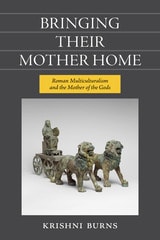
Bringing Their Mother Home
Roman Multiculturalism and the Mother of the GodsKrishni Burns
University of Michigan Press, 2025
Bringing Their Mother Home examines the worship of the Greco-Phrygian goddess Cybele, known as the Magna Mater in Rome, to understand the ways that the mid- to late-Roman Republic constructed and performed a multicultural, multiethnic identity. The goddess, originally worshiped in ancient Turkey, was brought by the Romans to their city in 204 BCE and renamed the Magna Mater (the Great Mother). Previous scholarship contended that the Romans feared and hated the goddess and her followers because they were foreign and gender nonconforming, but author Krishni Burns argues that the Romans embraced the Magna Mater and her genderfluid followers as they created a space for multiculturalism at a time when Rome was expanding rapidly across the Mediterranean. By importing the cult and ritually performing the Magna Mater's blended Phrygian and Roman identity, the Roman state was able to ease the process of incorporating the eastern Mediterranean kingdoms into its hegemony.
Drawing on historical, literary, and archaeological evidence, Bringing Their Mother Home reevaluates the semiotics and practices of the Magna Mater cult as a way to perform the multicultural Roman identity and explores the political and military climate of the Mediterranean leading up to the cult's adoption in 204 BCE.
Drawing on historical, literary, and archaeological evidence, Bringing Their Mother Home reevaluates the semiotics and practices of the Magna Mater cult as a way to perform the multicultural Roman identity and explores the political and military climate of the Mediterranean leading up to the cult's adoption in 204 BCE.
[more]