Results by title
344 books match the query 'Nationalism' and 18 start with b

Basque Nationalism and the Spanish State
Andre Lecours
University of Nevada Press, 2016
An examination of Basque nationalism from a historical perspective. Basque nationalism has been extensively examined from the perspectives of Basque culture and internal conditions in the Basque Country, but André Lecours is among the first to demonstrate how Basque nationalism was shaped by the many forms and historical phases of the Spanish state. His discussion employs one of the most debated approaches in the social sciences—historical institutionalism—and it includes an up-to-date examination of the circumstances for, and consequences of, recent events such as ETA's announcement in 2006 of a permanent cease-fire. Lecours also analyzes other aspects of Basque nationalism, including the international relations of the Basque Autonomous Government, as well as the responses of the contemporary Spanish state and how it deploys its own brand of nationalism. Finally, the book offers a comparative discussion of Basque, Catalan, Scottish, Flemish, and Quebecois nationalist movements, suggesting that nationalism in the Basque Country, despite the historical presence of violence, is in many ways similar to nationalism in other industrialized democracies. Basque Nationalism and the Spanish State is an original and provocative discussion that is essential reading for anyone interested in the Basques or in the development of modern nationalist movements.
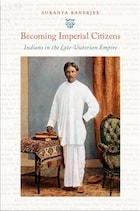
Becoming Imperial Citizens
Indians in the Late-Victorian EmpireSukanya Banerjee
Duke University Press, 2010
Interpreting autobiography, fiction, election speeches, economic analyses, parliamentary documents, and government correspondence, Banerjee foregrounds the narrative logic sustaining the unprecedented claims to citizenship advanced by racialized colonial subjects. She focuses on the writings of figures such as Dadabhai Naoroji, known as the first Asian to be elected to the British Parliament; Surendranath Banerjea, among the earliest Indians admitted into the Indian Civil Service; Cornelia Sorabji, the first woman to study law in Oxford and the first woman lawyer in India; and Mohandas K. Gandhi, who lived in South Africa for nearly twenty-one years prior to his involvement in Indian nationalist politics. In her analysis of the unexpected registers through which they carved out a language of formal equality, Banerjee draws extensively from discussions in both late-colonial India and Victorian Britain on political economy, indentured labor, female professionalism, and bureaucratic modernity. Signaling the centrality of these discussions to the formulations of citizenship, Becoming Imperial Citizens discloses a vibrant transnational space of political action and subjecthood, and it sheds new light on the complex mutations of the category of citizenship.
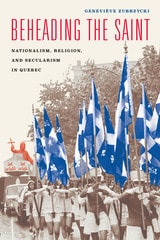
Beheading the Saint
Nationalism, Religion, and Secularism in QuebecGeneviève Zubrzycki
University of Chicago Press, 2016
In Beheading the Saint, Geneviève Zubrzycki studies that transformation through a close investigation of the annual Feast of St. John the Baptist of June 24. The celebrations of that national holiday, she shows, provided a venue for a public contesting of the dominant ethno-Catholic conception of French Canadian identity and, via the violent rejection of Catholic symbols, the articulation of a new, secular Québécois identity. From there, Zubrzycki extends her analysis to the present, looking at the role of Québécois identity in recent debates over immigration, the place of religious symbols in the public sphere, and the politics of cultural heritage—issues that also offer insight on similar debates elsewhere in the world.
Belarusian Nation-Building in Times of War and Revolution
Lizaveta Kasmach
Central European University Press, 2023
The proclamation of Belarusian independence on March 25, 1918, and the rival establishment of the Soviet Belarusian state on January 1, 1919, created two distinct and mutually exclusive national myths, which continue to define contemporary Belarusian society. This book examines the processes that resulted in this dual resolution in the context of World War I and the subsequent Russian Revolutions.
Based on original archival material, Lizaveta Kasmach scrutinizes the development of competing concepts of Belarusian nationhood in the context of rivaling national aspirations and imperial policies. The analysis convincingly demonstrates the divisions within the nationalist movement, both politically between the moderates and socialists, and geographically between German-occupied territory with Vilna as a center versus Russian-controlled territory around Minsk. Besides the case study of Belarusian nation-building efforts, the book is a contribution to the study of the First World War in East Central Europe, approaching the war and its aftermath as a mobilizational moment in the region.
Between Frontiers
Nation and Identity in a Southeast Asian BorderlandNoboru Ishikawa
Ohio University Press, 2010
Noboru Ishikawa grounds his discussion of border zones in materials gathered during two years of archival research and fieldwork relating to the boundary that separates Malaysian from Indonesian territory in western Borneo. His book considers how the state maintains its national space and how people strategically situate themselves by their community, nation, and ethnic group designated as national territory. Examining these issues in the context of concrete circumstances, where a village boundary coincides with a national border, allows him to delineate the dialectical relationship between nation-state and borderland society both as history and as process. Scholars across the humanities and social sciences will learn from this masterful linking of history and ethnography, and of macro and micro perspectives.

Between the Brown and the Red
Nationalism, Catholicism, and Communism in Twentieth-Century Poland—The Politics of Boleslaw PiaseckiMikolaj Stanislaw Kunicki
Ohio University Press, 2012
Between the Brown and the Red captures the multifaceted nature of church-state relations in communist Poland, relations that oscillated between mutual confrontation, accommodation, and dialogue. Ironically, under communism the bond between religion and nation in Poland grew stronger. This happened in spite of the fact that the government deployed nationalist themes in order to portray itself as more Polish than communist. Between the Brown and the Red also introduces one of the most fascinating figures in the history of twentieth-century Poland and the communist world.
In this study of the complex relationships between nationalism, communism, authoritarianism, and religion in twentieth-century Poland, Mikołaj Kunicki shows the ways in which the country’s communist rulers tried to adapt communism to local traditions, particularly ethnocentric nationalism and Catholicism. Focusing on the political career of Bolesław Piasecki, a Polish nationalist politician who began his surprising but illuminating journey as a fascist before the Second World War and ended it as a procommunist activist, Kunicki demonstrates that Polish communists reinforced an ethnocentric self-definition of Polishness and—as Piasecki’s case demonstrates—thereby prolonged the existence of Poland’s nationalist Right.
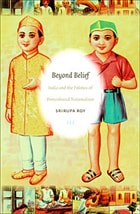
Beyond Belief
India and the Politics of Postcolonial NationalismSrirupa Roy
Duke University Press, 2007
Roy considers several different ways that identification with the Indian nation-state was produced and consolidated during the 1950s and 1960s. She looks at how the Films Division of India, a state-owned documentary and newsreel production agency, allowed national audiences to “see the state”; how the “unity in diversity” formation of nationhood was reinforced in commemorations of India’s annual Republic Day; and how the government produced a policy discourse claiming that scientific development was the ultimate national need and the most pressing priority for the state to address. She also analyzes the fate of the steel towns—industrial townships built to house the workers of nationalized steel plants—which were upheld as the exemplary national spaces of the new India. By prioritizing the role of actual manifestations of and encounters with the state, Roy moves beyond theories of nationalism and state formation based on collective belief.

Beyond Flesh
Queer Masculinities and Nationalism in Israeli CinemaYosef, Raz
Rutgers University Press, 2004
Zionism was not only a political and ideological program but also a sexual one. The liberation of Jews and creation of a new nation were closely intertwined with a longing for the redemption and normalization of the Jewish male body. That body had to be rescued from anti-Semitic, scientific-medical discourse associating it with disease, madness, degeneracy, sexual perversity, and femininityeven with homosexuality. The Zionist movement was intent on transforming the very nature of European Jewish masculinity as it had existed in the diaspora. Zionist/Israeli films expressed this desire through visual and narrative tropes, enforcing the image of the hypermasculine, colonialist-explorer and militaristic nation-builder, an image dependent on the homophobic repudiation of the "feminine" within men.
The creation of a new heterosexual Jewish man was further intertwined with attitudes on the breeding of children, bodily hygiene, racial improvement, and Orientalist perspectiveswhich associated the East, and especially Eastern bodies, with unsanitary practices, plagues, disease, and sexual perversity. By stigmatizing Israels Eastern populations as agents of death and degeneration, Zionism created internal biologized enemies, against whom the Zionist society had to defend itself. In the name of securing the life and reproduction of the new Ashkenazi Jewry, Israeli society discriminated against both its internal enemies, the Palestinians, and its own citizens, the Mizrahim (Oriental Jews).
Yosefs critique of the construction of masculinities and queerness in Israeli cinema and culture also serves as a model for the investigation of the role of male sexuality within national culture in general.
Beyond Mosque, Church, and State
Alternative Narratives of the Nation in the BalkansYana Hashamova
Central European University Press, 2016
Beyond Populism
Angry Politics and the Twilight of NeoliberalismJeff Maskovsky
West Virginia University Press, 2020
Across the world, politics is lurching to the right, ethnic nationalism is on the rise, and people are furious. Beyond Populism critically examines the new destructive projects of resentment that have surfaced in the political spaces opened by neoliberalism’s failures, particularly since the financial collapse of 2008. It contextualizes the recent history of the Global North—notably Brexit and the Trump election—among wider comparative politics, with chapters on India, Colombia, Eastern Europe, the Philippines, Ethiopia, and other parts of the globe marked by populist insurgencies.
The essays collected here explore how global, regional, national, and local structures of power produce angry politics. They go beyond conventional academic debates about populism to explore the different kinds of anger that shape politics today and to make legible the multiplicity of forces, antagonisms, conflicts, and emergent political forms that mark the present. By examining the politics of anger, Beyond Populism also considers what is needed to transform anger from a reactionary to an emancipatory force.

Blacks, Coloureds and National Identity in Nineteenth-century Latin America
Edited by Nancy Priscilla Naro
University of London Press, 2003
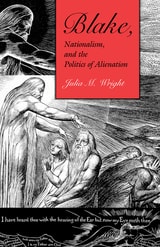
Blake, Nationalism, and the Politics of Alienation
Julia M. Wright
Ohio University Press, 2027
William Blake’s reputation as a staunch individualist is based in large measure on his repeated attacks on institutions and belief systems that constrain the individual’s imagination. Blake, however, rarely represents isolation positively, suggesting that the individual’s absolute freedom from communal pressures is not the ideal. Instead, as Julia Wright argues in her award-winning study Blake, Nationalism, and the Politics of Alienation, Blake’s concern lies with the kind of community that is being established. Moreover, writing at the moment of the emergence of modern nationalism, Blake reveals a concern with the national community in particular.
Beginning with a discussion of the priority of national narrative in late-eighteenth-century art theory and antiquarianism, Blake, Nationalism, and the Politics of Alienation traces its relevance in Blake’s printed works, from The Poetical Sketches and the Lambeth Prophecies to The Laocoön. Professor Wright then turns to Europe, America, and Visions of the Daughters of Albion, focusing on Blake’s portrayals of particular characters’ alienation from the groups and ideologies represented in the texts. The book closes by arguing that Blake’s major printed works, Milton and Jerusalem, are explicit and extensive engagements with the question of nation—and empire.
Although nationalism existed in various forms during the Romantic period, Blake’s contemporaries generally assumed that nations should progress continuously, producing a clear narrative line from an auspicious origin to the perfect fulfillment of that promise. Wright argues that these mutually determining constructs of national character and national narrative inform Blake’s handling of the problem of the individual-within-a-community.

Blood and Culture
Youth, Right-Wing Extremism, and National Belonging in Contemporary GermanyCynthia Miller-Idriss
Duke University Press, 2009
Miller-Idriss describes a new understanding of national belonging emerging among young Germans—one in which cultural assimilation takes precedence over blood or ethnic heritage. Moreover, she argues that teachers’ well-intentioned, state-sanctioned efforts to counter nationalist pride often create a backlash, making radical right-wing groups more appealing to their students. Miller-Idriss argues that the state’s efforts to shape national identity are always tempered and potentially transformed as each generation reacts to the official conception of what the nation “ought” to be.
Blood and Homeland
Eugenics and Racial Nationalism in Central and Southeast Europe, 1900-1940Paul J. Weindling
Central European University Press, 2007

Blood, Ink, and Culture
Miseries and Splendors of the Post-Mexican ConditionRoger Bartra
Duke University Press, 2002
Written with verve over a period of twenty years, these essays—most translated into English here for the first time—suggest why Bartra has become one of Latin America’s leading public intellectuals. The essays cover a broad range of topics, from the canonical forms of Mexican culture to the meaning of postnational identity in a globalizing age, from the repercussions of the 1994 Zapatista uprising to the 2000 election of Vicente Fox and the end of the PRI’s seven-decade rule. Across this range of topics, Bartra imparts astute insights into a critical period of transition in Mexican history, stressing throughout the importance of democracy, the complexity of identity, and the vibrancy of the Left. In Blood, Ink, and Culture, he provides a stimulating inside look at political and intellectual life in the southern reaches of North America.
Borders of Belief
Religious Nationalism and the Formation of Identity in Ireland and TurkeyGregory J. Goalwin
Rutgers University Press, 2022

Building Nineteenth-Century Latin America
Re-Rooted Cultures, Identities, and NationsWilliam Garrett Acree
Vanderbilt University Press, 2009

Burek
A Culinary MetaphorJernej Mlekuz
Central European University Press, 2015