Results by title
51 books match the query 'Nicaragua' and 2 start with b
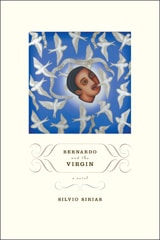
Bernardo and the Virgin
A NovelSilvio Sirias
Northwestern University Press, 2007
Silvio Sirias' sweeping novel tells many stories: that of a humble man touched by the transcendent; that same man as a devout boy denied the priesthood because of poverty; and those in his orbit, past and present. It is also the stormy epic of Nicaragua through the long Somoza years to the Sandinista revolution. Sirias' beautiful language mixes English with Spanish and details of dusty village life with wondrous images of Catholic mysticism. His portrayal of the rich recent past of Central America resonates with the experiences of both the natives and the thriving communities of Nicaraguans, Salvadorans, and others putting down roots in the United States.
Beyond The Barricades
Nicaragua and the Struggle for the Sandinista Press, 1979–1998Adam Jones
Ohio University Press, 2002
Throughout the 1980s, Barricada, the official daily newspaper of the ruling Sandinista Front, played the standard role of a party organ, seeking the mobilize the Nicaraguan public to support the revolutionary agenda. Beyond the Barricades, however, reveals a story that is both more intriguing and much more complex. Even during this period of sweeping transformation and outside military siege, another, more professional agenda also motivated Barricada’s journalists and editors.
When the Sandinistas unexpectedly fell from power in the 1990 elections, Barricada gained a substantial degree of autonomy that allowed it to explore a more balanced and nuanced journalism “in the national interest.” This new orientation, however, ran afoul of more orthodox party leaders, who gradually gained the upper hand in the bitter internal struggle that wracked the Sandinista Front in the early 1990s. The paper closed its doors in January 1998.
Adam Jones’s outstanding study offers an unprecedented behin-the-scenes looks at Barricada’s two decades of evolution and dissolution. It also presents an intimate portrait of a key revolutionary institution and the memorable individuals who were a part of it.