Results by title
74 books match the query 'Oral history' and 7 start with b
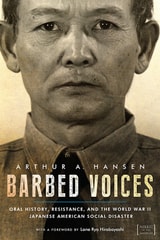
Barbed Voices
Oral History, Resistance, and the World War II Japanese American Social DisasterArthur A. Hansen
University Press of Colorado, 2021
Barbed Voices is an engaging anthology of the most significant published articles written by the well-known and highly respected historian of Japanese American history Arthur Hansen, updated and annotated for contemporary context. Featuring selected inmates and camp groups who spearheaded resistance movements in the ten War Relocation Authority–administered compounds in the United States during World War II, Hansen’s writing provides a basis for understanding why, when, where, and how some of the 120,000 incarcerated Japanese Americans opposed the threats to themselves, their families, their reference groups, and their racial-ethnic community.
What historically was benignly termed the “Japanese American Evacuation” was in fact a social disaster, which, unlike a natural disaster, is man-made. Examining the emotional implications of targeted systemic incarceration, Hansen highlights the psychological traumas that transformed Japanese American identity and culture for generations after the war. While many accounts of Japanese American incarceration rely heavily on government documents and analytic texts, Hansen’s focus on first-person Nikkei testimonies gathered through powerful oral history interviews gives expression to the resistance to this social disaster.
Analyzing the evolving historical memory of the effects of wartime incarceration, Barbed Voices presents a new scholarly framework of enduring value. It will be of interest to students and scholars of oral history, US history, public history, and ethnic studies as well as the general public interested in the WWII experience and civil rights.
[more]
Battle of Valle Giulia
Oral History and the Art of DialogueAlessandro Portelli
University of Wisconsin Press, 1997
History, we are often taught, is driven by vast social, political, and economic forces. But each political event, each war, each clash in the streets or at the picket lines, is experienced by individuals. It is this profound bond between public history and personal struggle, Alessandro Portelli contends, that gives oral history its significance and its power.
In The Battle of Valle Giulia—the title comes from an Italian student protest of the 1960s—Portelli reflects on how to connect personal memories with history, how to fittingly collect and represent the complexity of memory. Crossing cultures, classes, and generations, he records the private and singular experiences of Italian steelworkers and Kentucky coal miners, veterans and refugees of World War II, soldiers who fought in Vietnam, Italian resistance fighters and Nazis, and members of student movements from Berkeley to Rome. By listening to those whom others presume are "without historical memory"—such as youthful protesters, or the rural Tuscan women who saw every father, son, and brother killed by Nazi soldiers—Portelli clarifies the process by which narratives come into being as oral history, and he illustrates the differences and distances between story-telling and history-telling.
Portelli's articulate discussion of dialogue, representation, narrative and genre link historical analysis with literary and linguistic theory and with the concerns of contemporary anthropology.
[more]
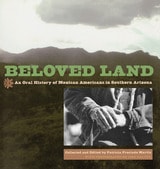
Beloved Land
An Oral History of Mexican Americans in Southern ArizonaCollected and Edited by Patricia Preciado Martin, with Photographs by José Galvez
University of Arizona Press, 2004
Doña Ramona Benítez Franco was born in 1902 on her parents' Arizona ranch and celebrated her hundredth birthday with family and friends in 2002, still living in her family's century-old adobe house. Doña Ramona witnessed many changes in the intervening years, but her memories of the land and customs she knew as a child are indelible.
For Doña Ramona as well as for countless generations of Mexican Americans, memories of rural life recall la querida tierra, the beloved land. Through good times and bad, the land provided sustenance. Today, many of those homesteads and ranches have succumbed to bulldozers that have brought housing projects and strip malls in their wake.
Now a writer and a photographer who have long been intimately involved with Arizona's Hispanic community have preserved the voices and images of men and women who are descendants of pioneer ranching and farming families in southern Arizona. Ranging from Tucson to the San Rafael Valley and points in between, this book documents the contributions of Mexican American families whose history and culture are intertwined with the lifestyle of the contemporary Southwest. These were hardy, self-reliant pioneers who settled in what were then remote areas. Their stories tell of love affairs with the land and a way of life that is rapidly disappearing.
Through oral histories and a captivating array of historic and contemporary photos, Beloved Land records a vibrant and resourceful way of life that has contributed so much to the region. Individuals like Doña Ramona tell stories about rural life, farming, ranching, and vaquero culture that enrich our knowledge of settlement, culinary practices, religious traditions, arts, and education of Hispanic settlers of Arizona. They talk frankly about how the land changed hands—not always by legal means—and tell how they feel about modern society and the disappearance of the rural lifestyle.
"Our ranch homes and fields, our chapels and corrals may have been bulldozed by progress or renovated into spas and guest ranches that never whisper our ancestors' names," writes Patricia Preciado Martin. "The story of our beautiful and resilient heritage will never be silenced . . . as long as we always remember to run our fingers through the nourishing and nurturing soil of our history." Beloved Land works that soil as it revitalizes that history for the generations to come.
[more]
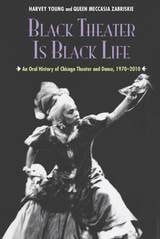
Black Theater Is Black Life
An Oral History of Chicago Theater and Dance, 1970-2010Harvey Young and Queen Meccasia Zabriskie
Northwestern University Press, 2013
Black Theater Is Black Life fills a critical gap in the history of African American culture in Chicago. Through interviews with prominent producers, directors, choreographers, designers, dancers, and actors, Young and Zabriskie create a portrait of a diverse, dynamic artistic community between 1970 and 2010. They frame this history with helpful guides, including a chronology of key events, a glossary of names, and an appendix of leading performing arts institutions in Chicago.
[more]
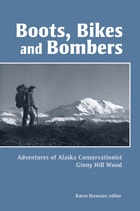
Boots, Bikes, and Bombers
Adventures of Alaska Conservationist Ginny Hill WoodEdited by Karen Brewster
University of Alaska Press, 2012
Boots, Bikes, and Bombers presents an intimate oral history of Ginny Hill Wood, a pioneering Alaska conservationist and outdoorswoman. Born in Washington in 1917, Wood served as a Women’s Airforce Service Pilot in World War II, and flew a military surplus airplane to Alaska in 1946. Settling in Fairbanks, she went on to co-found Camp Denali, Alaska’s first wilderness ecotourism lodge; helped start the Alaska Conservation Society, the state’s first environmental organization; and applied her love of the outdoors to her work as a backcountry guide and an advocate for trail construction and preservation.
An innovative and collaborative life history, Boots, Bikes, and Bombers, incorporates the story of friendship between the author and subject. The resulting book is a valuable contribution to the history of Alaska as well as a testament to the joys of living a life full of passion and adventure.
[more]
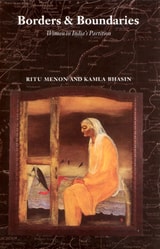
Borders and Boundaries
How Women Experienced the Partition of IndiaRitu Menon
Rutgers University Press, 1998
As an event of shattering consequence, the Partition of India remains significant today. While Partition sounds smooth on paper, the reality was horrific. More than eight million people migrated and one million died in the process. The forced migration, violence between Hindus and Muslims, and mass widowhood were unprecedented and well-documented. What was less obvious but equally real was that millions of people had to realign their identities, uncertain about who they thought they were. The rending of the social and emotional fabric that took place in 1947 is still far from mended.
While there are plenty of official accounts of Partition, there are few social histories and no feminist histories. Borders and Boundaries changes that, providing first-hand accounts and memoirs, juxtaposed alongside official government accounts. The authors make women not only visible but central. They explore what country, nation, and religious identity meant for women, and they address the question of the nation-state and the gendering of citizenship.
In the largest ever peace-time mass migration of people, violence against women became the norm. Thousands of women committed suicide or were done to death by their own kinsmen. Nearly 100,000 women were "abducted" during the migration. A young woman might have been separated from her family when a convoy was ambushed, abducted by people of another religion, forced to convert, and forced into marriage or cohabitation. After bearing a child, she would be offered the opportunity to return only if she left her child behind and if she could face shame in her natal community. These stories do not paint their subjects as victims. Theirs are the stories of battles over gender, the body, sexuality, and nationalism-stories of women fighting for identity.
[more]
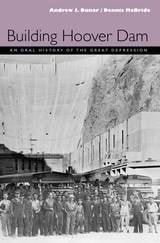
Building Hoover Dam
An Oral History Of The Great DepressionAndrew J. Dunar
University of Nevada Press, 2001
Andrew J. Dunar and Dennis McBride skillfully interweave eyewitness accounts of the building of Hoover Dam. These stories create the richest existing portrait of the building of Hoover Dam and its tremendous effect on the lives of those involved in its creation: the gritty, sometimes grisly realities of living in cardboard boxes and tents during several of the hottest Southern Nevada summers on record; the fearsome carbon monoxide deaths of tunnel builders who, it was claimed, had died of "pneumonia"; the uproarious life of nearby Las Vegas versus the tightly controlled existence of the workers in the built-overnight confines of Boulder City; and of course the astounding accomplishment of building the Dam itself and completing the task not only early but under budget!
[more]