Results by title
65 books match the query 'Oral tradition' and 2 start with b
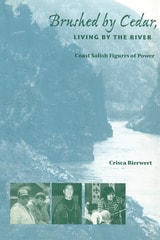
Brushed by Cedar, Living by the River
Coast Salish Figures of PowerCrisca Bierwert
University of Arizona Press, 1999
A brilliant, experimental ethnography, Brushed by Cedar is destined to change the way anthropologists write about the people they befriend.
Crisca Bierwert has created a fresh poststructural ethnography that offers new insights into Coast Salish cultures. Arguing against the existence of a master narrative, she presents her understanding of these Native American peoples of Washington state and British Columbia, Canada, through poetic bricolage, offering the reader a pastiche of rich cultural images. Bierwert employs postmodern literary and social analyses to examine many aspects of Salish culture: legends and their storytellers; domestic violence; longhouse ceremonies; the importance and power of place; and disputes over fishing rights. Her reflections overlap as a dialogue would, weaving throughout the book significant threads of Salish knowledge and creating a nonauthoritative text that nonetheless speaks knowingly.
This book represents the future of contemporary anthropology. Unlike traditional ethnography, it makes no attempt to portray a complete picture of the Coast Salish. Instead, Bierwert utilizes a critical and diffuse approach that defies colonial, syncretic, and hegemonic structures and applies advanced literary theory to the creation of ethnography.
Brushed by Cedar is an important guideline for anyone who writes about other cultures and will be expecially useful to classes in the methodology and history of ethnography, as well as to scholars specializing in Native American studies or oral literatures.
[more]
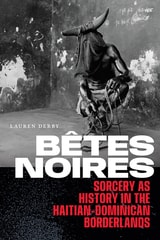
Bêtes Noires
Sorcery as History in the Haitian-Dominican BorderlandsLauren Derby
Duke University Press, 2025
In Bêtes Noires, Lauren Derby explores storytelling traditions among the people of Haiti and the Dominican Republic, focusing on shape-shifting spirit demons called baka/bacá. Drawing on interviews with and life stories of residents in a central Haitian-Dominican frontier town, Derby contends that bacás—hot spirits from the sorcery side of vodou/vodú that present as animals and generate wealth for their owners—are a manifestation of what Dominicans call fukú de Colón, the curse of Columbus. The dogs, pigs, cattle, and horses that Columbus brought with him are the only types of animals that bacás become. As instruments of Indigenous dispossession, these animals and their spirit demons convey a history of trauma and racialization in Dominican popular culture. In the context of slavery and beyond, bacás keep alive the promise of freedom, since shape-shifting has long enabled fugitivity. As Derby demonstrates, bacás represent a complex history of race, religion, repression, and resistance.
[more]