Results by title
55 books match the query 'Pease, Donald E.' and 3 start with b
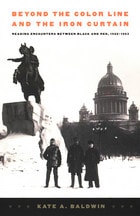
Beyond the Color Line and the Iron Curtain
Reading Encounters between Black and Red, 1922-1963Kate A. Baldwin
Duke University Press, 2002
Langston Hughes, W. E. B. Du Bois, Claude McKay, and Paul Robeson each lived or traveled extensively in the Soviet Union between the 1920s and the 1960s, and each reflected on Communism and Soviet life in works that have been largely unavailable, overlooked, or understudied. Kate A. Baldwin takes up these writings, as well as considerable material from Soviet sources—including articles in Pravda and Ogonek, political cartoons, Russian translations of unpublished manuscripts now lost, and mistranslations of major texts—to consider how these writers influenced and were influenced by both Soviet and American culture. Her work demonstrates how the construction of a new Soviet citizen attracted African Americans to the Soviet Union, where they could explore a national identity putatively free of class, gender, and racial biases. While Hughes and McKay later renounced their affiliations with the Soviet Union, Baldwin shows how, in different ways, both Hughes and McKay, as well as Du Bois and Robeson, used their encounters with the U. S. S. R. and Soviet models to rethink the exclusionary practices of citizenship and national belonging in the United States, and to move toward an internationalism that was a dynamic mix of antiracism, anticolonialism, social democracy, and international socialism.
Recovering what Baldwin terms the "Soviet archive of Black America," this book forces a rereading of some of the most important African American writers and of the transnational circuits of black modernism.
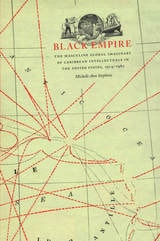
Black Empire
The Masculine Global Imaginary of Caribbean Intellectuals in the United States, 1914–1962Michelle Ann Stephens
Duke University Press, 2005
Stephens argues that the global black political consciousness she identifies was constituted by both radical and reactionary impulses. On the one hand, Garvey, McKay, and James saw freedom of movement as the basis of black transnationalism. The Caribbean archipelago—a geographic space ideally suited to the free movement of black subjects across national boundaries—became the metaphoric heart of their vision. On the other hand, these three writers were deeply influenced by the ideas of militarism, empire, and male sovereignty that shaped global political discourse in the early twentieth century. As such, their vision of transnational blackness excluded women’s political subjectivities. Drawing together insights from American, African American, Caribbean, and gender studies, Black Empire is a major contribution to ongoing conversations about nation and diaspora.
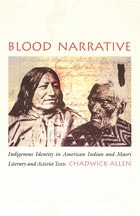
Blood Narrative
Indigenous Identity in American Indian and Maori Literary and Activist TextsChadwick Allen
Duke University Press, 2002
Allen shows how both Maori and Native Americans resisted the assimilationist tide rising out of World War II and how, in the 1960s and 1970s, they each experienced a renaissance of political and cultural activism and literary production that culminated in the formation of the first general assembly of the World Council of Indigenous Peoples. He focuses his comparison on two fronts: first, the blood/land/memory complex that refers to these groups' struggles to define indigeneity and to be freed from the definitions of authenticity imposed by dominant settler cultures. Allen's second focus is on the discourse of treaties between American Indians and the U.S. government and between Maori and Great Britain, which he contends offers strong legal and moral bases from which these indigenous minorities can argue land and resource rights as well as cultural and identity politics.
With its implicit critique of multiculturalism and of postcolonial studies that have tended to neglect the colonized status of indigenous First World minorities, Blood Narrative will appeal to students and scholars of literature, American and European history, multiculturalism, postcolonialism, and comparative cultural studies.