Results by title
60 books match the query 'Physical' and 5 start with b
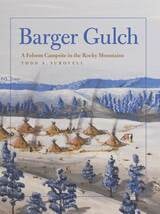
Barger Gulch
A Folsom Campsite in the Rocky MountainsTodd A. Surovell
University of Arizona Press, 2022
The best archaeological sites are those that present problems and inspire research, writes Surovell. From the start, the Folsom site called Barger Gulch Locality B was one of those sites; it was a problem-rich environment. Many Folsom sites are sparse scatters of stone and bone, a reflection of a mobile lifestyle that leaves little archaeological materials. The people at Barger Gulch left behind tens of thousands of pieces of chipped stone; they appeared to have spent quite a bit of time there in comparison to other places they inhabited.
Summarizing findings from nine seasons of excavations, Surovell explains that the site represents a congregation of mobile hunter-gatherers who spent winter along Barger Gulch, a tributary of the Colorado River. Surovell uses spatial patterns in chipped stone to infer the locations of hearths and house features. He examines the organization of household interiors and discusses differential use of interior and exterior spaces. Data allow inference about the people who lived at the site, including aspects of the identity of flintknappers and household versus group mobility. The site shows evidence of a Paleoindian camp circle, child flintknapping, household production of weaponry, and the fission/fusion dynamics of group composition that is typical of nomadic peoples.
Barger Gulch provides key findings on Paleoindian technological variation and spatial and social organization.
Bioarchaeological Studies of Life in the Age of Agriculture
A View from the SoutheastEdited by Patricia M. Lambert
University of Alabama Press, 2000
Investigations of skeletal remains from key archaeological sites reveal new data and offer insights on prehistoric life and health in the Southeast.
The shift from foraging to farming had important health consequences for prehistoric peoples, but variations in health existed within communities that had made this transition. This new collection draws on the rich bioarchaeological record of the Southeastern United States to explore variability in health and behavior within the age of agriculture. It offers new perspectives on human adaptation to various geographic and cultural landscapes across the entire Southeast, from Texas to Virginia, and presents new data from both classic and little-known sites.
The contributors question the reliance on simple cause-and-effect relationships in human health and behavior by addressing such key bioarchaeological issues as disease history and epidemiology, dietary composition and sufficiency, workload stress, patterns of violence, mortuary practices, and biological consequences of European contact. They also advance our understanding of agriculture by showing that uses of maize were more varied than has been previously supposed.
Representing some of the best work being done today by physical anthropologists, this volume provides new insights into human adaptation for both archaeologists and osteologists. It attests to the heterogeneous character of Southeastern societies during the late prehistoric and early historic periods while effectively detailing the many factors that have shaped biocultural evolution.
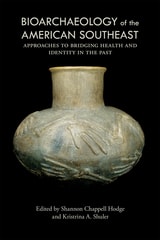
Bioarchaeology of the American Southeast
Approaches to Bridging Health and Identity in the PastEdited by Shannon Chappell Hodge and Kristrina A. Shuler
University of Alabama Press, 2018
Building on the 1991 publication What Mean These Bones? Studies in Southeastern Bioarchaeology, this new edited collection from Shannon Chappell Hodge and Kristrina A. Shuler marks steady advances over the past three decades in the theory, methodology, and purpose of bioarchaeology in the southeastern United States and across the discipline. With a geographic scope that ranges from Louisiana to South Carolina and a temporal span from early prehistory through the nineteenth century, the coverage aims to be holistic.
Bioarchaeology of the American Southeast: Approaches to Bridging Health and Identity in the Past is organized into two main parts. The first, “Context and Culture History in Bioarchaeology,” focuses on the fundamentals of archaeology—figuring out who lived at an archaeological site, when they lived there, what they did, and how they lived their lives.
This builds the framework that allows archaeologists to answer deeper questions, such as the ones addressed in the second part, “Social Identities in Bioarchaeology.” Here contributors explore questions of identity, ethnicity, gender and the status of women, social status, class, power and exploitation, migration, and conflict. These chapters implement and contribute to anthropological theory and showcase improved methods, such as innovative statistical analyses, and incorporate newer technology, including a DNA and geographic information system applications.
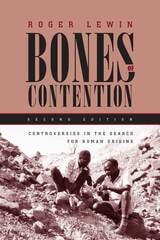
Bones of Contention
Controversies in the Search for Human OriginsRoger Lewin
University of Chicago Press, 1997
in many ways, remains contentious.
"[An] un-put-downable book."—John Gribbon, Times Educational Supplement
"Not just another 'stones and bones' account of human evolution. It is Lewin's thesis, amply demonstrated, that paleoanthropology is the most subjective of sciences because it engages the emotions of virtually everyone; and since the evidence is scrappy, interpretation is everything. . . . A splendid, stirring, and eye-opening account, to be devoured."—Kirkus Reviews, starred review
"[Lewin shows] 'how very unscientific the process of scientific inquiry can be.'. . . Bones of Contention is . . . serious intellectual history."—Edward Dolnick, Wall Street Journal
"[Lewin] documents his thesis in persuasive detail. . . . The reader is carried along by the power of Mr. Lewin's reporting."—Robert Wright, New York Times Book Review
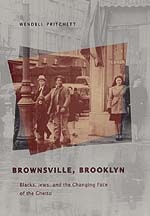
Brownsville, Brooklyn
Blacks, Jews, and the Changing Face of the GhettoWendell E. Pritchett
University of Chicago Press, 2001
The story of these two different, but in many ways similar, Brownsvilles is compellingly told in this probing new work. Focusing on the interaction of Brownsville residents with New York's political and institutional elites, Wendell Pritchett shows how the profound economic and social changes of post-World War II America affected the area. He covers a number of pivotal episodes in Brownsville's history as well: the rise and fall of interracial organizations, the struggles to deal with deteriorating housing, and the battles over local schools that culminated in the famous 1968 Teachers Strike. Far from just a cautionary tale of failed policies and institutional neglect, the story of Brownsville's transformation, he finds, is one of mutual struggle and frustrated cooperation among whites, blacks, and Latinos.
Ultimately, Brownsville, Brooklyn reminds us how working-class neighborhoods have played, and continue to play, a central role in American history. It is a story that needs to be read by all those concerned with the many challenges facing America's cities today.