Results by title
413 books match the query 'Pictorial works' and 24 start with b
BLUE HIGHWAYS Revisited
Edgar I. Ailor III, Photography by Edgar I. Ailor III and Edgar I. Ailor IV, Foreword by William Least Heat-Moon
University of Missouri Press, 2012
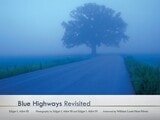
Through illustrative photography and text, Ailor and his son capture once more the local color and beauty of the back roads, cafes, taverns, and people of Heat-Moon’s original trek. Almost every photograph in Blue Highways Revisited is referenced to a page in the original work. With side-by-side photographic comparisons of eleven of Heat-Moon’s characters, this new volume reflects upon and develops the memoir of Heat-Moon’s cross-country study of American culture and spirit. Photographs of Heat-Moon’s logbook entries, original manuscript pages, Olympia typewriter, Ford van, and other artifacts also give readers insight into Heat-Moon’s approach to his trip. Discussions with Heat-Moon about these archival images provide the reader insight into the travels and the writing of Blue Highways that only the perspective of the author could provide.
Blue Highways Revisited reaffirms that the "blue highway" serves as a romantic symbol of the free and restless American spirit, as the Ailors lose themselves to the open road as Heat-Moon did thirty years previously. This book reminds readers of the insatiable attraction of the “blue highway”—“But in those brevities just before dawn and a little after dusk—times neither day or night—the old roads return to the sky some of its color. Then, in truth, they carry a mysterious cast of blue, and it's that time when the pull of the blue highway is strongest, when the open road is a beckoning, a strangeness, a place where a man can lose himself” (Introduction to Blue Highways).

Baltimore Portraits
Amos Badertscher
Duke University Press, 1999
The photographer’s focus on content rather than on elaborate technique reveals the intensely personal—and, indeed, autobiographical—nature of his portraits. Their simplicity along with the text’s intimacy affects the viewer in ways not easily forgotten. An introduction by Tyler Curtain contextualizes the photographs both within the history of Baltimore and its queer subculture and in relationship to contemporaneous work by photographers Nan Goldin, Robert Mapplethorpe, Cindy Sherman, Duane Michaels, and others. Curtain also positions the underlying concerns of Bardertscher’s art in relation to gay and lesbian cultural politics.
This striking collection of portraits, along with the photographer’s moving text, will impact not only a general audience of photographers and enthusiasts of the art but also those engaged with gay and lesbian studies, queer theory, and cultural studies in general. It is published in association with the Duke University Museum of Art.
Barn Quilts and the American Quilt Trail Movement
Suzi Parron
Ohio University Press, 2012
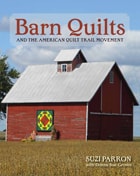
The story of the American Quilt Trail, featuring the colorful patterns of quilt squares painted large on barns throughout North America, is the story of one of the fastest-growing grassroots public arts movements in the United States and Canada. In Barn Quilts and the American Quilt Trail Movement Suzi Parron takes us to twenty-five states as well as Canada to visit the people and places that have put this movement on America’s tourist and folk art map.
Through dozens of interviews with barn quilt artists, committee members, and barn owners, Parron documents a journey that began in 2001 with the founder of the movement, Donna Sue Groves. Groves’s desire to honor her mother with a quilt square painted on their barn became a group effort that eventually grew into a county-wide project. Today, quilt squares form a long imaginary clothesline, appearing on more than three thousand barns scattered along one hundred and twenty driving trails.
With more than eighty full-color photographs, Parron documents here a movement that combines rural economic development with an American folk art phenomenon.
Barrio
Photographs from Chicago's Pilsen and Little VillagePaul D'Amato
University of Chicago Press, 2006
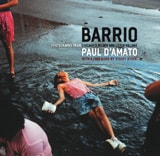
Barrio collects ninety of these striking color images along with D’Amato’s fascinating account of his time photographing Mexican Chicago and his acceptance—often grudging, after threatened violence—into the heart of the city’s Mexican community. Some of the photos here are beautifully composed and startling—visual narratives that are surreal and dreamlike, haunting and mythic. Others, like those D’Amato took while shadowing graffiti artists in the subway, are far more immediate and improvisational. With a foreword by author Stuart Dybek that places D’Amato’s work in the context of the Pilsen and Little Village that Dybek has elsewhere captured so memorably, this book offers a penetrating, evocative, and overall streetwise portrait of two iconic and enduring Hispanic neighborhoods.
Bear River
Last Chance to Change CourseCraig Denton
Utah State University Press, 2007
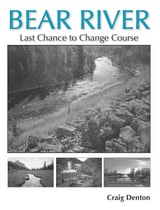
Craig Denton's documentary takes on these questions. He tells the story of the river and the people, of many sorts, with diverse purposes, who live and depend on it. Bear River begins in alpine snowfields, lakes, and creeks in the Uinta Mountains, flows north through Wyoming, loops south in Idaho, and enters the inland sea by way of the an environmentally critical bird refuge. Along the way it has many uses: habitat, farms, electricity, recreation, lawns and homes. Denton researches the natural and human history of the river, photographed it, interviewed many stakeholders, and tried to capture the river perspective. His photographs, printed as crisp duotones, carry us downstream, ultimately to big questions, begging to be answered soon, about what we should and can make of the Bear River. Denton writes,
Gravity my engine,
Water my soul.
I am the teller of life and deep time.
You would measure me.
Sever me.
Own me.
In your name.
Let me flow
In your imagination
That I may speak.
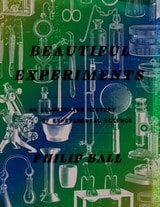
Beautiful Experiments
An Illustrated History of Experimental SciencePhilip Ball
University of Chicago Press, 2023
Featuring two hundred color plates, this history of the craft of scientific inquiry is as exquisite as the experiments whose stories it shares.
This illustrated history of experimental science is more than just a celebration of the ingenuity that scientists and natural philosophers have used throughout the ages to study—and to change—the world. Here we see in intricate detail experiments that have, in some way or another, exhibited elegance and beauty: in their design, their conception, and their execution. Celebrated science writer Philip Ball invites readers to marvel at and admire the craftsmanship of scientific instruments and apparatus on display, from the earliest microscopes to the giant particle colliders of today. With Ball as our expert guide, we are encouraged to think carefully about what experiments are, what they mean, and how they are used. Ranging across millennia and geographies, Beautiful Experiments demonstrates why “experiment” remains a contested notion in science, while also exploring how we came to understand the way the world functions, what it contains, and where the pursuit of that understanding has brought us today.
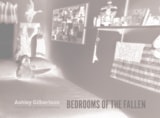
Bedrooms of the Fallen
Ashley Gilbertson
University of Chicago Press, 2014
The book’s wide-format black-and-white images depict the bedrooms of forty fallen soldiers—the equivalent of a single platoon—from the United States, Canada, and several European nations. Left intact by families of the deceased, the bedrooms are a heartbreaking reminder of lives cut short: we see high school diplomas and pictures from prom, sports medals and souvenirs, and markers of the idealism that carried them to war, like images of the Twin Towers and Osama Bin Laden. A moving essay by Gilbertson describes his encounters with the families who preserve these private memorials to their loved ones, and shares what he has learned from them about war and loss.
Bedrooms of the Fallen is a masterpiece of documentary photography, and an unforgettable reckoning with the human cost of war.
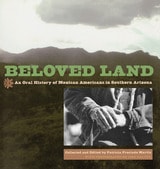
Beloved Land
An Oral History of Mexican Americans in Southern ArizonaCollected and Edited by Patricia Preciado Martin, with Photographs by José Galvez
University of Arizona Press, 2004
For Doña Ramona as well as for countless generations of Mexican Americans, memories of rural life recall la querida tierra, the beloved land. Through good times and bad, the land provided sustenance. Today, many of those homesteads and ranches have succumbed to bulldozers that have brought housing projects and strip malls in their wake.
Now a writer and a photographer who have long been intimately involved with Arizona's Hispanic community have preserved the voices and images of men and women who are descendants of pioneer ranching and farming families in southern Arizona. Ranging from Tucson to the San Rafael Valley and points in between, this book documents the contributions of Mexican American families whose history and culture are intertwined with the lifestyle of the contemporary Southwest. These were hardy, self-reliant pioneers who settled in what were then remote areas. Their stories tell of love affairs with the land and a way of life that is rapidly disappearing.
Through oral histories and a captivating array of historic and contemporary photos, Beloved Land records a vibrant and resourceful way of life that has contributed so much to the region. Individuals like Doña Ramona tell stories about rural life, farming, ranching, and vaquero culture that enrich our knowledge of settlement, culinary practices, religious traditions, arts, and education of Hispanic settlers of Arizona. They talk frankly about how the land changed hands—not always by legal means—and tell how they feel about modern society and the disappearance of the rural lifestyle.
"Our ranch homes and fields, our chapels and corrals may have been bulldozed by progress or renovated into spas and guest ranches that never whisper our ancestors' names," writes Patricia Preciado Martin. "The story of our beautiful and resilient heritage will never be silenced . . . as long as we always remember to run our fingers through the nourishing and nurturing soil of our history." Beloved Land works that soil as it revitalizes that history for the generations to come.
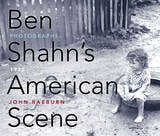
Ben Shahn's American Scene
Photographs, 1938John Raeburn
University of Illinois Press, 2010
The paintings, murals, and graphics of Ben Shahn (1898-1969) have made him one of the most heralded American artists of the twentieth century, but during the 1930s he was also among the nation's premier photographers. Much of his photographic work was sponsored by the New Deal's Farm Security Administration, where his colleagues included Dorothea Lange and Walker Evans.
Ben Shahn's American Scene: Photographs, 1938 presents one hundred superb photographs from his most ambitious FSA project, a survey of small-town life in the Depression. John Raeburn's accompanying text illuminates the thematic and formal significance of individual photographs and reveals how, taken together, they address key cultural and political issues of the years leading up to World War II. Shahn's photographs highlight conflicts between traditional values and the newer ones introduced by modernity as represented by the movies, chain stores, and the tantalizing allure of consumer goods, and they are particularly rich in observation about the changes brought about by Americans' universal reliance on the automobile. They also explore the small town's standing as the nation's symbol of democratic community and expose the discriminatory social and racial practices that subverted this ideal in 1930s America.
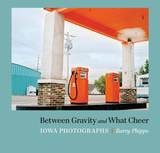
Between Gravity and What Cheer
Iowa PhotographsBarry Phipps
University of Iowa Press, 2018
When Barry Phipps relocated to Iowa City from Chicago in 2012, he knew nothing of Iowa. He began taking day trips across Iowa in the spirit of wonder and discovery. His marked-up road map soon became a work of art in and of itself, covered with spokes, lines, and places both seen and needing to be seen. Along the way he plied his trade, taking photographs.
Inspired by such seminal work as Robert Frank’s The Americans, this is a unique vision of the Midwest and Iowa. Without condescending or overemphasizing the decline of small town America, Phipps documents rural communities as they are now, noting abstract shapes and colors as he photographs business districts with quirky and/or artful signs, streetscapes and landscapes, buildings with ghosts of paint from previous lives, and the occasional resident.
In addition to their startling attention to color and geometry, Phipps’s photos delight because they suggest an author who isn’t on intimate terms with his subject matter, but very much wants to be. Though the photographs in this collection frequently maintain a cautious distance from the houses, water towers, and iconography he captures on film, the pictures feel, at once, eager and shy.
Phipps admires his new home—from afar, by varying degrees—and excitedly introduces himself to it: the first steps of a journey toward claiming Iowa as his.
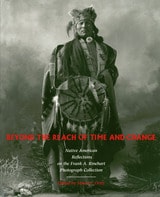
Beyond the Reach of Time and Change
Native American Reflections on the Frank A. Rinehart Photograph CollectionEdited by Simon J. Ortiz
University of Arizona Press, 2004
This book provides an unusual perspective on the Rinehart collection. It features one hundred outstanding images printed from the original negatives made by Rinehart and Muhr at the Congress and over the course of the next two years. It also includes 14 essays by modern Native American writers, artists, and educators—some of them descendants of the individuals photographed—reflecting on the place of these images in their heritage.
Beyond the Reach of Time and Change is not another coffee-table book of historical Indian photographs but rather a conversation between Indian people of a century ago and today. Just as the Rinehart collection offers today's Native Americans a unique connection to the past, this book offers all readers a positive understanding of continuity and endurance within the American Indian community.

Bicycles
Vintage People on Photo PostcardsTom Phillips
Bodleian Library Publishing, 2011
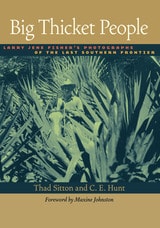
Big Thicket People
Larry Jene Fisher's Photographs of the Last Southern FrontierBy Thad Sitton and C.E. Hunt
University of Texas Press, 2008
Living off the land—hunting, fishing, and farming, along with a range of specialized crafts that provided barter or cash income—was a way of life that persisted well into the twentieth century in the Big Thicket of southeast Texas. Before this way of life ended with World War II, professional photographer Larry Jene Fisher spent a decade between the 1930s and 1940s photographing Big Thicket people living and working in the old ways. His photographs, the only known collection on this subject, constitute an irreplaceable record of lifeways that first took root in the southeastern woodlands of the colonial United States and eventually spread all across the Southern frontier.
Big Thicket People presents Fisher's photographs in suites that document a wide slice of Big Thicket life-people, dogs, camps, deer hunts, farming, syrup mills, rooter hogs and stock raising, railroad tie making, barrel stave making, chimney building, peckerwood sawmills, logging, turpentining, town life, church services and picnics, funerals and golden weddings, and dances and other amusements. Accompanying each suite of images is a cultural essay by Thad Sitton, who also introduces the book with a historical overview of life in the Big Thicket. C. E. Hunt provides an informative biography of Larry Jene Fisher.

Birds of Belize
By H. Lee Jones
University of Texas Press, 2003
With nearly six hundred identified species of birds—and an average of five "new" species discovered annually—Belize is becoming a birding hotspot for amateur and professional birders from around the globe. Thousands of birders visit the country each year to enjoy Belize's amazing abundance and variety of both temperate and tropical birds in natural habitats that remain largely unspoiled. But until now, despite the growing need for an authoritative identification guide, birders have had to rely on regional field guides that offer only limited information on Belizean birds.
Birds of Belize provides the first complete guide to the identification of all currently known species—574 in all. The birds are grouped by families, with an introduction to each family that highlights its uniquely identifying characteristics and behaviors. The species accounts include all the details necessary for field identification: scientific and common names, size, plumage features, thorough voice descriptions, habitat, distribution, and status in Belize. Full color, expertly drawn illustrations by noted bird artist Dana Gardner present male and female, juvenile and adult, and basic and alternate plumages to aid visual identification throughout the year, while 234 range maps show the birds' distribution and seasonality in Belize. A comprehensive bibliography completes the volume.
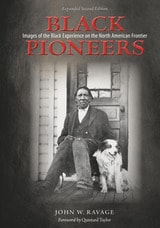
Black Pioneers
Images of the Black Experience on the North American FrontierJohn Ravage
University of Utah Press, 1997
Using public and private collections in every western state and in Canada, Ravage has gathered more than three hundred photographs, line drawings, lithographs, stereoviews, and other images. This new edition also adds sections on black entertainers and ranchers, a chapter on the dating of historic photographs and their genealogical significance, as well as an expanded bibliography. All aid understanding of the black frontier experience.
Ravage goes beyond the stereotypical photography of the era, which often reflected white fears and prejudices, to present the works of frontier photographers. Galveston’s Lucius Harper, Denver’s John Green, and the Northwest’s nomadic James Presley Ball all bring life to their subjects and meaning to their presence in the American West. Black Pioneers is a vibrant visual document of the profound influence blacks had on communal and frontier history.

Blaze Orange
Whitetail Deer Hunting in WisconsinTravis Dewitz
Wisconsin Historical Society Press, 2014
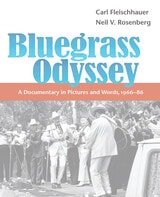
Bluegrass Odyssey
A Documentary in Pictures and Words, 1966-86Carl Fleischhauer and Neil V. Rosenberg
University of Illinois Press, 2006

Blues in Black and White
The Landmark Ann Arbor Blues FestivalsAs photographed by Stanley Livingston with Text and a History of the Ann Arbor Blues Festival by Michael Erlewine
University of Michigan Press, 2010
"This was really the first time that blues music, especially Chicago/urban blues, was showcased in this way. Sadly, the festivals were not recorded professionally. So Mr. Livingston's photos are the best record of the festivals."
---Michael Jewett, longtime weekday afternoon host of 89.1 Jazz and host of "Blues & Some Uthuh Stuff"
"The photos are works of art. It is great to see photos of musicians such as Buddy Guy and James Cotton looking so young and vibrant. And it is great to see photos of blues legends such as John Lee Hooker, Roosevelt Sykes, Howlin' Wolf, and Son House, who have long since passed away."
---Peter Madcat Ruth, Grammy-winning blues harmonica player
"If Woodstock was one of the Fifty Moments That Changed Rock 'n' Roll History, as honored in Rolling Stone magazine, then the Ann Arbor Blues Festival was the coronation for the blues roots that sired rock to begin with. . . . finally we have this amazing book of Stanley Livingston's priceless images, along with Michael Erlewine's detailed chronology."
---From the foreword by Jim O'Neal, Cofounder, Living Blues Magazine
In 1969 and 1970, the first Ann Arbor Blues Festivals brought together the greatest-ever selection of blues performers---an enormous blues party that seemed to feature every big name in the world of blues.
The Ann Arbor Blues Festival was just that: a festival and celebration of city blues. It helped to mark the discovery of modern blues music (and the musicians who made that music) by a much larger audience. The festival, however, was something more than just a white audience discovering black music.
Never before had such a far-reaching list of performers been assembled, including the grandfathers of southern country blues and the hottest electric bands from Chicago. These groundbreaking festivals were the seed that grew into the Ann Arbor Blues and Jazz Festival, which was continued annually for many years. To name just a few of the dozens of artists who performed at the festival: Luther Allison, John Lee Hooker, Howlin' Wolf, B.B. King, Muddy Waters, Otis Rush, Hound Dog Taylor, Big Mama Thorton, T-Bone Walker, Sippie Wallace, Junior Wells, and Mighty Joe Young.
Stanley Livingston, a professional photographer from Ann Arbor, captured these legendary performances onstage---as well as the goings-on backstage. Livingston's thousands of photographs from these festivals, previously unpublished and known only to a few, are among the finest candid blues shots ever taken. Together with editor and archivist Michael Erlewine's text accompaniments, these photographs, reproduced here as high-quality duotones, comprise a visual history and important keepsake for blues aficionados everywhere.
Stanley Livingston was an award-winning photographer living and working in Ann Arbor until he passed away in 2010, after the book was released.
Michael Erlewine, also from Ann Arbor, is a renowned archivist of popular culture and founder of the All-Music Guide (allmusic.com) and editor of a number of books on blues and jazz.
Cover photo of B.B. King by Stanley Livingston
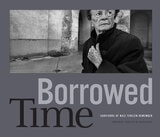
Borrowed Time
Survivors of Nazi Terezín RememberDennis Carlyle Darling
University of Texas Press, 2024
Honorable Mention — The International Photography Awards 2024 Book Category
Documentation, through photographs and interviews, of those who survived the unique Nazi ghetto/camp located at Terezín, Czech Republic.
Dennis Carlyle Darling has photographed and interviewed hundreds of Holocaust survivors who spent time at the German transit camp and ghetto at Terezín, a former eighteenth-century military garrison located north of Prague. Many of the prisoners were kept there until they could be transported to Auschwitz or other camps, but unlike German captives elsewhere, they were allowed to participate in creative activities that the Nazis used for propaganda purposes to show the world how well they were treating Jews. Although it was not classified as a “death camp,” more than 33,000 prisoners died at Terezín from hunger, disease, and mistreatment.
In Borrowed Time, Darling reveals Terezín as a place of painful contradictions, through striking and intimate portraits that retrace time and place with his subjects, the last remnants of those who survived the experience. Returning to sites of painful memories with his interview subjects to photograph them, Darling respectfully depicts these survivors and tells their stories.
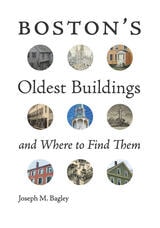
Boston's Oldest Buildings and Where to Find Them
Joseph M. Bagley
Brandeis University Press, 2021
As Boston approaches its four-hundredth anniversary, it is remarkable that it still maintains its historic character despite constant development. The fifty buildings featured in this book all pre-date 1800 and illustrate Boston’s early history. This is the first book to survey Boston’s fifty oldest buildings and does so through an approachable narrative which will appeal to nonarchitects and those new to historic preservation. Beginning with a map of the buildings’ locations and an overview of the historic preservation movement in Boston, the book looks at the fifty buildings in order from oldest to most recent. Geographically, the majority of the buildings are located within the downtown area of Boston along the Freedom Trail and within easy walking distance from the core of the city. This makes the book an ideal guide for tourists, and residents of the city will also find it interesting as it includes numerous properties in the surrounding neighborhoods. The buildings span multiple uses from homes to churches and warehouses to restaurants. Each chapter features a building, a narrative focusing on its historical significance, and the efforts made to preserve it over time. Full color photos and historical drawings illustrate each building and area. Boston’s Oldest Buildings and Where to Find Them presents the ideals of historic preservation in an approachable and easy-to-read manner appropriate for the broadest audience. Perfect for history lovers, architectural enthusiasts, and tourists alike.
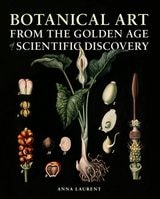
Botanical Art from the Golden Age of Scientific Discovery
Anna Laurent
University of Chicago Press, 2016
This beautifully illustrated oversized book gives the humble wall chart its due, reproducing more than two hundred of them in dazzling full color. Each wall chart is accompanied by captions that offer accessible information about the species featured, the scientists and botanical illustrators who created it, and any particularly interesting or innovative features the chart displays. And gardeners will be pleased to discover useful information about plant anatomy and morphology and species differences. We see lilies and tulips, gourds, aquatic plants, legumes, poisonous plants, and carnivorous plants, all presented in exquisite, larger-than-life detail.
A unique fusion of art, science, and education, the wall charts gathered here offer a glimpse into a wonderful scientific heritage and are sure to thrill naturalists, gardeners, and artists alike.
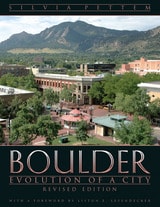
Boulder
Evolution of a City, Revised EditionSilvia Pettem
University Press of Colorado, 2006
Pettem devotes the first chapter to an introduction of the early photographers whose work appears throughout the book. Moving outward from the central business district as development did, each subsequent chapter focuses on a particular area in Boulder, with an introductory essay followed by historic and contemporary photographs with detailed captions.
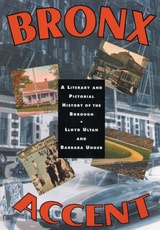
Bronx Accent
A Literary and Pictorial History of the BoroughUltan, Lloyd
Rutgers University Press, 2000
Bringing together a variety of past literary figures as well as emerging talents, this comprehensive book captures the Zeitgeist of the neighborhood through the eyes of its writers. Included are selections from the writings of Jack Kerouac, Mark Twain, James Baldwin, James Fenimore Cooper, Tom Wolfe, Herman Wouk, Theodore Dreiser, Washington Irving, Clifford Odets, Cynthia Ozick, Grace Paley, Edgar Allan Poe, Chaim Potok, Kate Simon, Leon Trotsky, and Sholem Aleichem.
Lloyd Ultan and Barbara Unger place the literature of these and other writers in historical context and reproduce one hundred vintage photographs that bring the writings to life. Filtered through the imaginations of authors of different times, ethnic groups, social classes, and literary styles, the borough of The Bronx emerges not only as a shaper of destinies and lives, but as an important literary mecca.
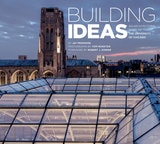
Building Ideas
An Architectural Guide to the University of ChicagoJay Pridmore
University of Chicago Press, 2013
Building Ideas: An Architectural Guide to the University of Chicago explores the environment that has supported more than a century of exceptional thinkers. This photographic guide traces the evolution of campus architecture from the university’s founding in 1890 to its plans for the twenty-first century.
When William Rainey Harper, the university’s first president, and the trustees decided to build a set of Gothic quadrangles, they created a visual link to European precursors and made a bold statement about the future of higher education in the United States. Since then the university has regularly commissioned forward-thinking architects to design buildings that expand—or explode—traditional ideals while redefining the contemporary campus.
Full of panoramic photographs and exquisite details, Building Ideas features the work of architects such as Frank Lloyd Wright, Henry Ives Cobb, Holabird & Roche, Eero Saarinen, Ludwig Mies van der Rohe, Walter Netsch, Ricardo Legorreta, Rafael Viñoly, César Pelli, Helmut Jahn, and Tod Williams Billie Tsien Architects. The guide also includes guest commentaries by prominent architects and other notable public figures. It is the perfect collection for Chicago alumni and students, Hyde Park residents and visitors, and anyone inspired by the institutional ideas and aspirations of architecture.