Results by title
50 books match the query 'Plants & Animals' and 5 start with b
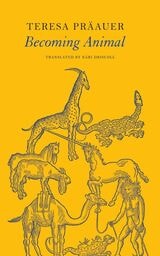
Becoming Animal
Teresa Präauer
Seagull Books, 2024
An unveiling of the presence of captivating figures and creatures throughout history.
In this gripping philosophical and cultural exploration, Teresa Präauer sets out to investigate figures of transformation, transmission, and translation—across languages, cultures, genres, media, species, and spaces. Hybrids, chimeras, monsters, and liminal creatures of all sorts inhabit these pages, as indeed they do the pages of the cultural archive from Antiquity and the Middle Ages to the present day: everything from the harpies, ape-men, and cynocephali that inhabit the edges of medieval maps and taxonomies to the Krampuses and Furries that roam through Alpine villages and convention centers today. Yet these chimeras are not aberrations; rather, they reveal an essential truth about culture and artistic expression.
What emerges in Becoming Animal is a kaleidoscopic image of culture as the constant probing of the limits of the sayable, as an unending process of attempting to capture in words and symbols that which cannot be pinned down.
[more]
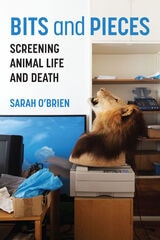
Bits and Pieces
Screening Animal Life and DeathSarah O'Brien
University of Michigan Press, 2023
Bits and Pieces: Screening Animal Life and Death gathers pivotal and more mundane moments, dispersed across a predominantly Western history of moving images, in which animals materialize in movies and TV shows, from iconic scenes of cattle slaughter in early Soviet montage to quandaries over hunting trophies in recent home-renovation reality TV series, to animals in Black horror films. Sarah O'Brien carefully views these fragments in dialogue with germinal texts at the intersection of animal studies, film and television studies, and cultural studies. She explores the capacity of moving images to unsettle the ways in which audiences have become habituated to viewing animal life and death on screens, and, more importantly, to understanding these images as more and less connected to the “production for consumption” of animals that is specific to modern industrialization. By looking back at films and TV series in which the places and practices of killing or keeping animals enter, occupy, or slip from the foreground, Bits and Pieces takes seriously the idea that cinema and television have the capacity not only to catch but to challenge and change viewers’ regard for animals.
[more]
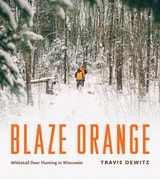
Blaze Orange
Whitetail Deer Hunting in WisconsinTravis Dewitz
Wisconsin Historical Society Press, 2014
In Blaze Orange, photographer Travis Dewitz captures the joy, excitement, and camaraderie of deer hunting in Wisconsin. A lone hunter in a tree stand as dawn arrives. A girl and her grandfather scanning a field in the fresh snow. Tired hunters laughing around the evening fire back at camp. These are snapshots of a culture touchstone. With more than 600,000 hunters taking to the fields and woods of the state each year, the whitetail deer season is by far Wisconsin’s largest sporting event. Dewitz documents the hunt and more as he rides along with hunters and a game warden, visits local mom-and-pop stores where hunters gather, and records the industries that operate alongside the deer season—a taxidermist and knife maker, butchers and sausage makers. The result is a stunning and keen-eyed chronicle of one season of the Wisconsin deer hunt.
[more]
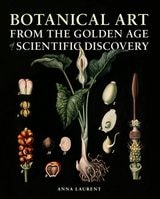
Botanical Art from the Golden Age of Scientific Discovery
Anna Laurent
University of Chicago Press, 2016
Throughout the nineteenth and twentieth centuries, wall charts were a familiar classroom component, displaying scientific images at a large scale, in full color. But it's only now that they've been superseded as a teaching tool that we have begun to realize something their ubiquity hid: they are stunning examples of botanical art at its finest.
This beautifully illustrated oversized book gives the humble wall chart its due, reproducing more than two hundred of them in dazzling full color. Each wall chart is accompanied by captions that offer accessible information about the species featured, the scientists and botanical illustrators who created it, and any particularly interesting or innovative features the chart displays. And gardeners will be pleased to discover useful information about plant anatomy and morphology and species differences. We see lilies and tulips, gourds, aquatic plants, legumes, poisonous plants, and carnivorous plants, all presented in exquisite, larger-than-life detail.
A unique fusion of art, science, and education, the wall charts gathered here offer a glimpse into a wonderful scientific heritage and are sure to thrill naturalists, gardeners, and artists alike.
[more]
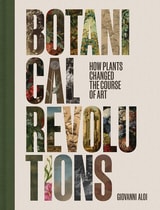
Botanical Revolutions
How Plants Changed the Course of ArtGiovanni Aloi
J. Paul Getty Trust, The, 2025
This groundbreaking volume unearths the representation of plants and their vital impact on art, thereby advocating for the botanical world’s legitimate place in art history.
Desired for their aesthetic beauty, sought after for their medicinal properties, harvested for their scents and flavors, or grown as essential material resources, plants are indissolubly entwined with our existence. In art it is no different: plants have played a critical role. Yet despite their significant material and conceptual contributions, plants have been sidelined in the commentary of art historians and critics.
Botanical Revolutions presents a global history of plants in art, focusing on the crucial moments that signaled the formation of new movements and styles, as well as the creation of media that could not have occurred without the involvement of and interaction with the vegetal world. In this fascinating and beautifully illustrated book, author Giovanni Aloi delves deeply into the history and representation of plants in art, advocates for a change in our relationship with the botanical world, and presents an alternative history of art that foregrounds the truly indispensable contributions of plants.
[more]