Results by title
1066 books match the query 'Political' and 37 start with b
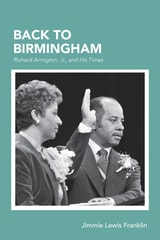
Back To Birmingham
Richard Arrington, Jr., and His TimesJimmie Lewis Franklin
University of Alabama Press, 1989
During the 1960s, Birmingham, Alabama was the central battleground in the struggle for human rights in the American South. As one of the most segregated cities in the United States, the city of Birmingham became infamous for its suppression of civil rights and for official and vigilante violence against its African American citizens, most notoriously the use of explosives in the Sixteenth Street Baptist Church bombing and the bombing of the home of Reverend Fred Shuttlesworth.
In October of 1979, Birmingham elected its first Black mayor, Richard Arrington Jr. He was born in the rural town of Livingston, Alabama. His family moved to Birmingham when he was a child. A man of quiet demeanor, he was nevertheless destined to bring to fruition many of the fundamental changes that the Civil Rights Movement had demanded. This is his story. Not a conventional political or Civil Rights history, Back to Birmingham is the story of a man who demonstrated faith in his region and people. The work illuminates Arrington's sense of place, a quality that enables a person to claim sentimentally a portion of the natural and human environment. Franklin passionately underscores the importance of the attachment of Southern Blacks to their land and place.
Back to Birmingham will appeal to both the general reader and the serious student of American society. The book endeavors to bridge the gap between popular and scholarly history. It is guided by the assumption that Americans of whatever description can find satisfaction in comprehending social change and that they are buoyed by the individual triumph of those who beat the odds.
Balkan Beauty, Balkan Blood
Modern Albanian Short StoriesRobert Elsie
Northwestern University Press, 2006
Albania's more established writers (including Dritëro Agolli, Ismail Kadare, Teodor Laço, and Eqrem Basha) appear here alongside newer talents (such as Ylljet Aliçka, Mimoza Ahmeti, Elivra Dones, Lindita Arapi, and Kim Mehmeti), providing English-speaking readers with an elucidating and entertaining overview of the recent history, and the future, of the nation's literature.
Ballad of Descent
Martin Vopenka
Northwestern University Press, 1995
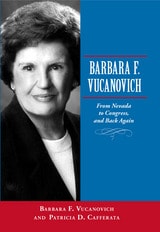
Barbara F. Vucanovich
From Nevada to Congress, and Back AgainBarbara F. Vucanovich
University of Nevada Press, 2014
Barbara Jordan
Speaking the Truth with Eloquent ThunderEdited by Max Sherman
University of Texas Press, 2007
Revered by Americans across the political spectrum, Barbara Jordan was "the most outspoken moral voice of the American political system," in the words of former President Bill Clinton, who awarded her the Presidential Medal of Freedom in 1994. Throughout her career as a Texas senator, U.S. congresswoman, and distinguished professor at the Lyndon B. Johnson School of Public Affairs, Barbara Jordan lived by a simple creed: "Ethical behavior means being honest, telling the truth, and doing what you said you were going to do." Her strong stand for ethics in government, civil liberties, and democratic values still provides a standard around which the nation can unite in the twenty-first century.
This volume brings together several major political speeches that articulate Barbara Jordan's most deeply held values. They include:
- "Erosion of Civil Liberties," a commencement address delivered at Howard University on May 12, 1974, in which Jordan warned that "tyranny in America is possible"
- "The Constitutional Basis for Impeachment," Jordan's ringing defense of the U.S. Constitution before the House Judiciary Committee investigating the Watergate break-in
- Keynote addresses to the Democratic National Conventions of 1976 and 1992, in which Jordan set forth her vision of the Democratic Party as an advocate for the common good and a catalyst of change
- Testimony in the U.S. Congress on the confirmation of Supreme Court nominee Robert Bork and on immigration reform
- Meditations on faith and politics from two National Prayer Breakfasts
- Acceptance speech for the 1995 Sylvanus Thayer Award presented by the Association of Graduates of the United States Military Academy, in which Jordan challenged the military to uphold the values of "duty, honor, country"
Accompanying the speeches are context-setting introductions by volume editor Max Sherman. The book concludes with the eloquent eulogy that Bill Moyers delivered at Barbara Jordan's memorial service in 1996, in which he summed up Jordan's remarkable life and career by saying, "Just when we despaired of finding a hero, she showed up, to give the sign of democracy.... This is no small thing. This, my friends, this is grace. And for it we are thankful."
Barry Goldwater and the Remaking of the American Political Landscape
Edited by Elizabeth Tandy Shermer
University of Arizona Press, 2013
Since Goldwater’s death in 1998, politicians, pundits, and academics have been assessing his achievements and his shortcomings. The twelve essays in this volume thoroughly examine the life, times, and impact of “Mr. Conservative.” Scrutinizing the transformation of a Phoenix department store owner into a politician, de facto political philosopher, and five-time US senator, contributors highlight the importance of power, showcasing the relationship between the nascent conservative movement’s cadre of elite businessmen, newsmen, and intellectuals and their followers at the grassroots—or sagebrush—level.
Goldwater, who was born in the Arizona Territory in 1909, was deeply influenced by his Western upbringing. With his appearance on the national stage in 1964, he not only articulated a new brand of conservatism but gave a voice to many Americans who were not enamored with the social and political changes of the era. He may have lost the battle for the presidency, but he energized a coalition of journalists, publishers, women’s groups, and Southerners to band together in a movement that reshaped the nation.
Becoming Political
Spinoza’s Vital Republicanism and the Democratic Power of JudgmentChristopher Skeaff
University of Chicago Press, 2018
Becoming What We Are
Classical and Christian Readings of ModernityJude P. Dougherty
Catholic University of America Press, 2023

Before the Law
Humans and Other Animals in a Biopolitical FrameCary Wolfe
University of Chicago Press, 2012
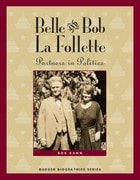
Belle and Bob La Follette
Partners in PoliticsBob Kann
Wisconsin Historical Society Press, 2008
The most famous couple in Wisconsin politics, "Fighting Bob" La Follette and his wife, Belle Case La Follette, come to life in the pages of the newest addition to the Badger Biographies series for young readers. In an accessible format that includes historic images, a glossary of terms, and sidebars explaining political concepts, students learn about Progressive politics and reform in the early 20th century through the experiences of this pioneering couple.
The father of "Progressive politics," Bob La Follette was famous for digging in his heels when it came to reforming government corruption. He also gained a reputation for fiery speeches on the campaign trail and on the Senate floor. Belle La Follette was political in her own right. The first woman to graduate from the University of Wisconsin's Law School, she was an advocate for world peace and an agitator for the women's vote. She was also Bob's most trusted political advisor. Together, the couple raised a family and fought for the changes they believed would make the world a better place.

Bergson, Politics, and Religion
Alexandre Lefebvre and Melanie White, eds.
Duke University Press, 2012
Contributors. Keith Ansell-Pearson, G. William Barnard, Claire Colebrook, Hisashi Fujita, Suzanne Guerlac, Vladimir Jankélévitch, Frédéric Keck, Leonard Lawlor, Alexandre Lefebvre, Paola Marrati, John Mullarkey, Paulina Ochoa Espejo, Carl Power, Philippe Soulez, Jim Urpeth, Melanie White, Frédéric Worms
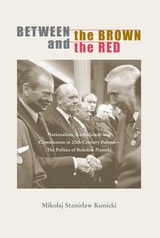
Between the Brown and the Red
Nationalism, Catholicism, and Communism in Twentieth-Century Poland—The Politics of Boleslaw PiaseckiMikolaj Stanislaw Kunicki
Ohio University Press, 2012
Between the Brown and the Red captures the multifaceted nature of church-state relations in communist Poland, relations that oscillated between mutual confrontation, accommodation, and dialogue. Ironically, under communism the bond between religion and nation in Poland grew stronger. This happened in spite of the fact that the government deployed nationalist themes in order to portray itself as more Polish than communist. Between the Brown and the Red also introduces one of the most fascinating figures in the history of twentieth-century Poland and the communist world.
In this study of the complex relationships between nationalism, communism, authoritarianism, and religion in twentieth-century Poland, Mikołaj Kunicki shows the ways in which the country’s communist rulers tried to adapt communism to local traditions, particularly ethnocentric nationalism and Catholicism. Focusing on the political career of Bolesław Piasecki, a Polish nationalist politician who began his surprising but illuminating journey as a fascist before the Second World War and ended it as a procommunist activist, Kunicki demonstrates that Polish communists reinforced an ethnocentric self-definition of Polishness and—as Piasecki’s case demonstrates—thereby prolonged the existence of Poland’s nationalist Right.
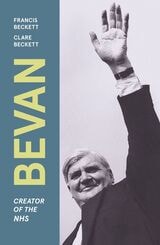
Bevan
Creator of the NHSFrancis Beckett and Clare Beckett
Haus Publishing, 2023
The creation of the National Health Service was the most significant of the many reforms of the post-war Labour government in the UK. The man responsible was Aneurin “Nye” Bevan. The son of a Welsh miner, he became a local trade union leader at only nineteen. In 1929, he was elected as a Labour MP. Bevan believed the war was Britain’s opportunity to create a new society, a position he maintained throughout the conflict. When the war ended in 1945, the landslide Labour victory gave him the chance to make this vision a reality. Known for his impassioned oratory, Bevan’s fundamental belief that the new NHS should be freely available to all was ultimately at odds with a government struggling to balance the books. He resigned in 1951 over the introduction of charges for prescriptions and glasses. With the NHS requiring an ever-increasing share of national income, this updated edition considers Bevan’s legacy as the future of the health service he created is fought over as never before.

Beyond Boundaries
C.L.R. James and Postnational StudiesEdited by Christopher Gair
Pluto Press, 2006
Invaluable for students of post-colonial studies, the book examines points where James crosses with other theorists, such as Lacan and Gramsci. Racial identity and cultural politics are key themes in his work, not to mention his unique writings on cricket. Contributors including Donald E Pease, Nicole King, Christopher Gair and Anthony Bogues illuminate the key themes in James's writing, and put forward the idea that the breath of James's thinking can be identified as the beginning of 'post-national' studies.
Christopher Gair is a lecturer in the Department of American and Canadian Studies, University of Birmingham. He is the author of Complicity and Resistance in Jack London¹ s Novels (Edwin Mullen Press, 1997), of The American Counterculture (forthcoming, Edinburgh University Press, 2006), and of numerous essays on American literature and culture. He is the editor of the journal Symbiosis.
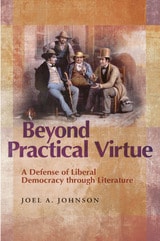
Beyond Practical Virtue
A Defense of Liberal Democracy through LiteratureJoel A. Johnson
University of Missouri Press, 2007
Why hasn’t democracy been embraced worldwide as the best form of government?
Aesthetic critics of democracy such as Carlyle and Nietzsche have argued that modern democracy, by removing the hierarchical institutions that once elevated society’s character, turns citizens into bland, mediocre souls. Joel A. Johnson now offers a rebuttal to these critics, drawing surprising inspiration from American literary classics.
Addressing the question from a new perspective, Johnson takes a fresh look at the worth of liberal democracy in these uncertain times and tackles head-on the thorny question of cultural development. Examining the novels of James Fenimore Cooper, Mark Twain, and William Dean Howells, he shows that through their fiction we can gain a better appreciation of the rich detail of everyday life, making the debate relevant to contemporary discussions of liberal democracy.
Johnson focuses on an issue that liberals have inadequately addressed: whether people tend to develop fully as individuals under liberal democracy when such a regime does little formally to encourage their development. He argues that, though the liberal fear of state-guided culture is well founded, it should not prevent us from evaluating liberalism’s effect on individual flourishing. By extending the debate over the worthiness of liberal democracy to include democracy’s effect on individual development, he contends that the democratic experience is much fuller than the aristocratic one and thus expands the faculties of its citizens.
Critics of American democracy such as John Rawls have sought to transform it into a social or egalitarian democracy in the European style. Johnson shows that neither the debate between Rawls and his communitarian critics nor the ongoing discussion of the globalization of American values adequately addresses the fundamental critique of democratic culture advanced by the aesthetic critics. Johnson’s cogent analysis reaches out to those readers who are ready for a more comprehensive evaluation of liberal democracy, offering new insight into the relationship between the state and the individual while blazing new trails in the intersection of politics and literature.
Beyond Self-Interest
Edited by Jane J. Mansbridge
University of Chicago Press, 1990
In Beyond Self-Interest, leading social scientists argue for a view of individuals behavior and social organization that takes into account the powerful motivations of duty, love, and malevolence. Economists who go beyond "economic man," psychologists who go beyond stimulus-response, evolutionary biologists who go beyond the "selfish gene," and political scientists who go beyond the quest for power come together in this provocative and important manifesto.
The essays trace, from the ancient Greeks to the present, the use of self-interest to explain political life. They investigate the differences between self-interest and the motivations of duty and love, showing how these motivations affect behavior in "prisoners' dilemma" interactions. They generate evolutionary models that explain how altruistic motivations escape extinction.
They suggest ways to model within one individual the separate motivations of public spirit and self-interest, investigate public spirit and self-interest, investigate public spirit in citizen and legislative behavior, and demonstrate that the view of democracy in existing Constitutional interpretations is not based on self-interest. They advance both human evil and mothering as alternatives to self-interest, this last in a penetrating feminist critique of the "contract" model of human interaction.

Big Bill Thompson, Chicago, and the Politics of Image
Douglas Bukowski
University of Illinois Press, 1998
A brilliant chameleon of a politician, Thompson could move from pro- to anti-prohibition, from opposing the Chicago Teachers Federation to opposing a superintendent hostile to it, from being anti-Catholic to winning, in huge numbers, the Catholic vote. Shape-shifter extraordinaire, Thompson stayed in power by repeatedly altering his political image. In Big Bill Thompson, Chicago, and the Politics of Image, Douglas Bukowski captures the essence of this wily urban politico as no other biographer or historian has. Using materials accessible only thanks to the Freedom of Information Act, Bukowski has fashioned an unforgettable story of a volatile Chicago leader and his era. And he does it with such grace and in such an irresistible style that readers will yearn to visit the local speakeasy and lift a glass to colorful politicians gone by.
Big Bill of Chicago
Lloyd Wendt and Herman Kogan
Northwestern University Press, 2005
To some he was a humanitarian and builder. Others scorned him as a fake and friend of gangsters with "the carcass of a rhinoceros and the brain of a baboon." This rollicking history traces the rise of William Hale "Big Bill" Thompson, Chicago's famous reform mayor, from his upper class roots to his years as a teenaged cowboy, from his fame as a star athlete to the years as a master politician in a world where the ward boss ruled and whiskey for the voters cost a quarter a shot. Big Bill of Chicago profiles the whole brawling arena of city politics from the turn of the century to the Prohibition Era. It is a primer in the way American politics worked-and works-and a map along the countless winding ways even the dirtiest deal can lead to something great.
Bill Clinton on Stump, State, and Stage
The Rhetorical Road to the White HouseStephen A. Smith
University of Arkansas Press, 1994
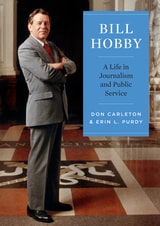
Bill Hobby
A Life in Journalism and Public ServiceDon Carleton and Erin L. Purdy
University of Texas Press, 2024
A comprehensive biography of a legendary lieutenant governor.
During his five terms as lieutenant governor of Texas, Bill Hobby became one of the most powerful political figures in the state’s history. He was first elected lieutenant governor of Texas in 1972 and served until 1990. Thanks to his brilliance as a political tactician and his personal integrity, Hobby was able to set the Senate’s agenda and garner respect from legislators on both sides of the aisle.
In Bill Hobby: A Life in Journalism and Public Service, Don Carleton and Erin Purdy document Hobby’s significant contributions to Texas as a journalist, politician, and philanthropist. Born into a prominent Texas family with a rich legacy of public service, he was the son of Houston newspaper publisher and former Texas governor William P. Hobby Sr., and Oveta Culp Hobby, who led the Women’s Army Corps during World War II and served in Eisenhower’s cabinet. After more than a decade as a journalist for the Houston Post, Hobby forged his own political path while also playing a prominent role in his family’s newspaper and television business.
Hobby was never shy about using his power to serve the people of Texas. Even after he left office, he continued to make a difference as a strong advocate for public education, including a term as chancellor of the University of Houston.
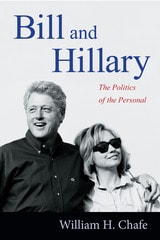
Bill and Hillary
The Politics of the PersonalWilliam H. Chafe
Duke University Press, 2012

Biocultural Creatures
Toward a New Theory of the HumanSamantha Frost
Duke University Press, 2016
Biopolitics from Below
Crisis, Conjuncture, RuptureRanabir Samaddar
Central European University Press, 2025
The current social turmoil enveloping the world has produced knee jerk reactions and a plethora of policy declarations. At the same time, the scenario is marked with response of those with low socioeconomic status to the worldwide chaos and precarious living conditions. In this context, how do we make sense of what is being described variously as a breakdown of democracy, its exhaustion, and the new challenges in the form of an alternative politics of life or a phenomenon that we may term as “biopolitics from below”?
The theme of the book is crisis, conjuncture, and rupture. It relates to the question of correlation of social and political forces in the emergence of certain events, presents certain events as illustrations, and takes a historiographical-analytical route to argue why certain things happen in the way they happen. Usually, crisis is the explanatory factor. This book seeks to go deeper and find out why some crises and not all produce unexpected outcomes. Or, as this book puts it differently, the essential gradient of a crisis is the correlation of forces at a particular time - and thus the question of conjuncture. The book seeks to open up to new adventures in thought, imagining new openings, and creating exits from the situation we find ourselves in.
Biopolitics
A ReaderTimothy Campbell and Adam Sitze, eds.
Duke University Press, 2013
Michel Foucault gave new and unprecedented meaning to the term "biopolitics" in his 1976 essay "Right of Death and Power over Life." In this anthology, that touchstone piece is followed by essays in which biopolitics is implicitly anticipated as a problem by Hannah Arendt and later altered, critiqued, deconstructed, and refined by major political and social theorists who explicitly engaged with Foucault's ideas. By focusing on the concept of biopolitics, rather than applying it to specific events and phenomena, this Reader provides an enduring framework for assessing the central problematics of modern political thought.
Contributors. Giorgio Agamben, Hannah Arendt, Alain Badiou, Timothy Campbell, Gilles Deleuze, Roberto Esposito, Michel Foucault, Donna Haraway, Michael Hardt, Achille Mbembe, Warren Montag, Antonio Negri, Jacques Rancière, Adam Sitze, Peter Sloterdijk, Paolo Virno, Slavoj Žižek
Biopower
Foucault and BeyondEdited by Vernon W. Cisney and Nicolae Morar
University of Chicago Press, 2015
Situating biopower as a radical alternative to traditional conceptions of power—what Foucault called “sovereign power”—the contributors examine a host of matters centered on life, the body, and the subject as a living citizen. Altogether, they pay testament to the lasting relevance of biopower in some of our most important contemporary debates on issues ranging from health care rights to immigration laws, HIV prevention discourse, genomics medicine, and many other topics.
Bismarck
Volker Ullrich
Haus Publishing, 2015
A leading historian of nineteenth- and twentieth-century history, Ullrich demonstrates that the “Founder of the Reich” was in fact an opponent of liberal German nationalism. After the wars of 1866 and 1870, Bismarck spent the rest of his career working to preserve peace in Europe and protect the empire he had created. Despite his reputation as an enemy of socialism, he introduced comprehensive health and unemployment insurance for German workers. Far from being a “man of iron and blood,” Bismarck was in fact a complex statesman who was concerned with maintaining stability and harmony far beyond Germany’s newly unified borders.
Comprehensive and balanced, Bismarck shows us the post-reunification value of looking anew at this monumental figure’s role in European history.
Black Communist in the Freedom Struggle
The Life of Harry HaywoodHarry Haywood
University of Minnesota Press, 2012
Mustering out of the U.S. army in 1919, Harry Haywood stepped into a battle that was to last the rest of his life. Within months, he found himself in the middle of one of the bloodiest race riots in U.S. history and realized that he’d been fighting the wrong war—the real enemy was right here at home. This book is Haywood’s eloquent account of coming of age as a black man in twentieth-century America and of his political awakening in the Communist Party.
For all its cultural and historical interest, Harry Haywood’s story is also noteworthy for its considerable narrative drama. The son of parents born into slavery, Haywood tells how he grew up in Omaha, Nebraska, found his first job as a shoeshine boy in Minneapolis, then went on to work as a waiter on trains and in restaurants in Chicago. After fighting in France during the war, he studied how to make revolutions in Moscow during the 1920s, led the Communist Party’s move into the Deep South in 1931, helped to organize the campaign to free the Scottsboro Boys, worked with the Sharecroppers’ Union, supported protests in Chicago against Mussolini’s invasion of Ethiopia, fought with the International Brigades in Spain, served in the Merchant Marines during World War II, and continued to fight for the right of self-determination for the Afro-American nation in the United States until his death in 1985.
This new edition of his classic autobiography, Black Bolshevik, introduces American readers to the little-known story of a brilliant thinker, writer, and activist whose life encapsulates the struggle for freedom against all odds of the New Negro generation that came of age during and after World War I.
Black Minded
The Political Philosophy of Malcolm XMichael E. Sawyer
Pluto Press, 2020
Michael Sawyer argues that the foundational concepts of Malcolm X's political philosophy - economic and social justice, strident opposition to white supremacy and Black internationalism - are often obscured by an emphasis on biography. The text demonstrates the way in which Malcolm X's philosophy lies at the intersection of the thought of W.E.B. Du Bois and Frantz Fanon and is an integral part of the revolutionary politics formed to alleviate the plight of people of African descent globally.
Exploring themes of ontology, the body, geographic space and revolution, Black Minded provides a much-needed appraisal of Malcolm X's political philosophy.
Bleak Liberalism
Amanda Anderson
University of Chicago Press, 2016
Amanda Anderson examines canonical works of high realism, political novels from England and the United States, and modernist works to argue that liberalism has engaged sober and even stark views of historical development, political dynamics, and human and social psychology. From Charles Dickens’s Bleak House and Hard Times to E. M. Forster’s Howards End to Doris Lessing’s The Golden Notebook, this literature demonstrates that liberalism has inventive ways of balancing sociological critique and moral aspiration. A deft blend of intellectual history and literary analysis, Bleak Liberalism reveals a richer understanding of one of the most important political ideologies of the modern era.
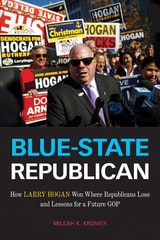
Blue-State Republican
How Larry Hogan Won Where Republicans Lose and Lessons for a Future GOPMileah K. Kromer
Temple University Press, 2023
Larry Hogan is one of the most popular political figures in the United States today. The two-term Republican governor of Maryland first won his seat after upsetting a favorite of the Democratic political establishment, and then overcame the Trump-driven wave in the heartland of the #resistance to win a second term in 2018.
Blue-State Republican is the remarkable story of how his carefully messaged, pragmatic approach to governance helped build a coalition of moderate and conservative Democrats, independents, women, college-educated and Black voters and maintained his GOP base during a time of polarization and negative partisanship. Mileah Kromer takes readers inside Maryland politics to illustrate exactly how Hogan won where Republicans lose and consider whether the un-Trump Republican offers any lessons for how the GOP can win the center-right voters who continue to make up a majority of the country.
Kromer conducts interviews with key political leaders and insiders, including Hogan himself, to explain the mechanics of his political success. She also provides a cogent analysis of public opinion polls and focus groups, ultimately showing why the success of a blue-state Republican matters outside of his home state, especially as Hogan considers a 2024 Presidential run.
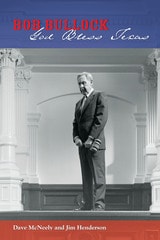
Bob Bullock
God Bless TexasBy Dave McNeely and Jim Henderson
University of Texas Press, 2008
Renowned for his fierce devotion to the people of Texas—as well as his equally fierce rages and unpredictable temper—Bob Bullock was the most powerful political figure in Texas at the end of the twentieth century. First elected to the Texas House of Representatives in 1956, Bullock held several key statewide posts before capturing the lieutenant governor's office in 1990. Though nominally the state's number two official, Bullock in fact became Texas's top power broker, wielding tremendous influence over the legislative agenda and state budget through the 1990s while also mentoring and supporting a future president—George W. Bush.
In this lively, yet thoroughly researched biography, award-winning journalists Dave McNeely and Jim Henderson craft a well-rounded portrait of Bob Bullock, underscoring both his political adroitness and his personal demons. They trace Bullock's rise through state government as Assistant Attorney General, Secretary of State, State Comptroller, and Lieutenant Governor, showing how he increased the power of every office he held. The authors spotlight Bullock's substantial achievements, which included hiring an unprecedented number of women and minorities, instituting a performance review to increase the efficiency of state agencies, restructuring the public school funding system, and creating the state's first water conservation and management plan.
Bodies of Resistance
New Phenomenologies of Politics, Agency, and CultureLaura Doyle
Northwestern University Press, 2001
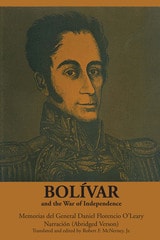
Bolívar and the War of Independence
Memorias del General Daniel Florencio O’Leary, NarraciónBy Daniel Florencio O'Leary
University of Texas Press, 1970
The overthrow of Spanish rule and the birth of new republican governments in northern South America at the beginning of the nineteenth century were in large part the work of one man—Simón Bolívar. Bolívar was not only the soldier who built a patriot army from a small band of exiles and led them victoriously across Venezuela and down the spine of the Andes as far as Potosí; he was also the statesman who framed the new republics that sprang to life after the defeat of the Spanish and who called the Congress of Panama in hopes of making real his dream of uniting all the South American republics in a single confederation. He was truly the Liberator.
The Narración, or narrative, of the Memorias of Daniel Florencio O’Leary has long been recognized by Spanish American scholars as one of the most important historical sources for a major part of Bolívar’s life. O’Leary took an active part in the wars for independence, first as a young officer, recruited in the British Isles to aid the patriot cause, and later as Bolívar’s chief aide, often entrusted with diplomatic missions. His firsthand knowledge of the stirring events of the period, his access to relevant documents, and his close association with the major figures in the struggle, as well as his friendship with Bolívar, made O’Leary a particularly valuable chronicler and biographer. Bolívar himself, shortly before his death, requested that O’Leary write the story of his life.
O’Leary’s meticulous attention to military and diplomatic maneuvers and his keen, sometimes acrid, comments on both men and events give the reader not only a vivid portrait of Bolívar—the man and his achievements—but also a remarkable insight into O’Leary’s own position as an autocratic-minded participant in the wars for independence. Although O’Leary’s devotion to, and admiration for, his Chief make for an occasionally partisan view, his stark account of the hardships and disappointments that Bolívar and his armies overcame against almost impossible odds does much to balance the narrative.
In his abridged translation, Robert McNerney has omitted the Apéndice, documents that O’Leary, had he lived, undoubtedly would have used as the source for completing his account of Bolívar’s life. Numerous letters and documents scattered through the original text also have been omitted, leaving a highly readable narrative.
Bookchin
A Critical AppraisalDamian F. White
Pluto Press, 2008
This is the first comprehensive overview of the work of Murray Bookchin, the left-libertarian social theorist and political ecologist who is widely regarded as the visionary precursor of anti-corporate politics.
Bookchin's writing spans fifty years and engages with a wide variety of issues: from ecology to urban planning, from environmental ethics to debates about radical democracy. Weaving insights from Hegel and Marx, Kropotkin and Mumford, Bookchin presents a critical theory whose central utopian message is 'things could be other than they are'.
This accessible introduction maps the evolution of Bookchin’s project. It traces his controversial engagements with Marxism, anarchism, critical theory, postmodernism and eco-centric thought. It evaluates his attempt to develop a social ecology. Finally, it considers how his thinking relates to current debates in social theory and environmentalism, critical theory and philosophy, political ecology and urban theory.
Offering a clear account of Bookchin's key themes, this book provides a critical but sympathetic account of the strengths and weaknesses of Bookchin's writing.
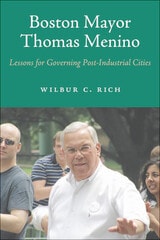
Boston Mayor Thomas Menino
Lessons for Governing Post-Industrial CitiesWilbur C. Rich
University of Massachusetts Press, 2023
Hailed as one of Boston’s most beloved mayors and its longest serving, Thomas Menino (1942–2014) deftly managed the city’s finances and transformed Boston into the hub of innovation that it is today. During his time in office, Boston embraced modern industrial growth and moved forward with noteworthy developments that altered neighborhoods, while also facing ongoing racial strife, challenges of unaffordable housing, and significant public union negotiations.
Mayors in modern American cities occupy unique positions as government leaders who need to remain active parts of their communities in addition to being tasked with fixing neighborhood issues, managing crises, and keeping schools and public infrastructure on course. Situating news coverage alongside interviews with the mayor and his administration, political scientist Wilbur C. Rich chronicles Menino’s time in office while also considering his personal and professional background, his larger-than-life personality, and his ambitions. Menino’s approach to these challenges and opportunities offers enduring lessons to anyone interested in urban government and political leadership.
Bruno Latour
Reassembling the PoliticalGraham Harman
Pluto Press, 2014
Bruno Latour, the French sociologist, anthropologist and long-established superstar in the social sciences is revisited in this pioneering account of his ever-evolving political philosophy. Breaking from the traditional focus on his metaphysics, most recently seen in Harman’s book Prince of Networks, the author instead begins with the Hobbesian and even Machiavellian underpinnings of Latour’s early period encountering his shift towards Carl Schmitt then finishing with his final development into the Lippmann / Dewey debate. Harman brings these twists and turns into sharp focus in terms of Latour’s personal political thinking.
Along with Latour’s most important articles on political themes, the book chooses three works as exemplary of the distinct periods in Latour’s thinking: The Pasteurization of France, Politics of Nature, and the recently published An Inquiry Into Modes of Existence, as his conception of politics evolves from a global power struggle between individuals, to the fabrication of fragile parliamentary networks, to just one mode of existence among many others.
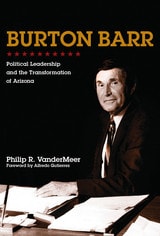
Burton Barr
Political Leadership and the Transformation of ArizonaPhilip R. VanderMeer, Foreword by Alfredo Gutierrez
University of Arizona Press, 2014
Considered perhaps the most influential person in Arizona’s political development, Burton Barr represented north central Phoenix in the Arizona House of Representatives for the twenty-two years from 1964 to 1986. As the Republican House Majority Leader for twenty of those years, he left his fingerprints on every major piece of legislation during those decades, covering such issues as air pollution, health care for indigents, school aid, the tax code, prison reform, child care, groundwater management, and freeway funding.
Burton Barr’s political life unfolded during the very time his state and region shifted from being outliers to trendsetters. His choices in policy making and his leadership style were both an outcome and a creator of his sociopolitical environment. Arizona politics in the 1960s and ’70s was a rich brew of key elements, a time when the economy was being transformed, the nature and distribution of populations shifted, partisan politics were in flux, and the very lifeblood of the West—water—was being contested under increasing pressures of usage and depletion.
How Barr successfully responded to those challenges is the story of Arizona’s development during those years. At the heart of it, Barr’s political life and personality are inextricably bound up with the life of the West.