Results by title
62 books match the query 'Political & Protest' and 6 start with b
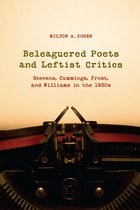
Beleaguered Poets and Leftist Critics
Stevens, Cummings, Frost, and Williams in the 1930sMilton A. Cohen
University of Alabama Press, 2011
A critical examination of modernist poetry and the demands of leftist literary theory.
Different as they were as poets, Wallace Stevens, E. E. Cummings, Robert Frost, and William Carlos Williams grappled with the highly charged literary politics of the 1930s in comparable ways. As other writers moved sharply to the Left, and as leftist critics promulgated a proletarian aesthetics, these modernist poets keenly felt the pressure of the times and politicized literary scene. All four poets saw their reputations critically challenged in these years and felt compelled to respond to the new politics, literary and national, in distinct ways, ranging from rejection to involvement.
Beleaguered Poets and Leftist Critics closely examines the dynamics of these responses: what these four poets wrote—in letters, essays, lectures, fiction (for Williams), and most importantly, in their poems; what they believed politically and aesthetically; how critics, particularly leftist critics, reviewed their work; how these poets reacted to that criticism and to the broader milieu of leftism. Each poet’s response and its subsequent impact on his poetic output is a unique case study of the conflicting demands of art and politics in a time of great social change.
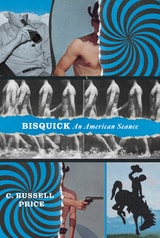
Bisquick
An American SeanceC. Russell Price
Northwestern University Press, 2026
A breathtaking gallop through spectral planes, grief, and ghosts
Grief is a rodeo filled with ghost clowns. In Bisquick: An American Seance, C. Russell Price explores spiritualism and the fetishization of the Midwest cowboy aesthetic, creating a vibrant world inhabited by three unforgettable characters: the speaker, a traumatized eco-anarchist working through grief; Ghost Cowboy, a ghost dream boyfriend hell-bent on hunting predators of the poor; and Bisquick, a blue ghost horse who just wants to dance. This spectral trio boogies, copulates, and fights against a system that ghosted them long before the demise of their physical bodies, determined to stay saddled to their dreams. Price gallops through the widths of time, the geography of the United States, the spectral plane, and the leather BDSM scene as they attempt to answer this provocative collection’s central question: If the dead could talk, wouldn’t they have something better to say?
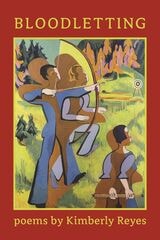
Bloodletting
Kimberly Reyes
Omnidawn, 2025
This is a collection of poems about how we find and cultivate love amid wars, including wars that often go ignored. Throughout Bloodletting, Kimberly Reyes considers how we define love and who gets to experience it, paying special attention to the ways that race and sex influence how we are perceived and valued by society. Through the voice of a Black woman coming to terms with her own perspectives on relationship-building, Reyes shows the damage that contemporary culture can do to women, and Black women in particular. Resisting passivity, Reyes’s poetry cuts through pervasive doom scrolling, virtue signaling, and parasocial relationships, inviting readers to remember what care is really supposed to feel like.

Boat
PoemsChristopher Merrill
Tupelo Press, 2013
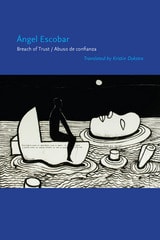
Breach of Trust/Abuso de confianza
Ángel Escobar with Translation by Kristin Dykstra
University of Alabama Press, 2016
The best-known work by acclaimed Cuban poet Ángel Escobar
Ángel Escobar’s Breach of Trust / Abuso de confianza is known by many as the most devastating book of his poetic generation. It is his first to be offered to an English-speaking audience. Merging personal and collective meditations, these twenty-three poems perform an indictment of violence. Escobar’s poetry delineates lacerations etched on bodies and minds by the sanguinary twentieth century, which unfolded out of a longer modernity spanning the Americas.
Breach of Trust / Abuso de confianza outlived its author, who took his own life in 1997. Brief and implicit appeals for justice and love offset the book’s abject theatricality. Escobar’s tragic masterpiece deftly interweaves themes into a striking synthesis offered in the spirit of survival.
Award-winning translator Kristin Dykstra introduces this collection with a comprehensive examination of Escobar’s life, work, and the times within which he wrote. Dykstra situates Escobar’s poetic abjection as his drive to confront thingification face to (non)face.
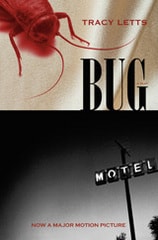
Bug
A PlayTracy Letts
Northwestern University Press, 2007
Tracy Letts's tale of love, paranoia, and government conspiracy is a thought-provoking psycho-thriller that mixes terror and laughter at a fever pitch.
This dark comedy takes place in a seedy motel room outside Oklahoma City, where Agnes, a drug-addled cocktail waitress, is hiding from her ex-con ex-husband. Her lesbian biker friend R.C. introduces her to Peter, a handsome drifter who might be an AWOL Gulf War veteran. They soon begin a relationship that takes place almost entirely within the increasingly claustrophobic confines of her motel room. Peter begins to rant about the war in Iraq, UFOs, the Oklahoma City bombings, cult suicides, and then secret government experiment on soldiers, of which he believes he is a victim. His delusions infect Agnes and the tension mounts as mysterious strangers appear at their door, past events haunt them at every turn and they are attacked by real bugs.