Results by title
73 books match the query 'Popular works' and 6 start with b
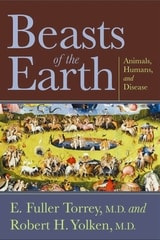
Beasts of the Earth
Animals, Humans, and DiseaseTorrey, E. Fuller
Rutgers University Press, 2014
Humans have lived in close proximity to other animals for thousands of years. Recent scientific studies have even shown that the presence of animals has a positive effect on our physical and mental health. People with pets typically have lower blood pressure, show fewer symptoms of depression, and tend to get more exercise.
But there is a darker side to the relationship between animals and humans. Animals are carriers of harmful infectious agents and the source of a myriad of human diseases. In recent years, the emergence of high-profile illnesses such as AIDS, SARS, West Nile virus, and bird flu has drawn much public attention, but as E. Fuller Torrey and Robert H. Yolken reveal, the transfer of deadly microbes from animals to humans is neither a new nor an easily avoided problem.
Beginning with the domestication of farm animals nearly 10,000 years ago, Beasts of the Earth traces the ways that human-animal contact has evolved over time. Today, shared living quarters, overlapping ecosystems, and experimental surgical practices where organs or tissues are transplanted from non-humans into humans continue to open new avenues for the transmission of infectious agents. Other changes in human behavior like increased air travel, automated food processing, and threats of bioterrorism are increasing the contagion factor by transporting microbes further distances and to larger populations in virtually no time at all.
While the authors urge that a better understanding of past diseases may help us lessen the severity of some illnesses, they also warn that, given our increasingly crowded planet, it is not a question of if but when and how often animal-transmitted diseases will pose serious challenges to human health in the future.
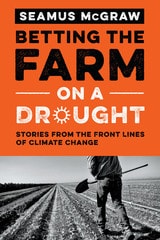
Betting the Farm on a Drought
Stories from the Front Lines of Climate ChangeBy Seamus McGraw
University of Texas Press, 2015
Climate change has become one of the most polarizing issues of our time. Extremists on the left regularly issue hyperbolic jeremiads about the impending destruction of the environment, while extremists on the right counter with crass, tortured denials. But out in the vast middle are ordinary people dealing with stronger storms and more intense droughts than they’ve ever known. This middle ground is the focus of Betting the Farm on a Drought, a lively, thought-provoking book that lays out the whole story of climate change—the science, the math, and most importantly, the human stories of people fighting both the climate and their own deeply held beliefs to find creative solutions to a host of environmental challenges.
Seamus McGraw takes us on a trip along America’s culturally fractured back roads and listens to farmers and ranchers and fishermen, many of them people who are not ideologically, politically, or in some cases even religiously inclined to believe in man-made global climate change. He shows us how they are already being affected and the risks they are already taking on a personal level to deal with extreme weather and its very real consequences for their livelihoods. McGraw also speaks to scientists and policymakers who are trying to harness that most renewable of American resources, a sense of hope and self-reliance that remains strong in the face of daunting challenges. By bringing these voices together, Betting the Farm on a Drought ultimately becomes a model for how we all might have a pragmatic, reasoned conversation about our changing climate.
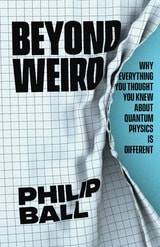
Beyond Weird
Why Everything You Thought You Knew about Quantum Physics Is DifferentPhilip Ball
University of Chicago Press, 2018
Since Niels Bohr said this many years ago, quantum mechanics has only been getting more shocking. We now realize that it’s not really telling us that “weird” things happen out of sight, on the tiniest level, in the atomic world: rather, everything is quantum. But if quantum mechanics is correct, what seems obvious and right in our everyday world is built on foundations that don’t seem obvious or right at all—or even possible.
An exhilarating tour of the contemporary quantum landscape, Beyond Weird is a book about what quantum physics really means—and what it doesn’t. Science writer Philip Ball offers an up-to-date, accessible account of the quest to come to grips with the most fundamental theory of physical reality, and to explain how its counterintuitive principles underpin the world we experience. Over the past decade it has become clear that quantum physics is less a theory about particles and waves, uncertainty and fuzziness, than a theory about information and knowledge—about what can be known, and how we can know it. Discoveries and experiments over the past few decades have called into question the meanings and limits of space and time, cause and effect, and, ultimately, of knowledge itself. The quantum world Ball shows us isn’t a different world. It is our world, and if anything deserves to be called “weird,” it’s us.
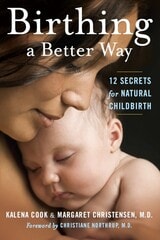
Birthing a Better Way
12 Secrets for Natural ChildbirthKalena Cook
University of North Texas Press, 2010
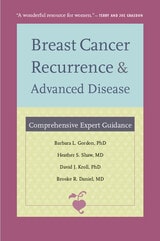
Breast Cancer Recurrence and Advanced Disease
Comprehensive Expert GuidanceBarbara L. Gordon, Heather S. Shaw, David J. Kroll, and Brooke R. Daniel
Duke University Press, 2010
This indispensable book aids those diagnosed with recurrent or late-stage breast cancer, those wanting to reduce the chance of a recurrence, and those with other types of late-stage cancer. It is also a valuable resource for healthcare professionals, friends, and family members.
Topics covered include
• Types of recurrence, their symptoms, and ways of minimizing the chance of a recurrence
• Diagnostic tests, potential surgeries, and treatments to manage late-stage cancer
• Getting the best care, evaluating complementary therapies, and alleviating pain and depression
• Cessation of treatment and what one may experience as the disease progresses
• End-of-life issues including dealing with financial and legal matters, communicating with loved ones and hospice workers, and planning memorial services
Breast Cancer Recurrence and Advanced Disease includes a glossary of medical terms, appendices on nutrition and integrative health centers, and links to current Web sites addressing matters such as clinical trials, patients’ rights, and medical expenses.
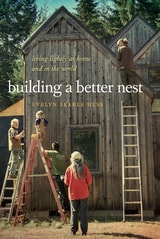
Building a Better Nest
Living Lightly at Home and in the WorldEvelyn Searle Hess
Oregon State University Press, 2015
What does it mean to build a better nest? Better for whom? Is it better for the individual or family? The planet? Green building and sustainable design are popular buzzwords, but to Hess, sustainable building is not a simple matter of buying and installing the latest recycled flooring products. It is also about cooperative work: working together in employment, in research, in activism, and in life. Hess is concerned with her local watershed, but also with the widening income gap, disappearing species, and peak resources. She actively works to reduce overconsumption and waste. For Hess, these problems are both philosophical and practical.
As Hess and her husband age, the questions of how to live responsibly arise with greater frequency and urgency. With unfailing wit and humor, she looks for answers in such places as neuroscience, Buddhism, and her ancestral legacy. Building a Better Nest will appeal to anyone with an interest in sustainable building, off-grid living, or alternative communities. The questions it asks about the way we live are earnest and important, from an author whose voice is steeped in wisdom and gratitude.