Results by title
597 books match the query 'Psychological aspects' and 14 start with b

Barbarous Souls
David L. Strauss
Northwestern University Press, 2010
Barbarous Souls tells the story of Darrel Parker’s wrongful conviction for Nancy’s murder. Lincoln native David Strauss weaves a shocking true crime story with an exposé of still-prevalent methods of interrogation—methods that often lead to false confessions and the conviction of innocent suspects. After he was convicted, Parker served thirteen years of a life sentence before agreeing to a deal that would free him but not clear his record. It was later discovered that a murderer who died in prison in 1988 had taped a confession to the crime.
A roller-coaster ride in the tradition of John Grisham’s The Innocent Man, Barbarous Souls is a thorough examination of a wrongful conviction based on a false confession, and an illuminating portrayal of a widespread phenomenon that still plagues the justice system.

Battle
The Nature and Consequences of Civil War CombatEdited by Kent Gramm
University of Alabama Press, 2008
A critical, multidisciplinary examination of Civil War combat that interrogates the technological, medical, psychological, and cultural forces shaping battlefield experience and its enduring national legacy.
“In our youth, our hearts were touched with fire,” wrote Oliver Wendell Holmes of his generation’s Civil War days. Through the ages, war stories have gleamed with romantic glory, and American memories of the cataclysmic Civil War inspire pageantry and poetry even today.
The essays in Battle form a corrective to such celebratory histories by examining the lethal realities of Civil War combat—Enlightenment science applied to the creation of weapons that maimed and killed, which far outpaced advances in diet, sanitation, and medical treatment. The book reveals that behind the drums and trumpets, sashes and swords, the armies of the Union and Confederacy alike were haunted by fear, pain, and death.
The collection includes an introduction and afterword by editor Kent Gramm, who also contributes an essay titled “Numbers” that reveals the war in statistics. Paul Fussell contributes a powerful essay titled “The Culture of War.” D. Scott Hartwig examines the face of battle at Gettysburg. Bruce A. Evans discusses medical technology in “Wounds, Death, and Medical Care in the Civil War.” Eric T. Dean challenges the meanings and consequences of combat in “The Awful Shock and Rage of Battle.” The collection is rounded out by Alan T. Nolan’s masterful review of the national consequences of battle and the resultant myth of the Confederacy’s Lost Cause.

Battling for Hearts and Minds
Memory Struggles in Pinochet's Chile, 1973–1988Steve J. Stern
Duke University Press, 2006
In the 1970s, Chilean dissidents were lonely “voices in the wilderness” insisting that state terror and its victims be recognized and remembered. By the 1980s, the dissent had spread, catalyzing a mass movement of individuals who revived public dialogue by taking to the streets, creating alternative media, and demanding democracy and human rights. Despite long odds and discouraging defeats, people of conscience—victims of the dictatorship, priests, youth, women, workers, and others—overcame fear and succeeded in creating truthful public memories of state atrocities. Recounting both their efforts and those of the regime’s supporters to win the battle for Chileans’ hearts and minds, Stern shows how profoundly the struggle to create memories, to tell history, matters.
Battling for Hearts and Minds is the second volume in the trilogy The Memory Box of Pinochet’s Chile. The third book will examine Chileans’ efforts to achieve democracy while reckoning with Pinochet’s legacy.
Before Their Time
Mary Stimming
Temple University Press, 1998
Each of these survivors faces the common difficulties associated with losing a loved one by suicide. They also experience difficulties specific to their status as both adult and child. Topics such as the impact of the parent's suicide on adult children's personal and professional choices, marriages and parenting, sibling and surviving parent relationships are explored with sensitivity and insight. Various coping skills, including humor, are described.
The writers describe feelings of regret and responsibility related to their parent's suicide. They express concern about other family members' vulnerability to suicide. They speak openly about the fears and stresses they face and how they cope with them.
The authors ranged in age from nineteen to thirty-six at the time of the parent's death. Between one and twenty-five years have passed since that tragedy.
In addition to the first-person narratives, the book includes a resource section with a national listing of suicide survivor support groups; an overview of existing research on survivors of suicide by John L. McIntosh, past president of the American Association of Suicidology; and an essay on elderly suicide by David C. Clark, secretary-general, International Association for Suicide, and editor-in-chief of Crisis. The book is introduced with a Foreword by Rev. Charles Rubey, founder and director of Loving Outreach to Survivors of Suicide.
Behavioral Public Finance
Edward J. McCaffery
Russell Sage Foundation, 2006
Belonging and Identity in STEM Higher Education
Edited by Camille Kandiko Howson and Martyn Kingsbury
University College London, 2024
In Belonging and Identity in STEM Higher Education, Camille Kandiko Howson and Martyn Kingsbury examine the role of science, technology, engineering, and mathematics (STEM) pedagogies in facilitating belonging, variable impacts across student characteristics, and the experiences of STEM students in higher education. Through case study contributions, the book analyzes the unique educational environments for STEM staff and students throughout Europe and Asia, challenging the assumptions that STEM fields are inherently unemotional and impersonal disciplines.
Between Self and Society
Inner Worlds and Outer Limits in the British Psychological NovelBy John Rodden
University of Texas Press, 2016
Between Self and Society explores the psychosocial dramas that galvanize six major British novels written between the eighteenth and twentieth centuries. The book challenges an influential misconception that has for too long hindered appreciation of the psychological novel. John Rodden argues that there should be no simplifying antithesis between psychological, “inner” conflicts (within the mind or “soul”) and institutional, “outer” conflicts (within family, class, community). Instead, it is the overarching, dramatic—yet often tortuous—relations between self and society that demand our attention. Rodden presents fresh interpretations of an eclectic group of prose fiction classics, including Tobias Smollett’s The Adventures of Roderick Random, William Godwin’s Caleb Williams, Thomas Hardy’s The Mayor of Casterbridge, Ford Madox Ford’s The Good Soldier, Wyndham Lewis’s Tarr, and D. H. Lawrence’s Women in Love.
Far from being merely admirable experiments, let alone daring though interesting failures, these fictions are shown to possess aesthetic unity, stylistic consistency, and psychic force. Between Self and Society thus impels our careful reconsideration of novels that represent major artistic achievements, yet have been either unjustly neglected or appreciated in limiting ways that do injustice to their psychological aspects. Rodden’s vibrant discussion invites an upward revaluation of these works and encourages the full recognition of their value and significance in British literary history.
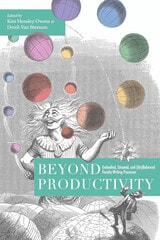
Beyond Productivity
Embodied, Situated, and (Un)Balanced Faculty Writing ProcessesKim Hensley Owens
Utah State University Press, 2023
This collection positions scholarly writers' ways of writing as a form of flexible, evolving knowledge. By exhibiting what is lost and gained through successive rounds of transformation and adaptation over time, the contributors offer a sustainable understanding and practice of process—one that looks beyond productivity as the primary measure of success. Each presents a fluid understanding of the writing process, illustrating its deeply personal nature and revealing how fragmented and disjointed methods and experiences can highlight what is precious about writing.
Beyond Productivity determines anew the use and value of scholarly writing and the processes that produce it, both within and beyond the context of the losses, constraints, and adaptations associated with the COVID-19 pandemic.
Beyond the Fourth Wall of War
Theater and Therapy for Embodied TraumaElise R. Morrison
University of Michigan Press, 2026
Beyond the Fourth Wall of War sheds light on forms of embodied performance that emerge in the aftermath of structural violence—war, displacement, and militarism—as individual bodies and bodies politic are shaped by communal disorders. As Elise R. Morrison argues that theater that addresses audiences directly by breaking the so-called “fourth wall”—which allows spectators to see but not interact with the events onstage—can offer embodied frameworks for reckoning with war trauma that move beyond traditions of illusionism and spectatorial distance.
Grounded in performance studies, this interdisciplinary study also draws deeply from digital media studies, peace studies, neuroscientific research in embodied cognition and trauma, and drama therapy. Through a comparative analysis of somatic, interactive methodologies in contemporary trauma-informed therapies, Morrison reveals the capacity of theatrical performance to model “somatic witnessing” and kinesthetic empathy and to cultivate communal practices of repair in response to state-sanctioned violence. Underlying this work is a broader inquiry into war’s performative nature, as participatory theater uniquely reorients spectatorship toward rehearsing “performative ethics” in representational and militarized “theaters of war.” Beyond the Fourth Wall of War makes novel interventions into discourses of contemporary warfare by extending the lens of trauma beyond the battlefield to civilian publics who observe conflict from a distance, yet remain entangled in its machinery.

Blue Juice
Euthanasia in Veterinary MedicinePatricia Morris
Temple University Press, 2012
Offering a candid behind-the-scenes look at small-animal veterinary practices, Blue Juice explores the emotional and ethical conflicts involved in providing a "good death" for companion animals. Patricia Morris presents a nuanced ethnographic account of how veterinarians manage patient care and client relations when their responsibility shifts from saving an animal's life to negotiating a decision to end it.
Using her own experiences and observations in veterinary settings as well as the voices of seasoned and novice vets, Morris reveals how veterinarians think about euthanasia and why this "dirty work" often precipitates "burnout," moral quandaries, and even tense or emotional interactions with clients. Closely observing these interactions, Morris illuminates the ways in which euthanasia reflects deep and unresolved tension in human-animal relationships.
Blue Juice seeks to understand how practitioners, charged with the difficult task of balancing the interests of animals and their humans, deal with the responsibility of ending their patients' lives.

Blue
A History of Postpartum Depression in AmericaRachel Louise Moran
University of Chicago Press, 2024
New motherhood is often seen as a joyful moment in a woman’s life; for some women, it is also their lowest moment. For much of the twentieth century, popular and medical voices blamed women who had emotional and mental distress after childbirth for their own suffering. By the end of the century, though, women with postpartum mental illnesses sought to take charge of this narrative. In Blue: A History of Postpartum Depression in America, Rachel Louise Moran explores the history of the naming and mainstreaming of postpartum depression. Coalitions of maverick psychiatrists, psychologists, and women who themselves had survived substantial postpartum distress fought to legitimize and normalize women’s experiences. They argued that postpartum depression is an objective and real illness and fought to avoid it being politicized alongside other fraught medical and political battles over women’s health.
Based on insightful oral histories and in-depth archival research, Blue reveals a secret history of American motherhood, women’s political activism, and the rise of postpartum depression advocacy amid an often-censorious conservative culture. By breaking new ground with the first book-length history of postpartum mental illness in the twentieth century, Moran brings mothers’ battles with postpartum depression out of the shadows and into the light.
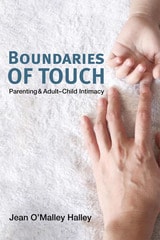
Boundaries of Touch
Parenting and Adult-Child IntimacyJean O'Malley Halley
University of Illinois Press, 2006
Discussing issues of parent-child contact ranging from breastfeeding to sexual abuse, Jean O'Malley Halley traces the evolution of mainstream ideas about touching between adults and children over the course of the twentieth century in the United States. Debates over when a child should be weaned and whether to allow a child to sleep in the parent's bed reveal deep differences in conceptions of appropriate adult-child contact.
Boundaries of Touch shows how arguments about adult-child touch have been politicized, simplified, and bifurcated into "naturalist" and "behaviorist" viewpoints, thereby sharpening certain binary constructions such as mind/body and male/female. Halley discusses the gendering of ideas about touch that were advanced by influential social scientists and parenting experts including Benjamin Spock, Alfred C. Kinsey, and Luther Emmett Holt. She also explores how touch ideology fared within and against the post-World War II feminist movements, especially with respect to issues of breastfeeding and sleeping with a child versus using a crib.
In addition to contemporary periodicals and self-help books on child rearing, Halley uses information gathered from interviews she conducted with mothers ranging in age from twenty-eight to seventy-three. Throughout, she reveals how the parent-child relationship, far from being a private or benign subject, continues as a highly contested, politicized affair of keen public interest.
Breaking Up (at) Totality
A Rhetoric of LaughterD. Diane Davis
Southern Illinois University Press, 2000
Rhetoric and composition theory has shown a renewed interest in sophistic countertraditions, as seen in the work of such "postphilosophers" as Jacques Derrida, Michel Foucault, and Hélène Cixous, and of such rhetoricians as Susan Jarratt and Steven Mailloux. As D. Diane Davis traces today’s theoretical interest to those countertraditions, she also sets her sights beyond them.
Davis takes a “third sophistics” approach, one that focuses on the play of language that perpetually disrupts the “either/or” binary construction of dialectic. She concentrates on the nonsequential third—excess—that overflows language’s dichotomies. In this work, laughter operates as a trope for disruption or breaking up, which is, from Davis’s perspective, a joyfully destructive shattering of our confining conceptual frameworks.
Brown Tide Rising
Metaphors of Latinos in Contemporary American Public DiscourseBy Otto Santa Ana
University of Texas Press, 2002
2002 – Best Book on Ethnic and Racial Political Ideology and/or Political Theory – Organized Section on Race, Ethnicity, and Politics of the American Political Science Association
"...awash under a brown tide...the relentless flow of immigrants..like waves on a beach, these human flows are remaking the face of America...." Since 1993, metaphorical language such as this has permeated mainstream media reporting on the United States' growing Latino population. In this groundbreaking book, Otto Santa Ana argues that far from being mere figures of speech, such metaphors produce and sustain negative public perceptions of the Latino community and its place in American society, precluding the view that Latinos are vested with the same rights and privileges as other citizens.
Applying the insights of cognitive metaphor theory to an extensive natural language data set drawn from hundreds of articles in the Los Angeles Times and other media, Santa Ana reveals how metaphorical language portrays Latinos as invaders, outsiders, burdens, parasites, diseases, animals, and weeds. He convincingly demonstrates that three anti-Latino referenda passed in California because of such imagery, particularly the infamous anti-immigrant measure, Proposition 187. Santa Ana illustrates how Proposition 209 organizers broadcast compelling new metaphors about racism to persuade an electorate that had previously supported affirmative action to ban it. He also shows how Proposition 227 supporters used antiquated metaphors for learning, school, and language to blame Latino children's speech—rather than gross structural inequity—for their schools' failure to educate them. Santa Ana concludes by calling for the creation of insurgent metaphors to contest oppressive U.S. public discourse about minority communities.