Results by title
74 books match the query 'Psychopathology' and 5 start with b
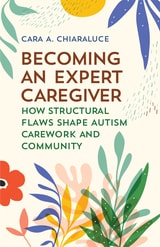
Becoming an Expert Caregiver
How Structural Flaws Shape Autism Carework and CommunityCara A. Chiaraluce
Rutgers University Press, 2025
Throughout the chapters in this book, the expert caregiver is one person who faces unbelievably daunting tasks of filling or reforming persistent institutional gaps, primarily in education and health care, and subverting ableist cultural norms. Without institutional support, answers to their questions, or pragmatic avenues to access resources, lay caregivers become the experts. Their trials and tribulations, especially when navigating the boundaries of professional/lay and private/public worlds, illuminate a type of carework that is increasingly relevant to a growing number of young families caring for neurodivergent, disabled, medically fragile, and/or chronically ill children. These stories offer a vivid picture of the often invisible complex challenges and structural forces that drive individuals to become expert caregivers in the first place.
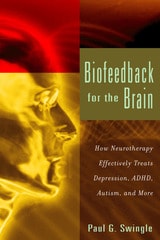
Biofeedback for the Brain
How Neurotherapy Effectively Treats Depression, ADHD, Autism, and MorePaul G. Swingle, PhD
Rutgers University Press, 2008
Neurofeedback is a cutting-edge, drug-free therapeutic technique used by over a thousand licensed therapists in North America to treat a range of conditions from attention deficit and hyperactivity disorders to epilepsy, stroke, anxiety, migraine, and depression. First popularized in the 1970s, this naturalistic method is based on the idea that we can control our brain activity and that, through training, the brain can learn to modify its own electrical patterns for more efficient processing or to overcome various states of dysfunction.
In Biofeedback for the Brain, Dr. Paul G. Swingle describes in clear and coherent language how these procedures work. With numerous actual case examples, readers follow the progress of clients from the initial “brain map” that shows the location and severity of the neurological abnormalities to the various stages of treatment. Conditions often considered untreatable by conventional health practitioners respond positively to neurotherapeutic treatment and Swingle describes many of these remarkable recoveries. Other chapters describe the use of neurotherapy for a variety of surprising purposes, including performance training for elite athletes, of which the most famous example is the Italian soccer team who considered the technique to be their “secret weapon” in attaining a World Cup victory.
Despite wide-ranging success stories and the endorsement of the American Psychological Association, many health care practitioners remain skeptical of neurofeedback and the procedures are still not well-known by the public or conventional health care providers. This book provides a thorough, definitive, and highly readable presentation of this remarkable health care alternative that offers millions of individuals a chance for healing.

Body Story
Julia K. De Pree
Ohio University Press, 2004
For De Pree, between being a girl and being a woman, there was starvation. Body Story is her intimate account of girlhood, virginity, anorexia, and motherhood. De Pree's prose is spare and unguarded, revealing in vivid flashbacks and poignant vignettes the sources of her inner pain.
In high school, the five-foot-ten De Pree weighed as little as 114 pounds. She was too weak to raise her arms above her head. “In a paradoxical way, I starved my body in order to understand my life,” she writes. “I had to place my body in suspension before I could move physically into sexuality. Starving allowed me to create an interim space between innocence and experience.”
De Pree renders the starkness of anorexia along with the process of recovery, relapse, and, ultimately, redemption. She also tells the story of the physical landscape, from her origins in the Midwest to the American South, Paris, and the vast New Mexican desert, as well as the psychic landscape of her body as it encounters the joys and challenges of maturation, childbirth, and motherhood.
De Pree offers readers a new way of understanding women¿s bodily experience, as she writes about the mystery and the meaning of her illness. As many as eight million Americans suffer from eating disorders. Body Story, unlike clinical reports or news accounts, illuminates the complexity of anorexia as the narrative moves toward a subjective and deeply personal truth.
This evocative and often radiant vision is a unique window into womanhood and selfhood in middle-class, contemporary America.
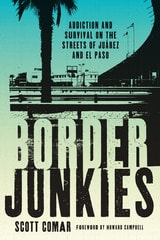
Border Junkies
Addiction and Survival on the Streets of Juárez and El PasoBy Scott Comar
University of Texas Press, 2011
The drug war that has turned Juárez, Mexico, into a killing field that has claimed more than 7,000 lives since 2008 captures headlines almost daily. But few accounts go all the way down to the streets to investigate the lives of individual drug users. One of those users, Scott Comar, survived years of heroin addiction and failed attempts at detox and finally cleaned up in 2003. Now a graduate student at the University of Texas at El Paso in the history department's borderlands doctoral program, Comar has written Border Junkies, a searingly honest account of his spiraling descent into heroin addiction, surrender, change, and recovery on the U.S.-Mexico border.
Border Junkies is the first book ever written about the lifestyle of active addiction on the streets of Juárez. Comar vividly describes living between the disparate Mexican and American cultures and among the fellow junkies, drug dealers, hookers, coyote smugglers, thieves, and killers who were his friends and neighbors in addiction—and the social workers, missionaries, shelter workers, and doctors who tried to help him escape. With the perspective of his anthropological training, he shows how homelessness, poverty, and addiction all fuel the use of narcotics and the rise in their consumption on the streets of Juárez and contribute to the societal decay of this Mexican urban landscape. Comar also offers significant insights into the U.S.-Mexico borderland's underground and peripheral economy and the ways in which the region's inhabitants adapt to the local economic terrain.
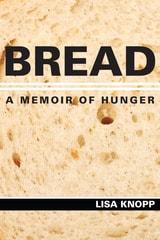
Bread
A Memoir of HungerLisa Knopp
University of Missouri Press, 2025
When she was 54, Lisa Knopp’s weight dropped to a number on the scale that she hadn’t seen since seventh grade. The severe food restricting that left her thin and sick when she was 15 and 25 had returned. This time, she was determined to understand the causes of her malady and how she could heal from a condition that is caused by a tangle of genetic, biological, familial, psychological, cultural, and spiritual factors. This compelling memoir, at once a food and illness narrative, explores the forces that cause eating disorders and disordered eating, including the link between those conditions in women, middle-aged and older, and the fear of aging and ageism.
Winner of the 2017 Nebraska Book Award for Memoir
2017 Choice Outstanding Academic Title