Results by title
1201 books match the query 'Race relations' and 96 start with b
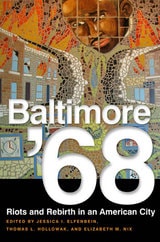
Baltimore '68
Riots and Rebirth in an American CityEdited by Jessica I. Elfenbein, Thomas L. Hollowak and Elizabeth M. Nix
Temple University Press, 2011
In 1968, Baltimore was home to a variety of ethnic, religious, and racial communities that, like those in other American cities, were confronting a quickly declining industrial base. In April of that year, disturbances broke the urban landscape along lines of race and class.
This book offers chapters on events leading up to the turmoil, the riots, and the aftermath as well as four rigorously edited and annotated oral histories of members of the Baltimore community. The combination of new scholarship and first-person accounts provides a comprehensive case study of this period of civil unrest four decades later.
This engaging, broad-based public history lays bare the diverse experiences of 1968 and their effects, emphasizing the role of specific human actions. By reflecting on the stories and analysis presented in this anthology, readers may feel empowered to pursue informed, responsible civic action of their own.
Baltimore '68 is the book component of a larger public history project, "Baltimore '68 Riots: Riots and Rebirth." The project's companion website (http://archives.ubalt.edu/bsr/index.html ) offers many more oral histories plus photos, art, and links to archival sources. The book and the website together make up an invaluable teaching resource on cities, social unrest, and racial politics in the 1960s. The project was the corecipient of the 2009 Outstanding Public History Project Award from the National Council on Public History.

Batos, Bolillos, Pochos, and Pelados
Class and Culture on the South Texas BorderBy Chad Richardson and Michael J. Pisani
University of Texas Press, 2017
A classic account of life on the Texas-Mexico border, Batos, Bolillos, Pochos, and Pelados offers the fullest portrait currently available of the people of the South Texas/Northern Mexico borderlands. First published in 1999, the book is now extensively revised and updated throughout to cover developments since 2000, including undocumented immigration, the drug wars, race relations, growing social inequality, and the socioeconomic gap between Latinos and the rest of American society—issues of vital and continuing national importance.
An outgrowth of the Borderlife Research Project conducted at the University of Texas Rio Grande Valley, Batos, Bolillos, Pochos, and Pelados uses the voices of several hundred Valley residents, collected by embedded student researchers and backed by the findings of sociological surveys, to describe the lives of migrant farmworkers, colonia residents, undocumented domestic servants, maquiladora workers, and Mexican street children. Likewise, it explores social, racial, and ethnic relations in South Texas among groups such as Latinos, Mexican immigrants, wealthy Mexican visitors, Anglo residents or tourists, and Asian and African American residents of South Texas. With this firsthand material and an explanatory focus that utilizes and applies social-science theoretical concepts, the book thoroughly addresses the future composition and integration of Latinos into the society and culture of the United States.
Battle for the BIA
G. E. E. Lindquist and the Missionary Crusade against John CollierDavid W. Daily
University of Arizona Press, 2004
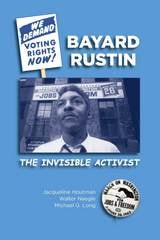
Bayard Rustin
The Invisible ActivistJacqueline Houtman
QuakerPress, 2014
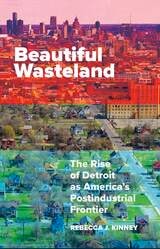
Beautiful Wasteland
The Rise of Detroit as America's Postindustrial FrontierRebecca J. Kinney
University of Minnesota Press, 2016
According to popular media and scholarship, Detroit, the once-vibrant city that crumbled with the departure of the auto industry, is where dreams can be reborn. It is a place that, like America itself, is gritty and determined. It has faced the worst kind of adversity, and supposedly now it’s back. But what does this narrative of “new Detroit” leave out? Beautiful Wasteland reveals that the contemporary story of Detroit’s rebirth is an upcycled version of the American Dream, which has long imagined access to work, home, and upward mobility as race-neutral projects. They’re not. As Rebecca J. Kinney shows, the narratives of Detroit’s rise, decline, and potential to rise again are deeply steeped in material and ideological investments in whiteness.
By remapping the narratives of contemporary Detroit through an extension of America’s frontier mythology, Kinney analyzes a cross-section of twentieth and twenty-first century cultural locations—an Internet forum, ruin photography, advertising, documentary film, and print and online media. She illuminates how the stories we tell about Detroit as a frontier of possibility enable the erasure of white privilege and systemic racism. By situating Detroit as a “beautiful wasteland,” both desirable and distressed, this shows how the narrative of ruin and possibility form a mutually constituted relationship: the city is possible precisely because of its perceived ruin.
Beautiful Wasteland tackles the key questions about the future of postindustrial America. As cities around the country reckon with their own postindustrial landscapes, Rebecca Kinney cautions that development that elides considerations of race and class will only continue to replicate uneven access to the city for the poor, working class, and people of color.
Beauty Shop Politics
African American Women's Activism in the Beauty IndustryTiffany M. Gill
University of Illinois Press, 2010
Looking through the lens of black business history, Beauty Shop Politics shows how black beauticians in the Jim Crow era parlayed their economic independence and access to a public community space into platforms for activism. Tiffany M. Gill argues that the beauty industry played a crucial role in the creation of the modern black female identity and that the seemingly frivolous space of a beauty salon actually has stimulated social, political, and economic change.
From the founding of the National Negro Business League in 1900 and onward, African Americans have embraced the entrepreneurial spirit by starting their own businesses, but black women's forays into the business world were overshadowed by those of black men. With a broad scope that encompasses the role of gossip in salons, ethnic beauty products, and the social meanings of African American hair textures, Gill shows how African American beauty entrepreneurs built and sustained a vibrant culture of activism in beauty salons and schools. Enhanced by lucid portrayals of black beauticians and drawing on archival research and oral histories, Beauty Shop Politics conveys the everyday operations and rich culture of black beauty salons as well as their role in building community.
Becoming Educated
A Midwest StorySimone C. Drake
The Ohio State University Press, 2026
Becoming Educated is Simone C. Drake’s engaging and bold memoir about race, class, gender, and the meaning of education in the urban Midwest. Drake, a scholar of literature, culture, and law, uses her own story as a Black girl attending recently desegregated Columbus public schools in the 1980s and 1990s to explore the United States’ most entrenched social problems and how local systems have tried to combat them. From starting kindergarten the year after an Ohio court decision called for busing to end school segregation, to climbing the ranks of academia, to her decision to send her sons to highly rated but largely white suburban schools, Drake weaves a lively and erudite accounting of her identity formation as an “integration guinea pig.” She punctuates her story with rich evocations of the music, TV, and film that shaped her generation, powerful reflections on relevant works by Black writers and artists from Dawoud Bey to Jay-Z, and images of her own artwork. This prismatic book is a must-read for Gen Xers, Midwesterners, and Americans of any race wanting to think more deeply about how our nation’s educational systems—and by extension, all of us—must reckon with inequalities past and present.

Becoming Mapuche
Person and Ritual in Indigenous ChileMagnus Course
University of Illinois Press, 2011
Becoming New Yorkers
Ethnographies of the New Second GenerationPhilip Kasinitz
Russell Sage Foundation, 2004
Becoming St. Louis
Family, Faith, and the Politics of Citizenship, 1820-1920Sharon Hartman Strom
University of Illinois Press, 2025
Becoming Trustworthy White Allies
Melanie S. Morrison
Duke University Press, 2025
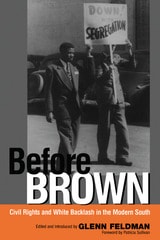
Before Brown
Civil Rights and White Backlash in the Modern SouthGlenn Feldman
University of Alabama Press, 2004
Details the ferment in civil rights that took place across the South before the momentous Brown vs. Board of Education decision in 1954
This collection refutes the notion that the movement began with the Supreme Court decision, and suggests, rather, that the movement originated in the 1930s and earlier, spurred by the Great Depression and, later, World War II—events that would radically shape the course of politics in the South and the nation into the next century.
This work explores the growth of the movement through its various manifestations—the activities of politicians, civil rights leaders, religious figures, labor unionists, and grass-roots activists—throughout the 1940s and 1950s. It discusses the critical leadership roles played by women and offers a new perspective on the relationship between the NAACP and the Communist Party.
Before Brown shows clearly that, as the drive toward racial equality advanced and national political attitudes shifted, the validity of white supremacy came increasingly into question. Institutionalized racism in the South had always offered white citizens material advantages by preserving their economic superiority and making them feel part of a privileged class. When these rewards were threatened by the civil rights movement, a white backlash occurred.
Before Brown
Heman Marion Sweatt, Thurgood Marshall, and the Long Road to JusticeBy Gary M. Lavergne
University of Texas Press, 2010
Winner, Coral Horton Tullis Memorial Prize for Best Book on Texas History, Texas State Historical Association, 2010
Carr P. Collins Award, Texas Institute of Letters, 2011
On February 26, 1946, an African American from Houston applied for admission to the University of Texas School of Law. Although he met all of the school's academic qualifications, Heman Marion Sweatt was denied admission because he was black. He challenged the university's decision in court, and the resulting case, Sweatt v. Painter, went to the U.S. Supreme Court, which ruled in Sweatt's favor. The Sweatt case paved the way for the landmark Brown v. Board of Education of Topeka rulings that finally opened the doors to higher education for all African Americans and desegregated public education in the United States.
In this engrossing, well-researched book, Gary M. Lavergne tells the fascinating story of Heman Sweatt's struggle for justice and how it became a milestone for the civil rights movement. He reveals that Sweatt was a central player in a master plan conceived by the National Association for the Advancement of Colored People (NAACP) for ending racial segregation in the United States. Lavergne masterfully describes how the NAACP used the Sweatt case to practically invalidate the "separate but equal" doctrine that had undergirded segregated education for decades. He also shows how the Sweatt case advanced the career of Thurgood Marshall, whose advocacy of Sweatt taught him valuable lessons that he used to win the Brown v. Board of Education case in 1954 and ultimately led to his becoming the first black Associate Justice of the Supreme Court.
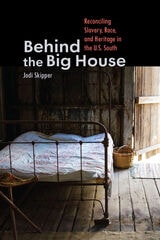
Behind the Big House
Reconciling Slavery, Race, and Heritage in the U.S. SouthJodi Skipper
University of Iowa Press, 2022
When residents and tourists visit sites of slavery, whose stories are told? All too often the lives of slaveowners are centered, obscuring the lives of enslaved people. Behind the Big House gives readers a candid, behind-the-scenes look at what it really takes to interpret the difficult history of slavery in the U.S. South. The book explores Jodi Skipper’s eight-year collaboration with the Behind the Big House program, a community-based model used at local historic sites to address slavery in the collective narrative of U.S. history and culture.
In laying out her experiences through an autoethnographic approach, Skipper seeks to help other activist scholars of color negotiate the nuances of place, the academic public sphere, and its ambiguous systems of reward, recognition, and evaluation.
Bending Archaeology toward Social Justice
Transformational Action for Positive PeaceBarbara J. Little
University of Alabama Press, 2023
Introduces an analytic model for how archaeologists can work toward social justice
In this time of Black Lives Matter, the demands of NAGPRA, and climate crises, the field of American archaeology needs a radical transformation. It has been largely a white, male, privileged domain that replicates an entrenched patriarchal, colonial, and capitalist system. In Bending Archaeology toward Social Justice, Barbara J. Little explores the concepts and actions required for such a change, looking to peace studies, anthropology, sociology, social justice activism, and the achievements of community-based archaeology for helpful approaches in keeping with the UN Sustainable Development Goals. She introduces an analytic model that uses the strengths of archaeology to destabilize violence and build peace.
As Little explains, the Diachronic Transformational Action model and the peace/violence triad of interconnected personal, cultural, and structural domains of power can help disrupt the injustice of all forms of violence. Diachronic connects the past to the present to understand how power worked in the past and works now. Transformational influences power now by disrupting the stability of the violence triad. Action refers to collaborative work to diagnose power relations and transform toward social justice.
Using this framework, Little confronts the country’s founding and myth of liberty and justice for all, as well as the American Dream. She also examines whiteness, antiracism, privilege, and intergenerational trauma, and offers white archaeologists concepts to grapple with their own racialized identities and to consider how to relinquish white supremacy. Archaeological case studies examine cultural violence and violent direct actions against women, Indigenous peoples, African Americans, and Japanese Americans, while archaeologies of poverty, precarity, and labor are used to show how archaeologists have helped expose the roots of these injustices. Because climate justice is integral to social justice, Little showcases insights that archaeology can bring to bear on the climate crisis and how lessons from the past can inform direct actions today. Finally, Little invites archaeologists to embrace inquiry and imagination so that they can both imagine and achieve the positive peace of social justice.
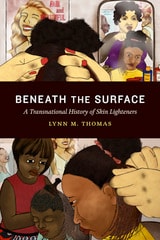
Beneath the Surface
A Transnational History of Skin LightenersLynn M. Thomas
Duke University Press, 2020
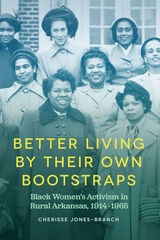
Better Living by Their Own Bootstraps
Black Women's Activism in Rural Arkansas, 1914-1965Cherisse Jones-Branch
University of Arkansas Press, 2021
The first major study to consider Black women’s activism in rural Arkansas, Better Living by Their Own Bootstraps foregrounds activists’ quest to improve Black communities through language and foodways as well as politics and community organizing. In reexamining these efforts, Cherisse Jones-Branch lifts many important figures out of obscurity, positioning them squarely within Arkansas’s agrarian history.
The Black women activists highlighted here include home demonstration agents employed by the Arkansas Agricultural Cooperative Extension Service and Jeanes Supervising Industrial Teachers, all of whom possessed an acute understanding of the difficulties that African Americans faced in rural spaces. Examining these activists through a historical lens, Jones-Branch reveals how educated, middle-class Black women worked with their less-educated rural sisters to create all-female spaces where they confronted economic, educational, public health, political, and theological concerns free from white regulation and interference.
Centered on the period between 1914 and 1965, Better Living by Their Own Bootstraps brings long-overdue attention to an important chapter in Arkansas history, spotlighting a group of Black women activists who uplifted their communities while subverting the formidable structures of white supremacy.
Between Fitness and Death
Disability and Slavery in the CaribbeanStefanie Hunt-Kennedy
University of Illinois Press, 2020
Stefanie Hunt-Kennedy provides a three-pronged analysis of disability in the context of Atlantic slavery. First, she examines the connections of enslavement and representations of disability and the parallel development of English anti-black racism. From there, she moves from realms of representation to reality in order to illuminate the physical, emotional, and psychological impairments inflicted by slavery and endured by the enslaved. Finally, she looks at slave law as a system of enforced disablement.
Audacious and powerful, Between Fitness and Death is a groundbreaking journey into the entwined histories of racism and ableism.
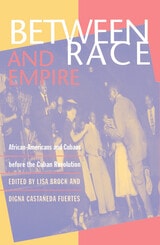
Between Race and Empire
African-Americans and Cubans before the Cuban RevolutionLisa Brock
Temple University Press, 1998
The eleven essays gathered here, written by scholars from both countries, heighten our appreciation of African-Americans as international actors and challenge the notion that Cubans had little or no race consciousness. This is the first study of the world capitalist system to track the international consciousness of working peoples, peoples of color, and women. With a focus on two sets of peoples not in state power, Between Race and Empire expands our understanding of "history from below," and reflects current trends in PanAfricanist and African Diaspora studies by tracing a little-studied linkage between two peoples of African descent.
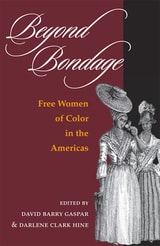
Beyond Bondage
Free Women of Color in the AmericasEdited by David Barry Gaspar and Darlene Clark Hine
University of Illinois Press, 2004
Beyond Constraint
Middle/Passages of Blackness and Indigeneity in the Radical TraditionShona N. Jackson
Duke University Press, 2024
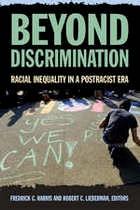
Beyond Discrimination
Racial Inequality in a Post-Racist EraFredrick C. Harris
Russell Sage Foundation, 2013
Beyond Little Rock
The Origins and Legacies of the Central High CrisisJohn A. Kirk
University of Arkansas Press, 2007

Beyond Pluralism
The Conception of Groups and Group Identities in AmericaEdited by Wendy F. Katkin, Ned Landsman, and Andrea Tyree
University of Illinois Press, 1998
melting pot, people come in all persuasions. This volume attempts to bridge
the gap that has developed between pluralists and multiculturalists, advocates
of the academic canon and defenders of diversity, celebrants of ethnic
heritage and critics of racial ascription. Contributors explore the nation's
pluralistic framework as a historical creation, looking at group relations
in the United States and how they have been conceptualized in the past.
Beyond Redemption
Race, Violence, and the American South after the Civil WarCarole Emberton
University of Chicago Press, 2013
Beyond Segregation
Multiracial And Multiethnic NeighborhoodsMichael T. Maly
Temple University Press, 2005
Beyond the Battlefield
Race, Memory, and the American Civil WarDavid W. Blight
University of Massachusetts Press, 2002
The book as a whole demonstrates several ways to probe the history of memory, to understand how and why groups of Americans have constructed versions of the past in the service of contemporary social needs. Topics range from the writing and thought of Frederick Douglass and W.E.B. Du Bois to a comparison of Abraham Lincoln and Douglass on the level of language and memory. The volume also includes a compelling study of the values of a single Union soldier, an analysis of Ken Burns's PBS series The Civil War, and a retrospective treatment of the distinguished African American historian Nathan I. Huggins.
Taken together, these lucidly written pieces offer a thoroughgoing assessment of the stakes of Civil War memory and their consequences for American race relations. Beyond the Battlefield demonstrates not only why we should preserve and study our Civil War battlefields, but also why we should lift our vision above those landscapes and ponder all the unfinished questions of healing and justice, of racial harmony and disharmony, that still bedevil our society and our historical imagination.
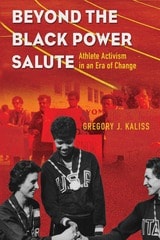
Beyond the Black Power Salute
Athlete Activism in an Era of ChangeGregory J. Kaliss
University of Illinois Press, 2023
Beyond the White Negro
Empathy and Anti-Racist ReadingKimberly Chabot Davis
University of Illinois Press, 2014
Davis analyzes how white engagement with African American novels, film narratives, and hip-hop can help form anti-racist attitudes that may catalyze social change and racial justice. Though acknowledging past failures to establish cross-racial empathy, she focuses on examples that show avenues for future progress and change. Her study of ethnographic data from book clubs and college classrooms shows how engagement with African American culture and pedagogical support can lead to the kinds of white self-examination that make empathy possible. The result is a groundbreaking text that challenges the trend of focusing on society's failures in achieving cross-racial empathy and instead explores possible avenues for change.
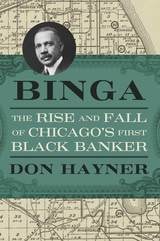
Binga
The Rise and Fall of Chicago's First Black BankerDon Hayner
Northwestern University Press, 2020
Binga is the definitive full-length biography of Jesse Binga, the first black banker in Chicago. Born into a large family in Detroit, Binga arrived in Chicago in 1892 in his late twenties with virtually nothing. Through his wits and resourcefulness, he rose to wealth and influence as a real estate broker, and in 1908 he founded the Binga Bank, the first black-owned bank in the city. But his achievements were followed by an equally notable downfall. Binga recounts this gripping story about race, history, politics, and finance.
The Black Belt, where Binga’s bank was located, was a segregated neighborhood on Chicago’s South Side—a burgeoning city within a city—and its growth can be traced through the arc of Binga’s career. He preached and embodied an American gospel of self-help and accrued wealth while expanding housing options and business opportunities for blacks. Devout Roman Catholics, he and his wife Eudora supported church activities and various cultural and artistic organizations; their annual Christmas party was the Black Belt’s social event of the year. But Binga’s success came at the price of a vicious backlash. After he moved his family into a white neighborhood in 1917, their house was bombed multiple times, his offices were attacked twice, and he became a lightning rod for the worst race riots in Chicago history, which took place in 1919. Binga persevered, but, starting with the stock market crash of October 1929, a string of reversals cost him his bank, his property, and his fortune.
A quintessentially Chicago story, Binga tells the history of racial change in one of the most segregated cities in America and how an extraordinary man stood as a symbol of hope in a community isolated by racial animosity.
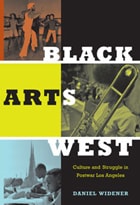
Black Arts West
Culture and Struggle in Postwar Los AngelesDaniel Widener
Duke University Press, 2010
Along with the politicization of black culture, Widener explores the rise of a distinctive regional Black Arts Movement. Originating in the efforts of wartime cultural activists, the movement was rooted in the black working class and characterized by struggles for artistic autonomy and improved living and working conditions for local black artists. As new ideas concerning art, racial identity, and the institutional position of African American artists emerged, dozens of new collectives appeared, from the Watts Writers Workshop, to the Inner City Cultural Center, to the New Art Jazz Ensemble. Spread across generations of artists, the Black Arts Movement in Southern California was more than the artistic affiliate of the local civil-rights or black-power efforts: it was a social movement itself. Illuminating the fundamental connections between expressive culture and political struggle, Black Arts West is a major contribution to the histories of Los Angeles, black radicalism, and avant-garde art.
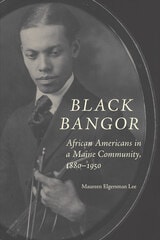
Black Bangor
African Americans in a Maine Community, 1880-1950Maureen Elgersman Lee
University of New Hampshire Press, 2005
Blacks have lived and worked in Maine as early as the seventeenth century, but historically have constituted less than one percent of Maine's population. Probably for this reason, books on Blacks in New England have largely ignored the experience of African American Mainers. Black Bangor is the first major published study of a Black community in Maine.
This tightly woven case study examines the African American community in Bangor during its heyday, 1880–1950, the period that saw an unprecedented migration of Blacks to that city. Blacks migrated to Bangor not just from other New England states, but from the Caribbean and Canadian Maritime Provinces as well, creating a heterogeneous community with roots in two hemispheres. Constituting an “ultraminority” in Bangor (according to the census, Blacks never numbered more than 300 souls during this period), this diverse community nonetheless came together to establish an impressive range of institutions, including local chapters of the NAACP and Odd Fellows, as well as of Mothers and Junior Mothers Clubs. Concentrated in an area known as the Parker Street neighborhood, Black women in Bangor became domestics and cooks, caterers and beauticians, clerks and stenographers. Men worked as loggers, teamsters, porters, chefs, and barbers; a few owned businesses.
Organized thematically, with sections on migration, labor, daily life, and community, Black Bangor's topics include not just migration patterns, work, and religious and cultural organizations, but also African American homes, furniture, clothing, and foodways. Elgersman Lee also examines race relations and depictions of Blacks in the local media, and draws comparisons between the experiences of Bangor's African American population and those of Blacks in other New England cities.
This fascinating and exhaustive study will appeal to anyone from Maine, as well as those interested in African American history and the rich texture of the region's cultural life.
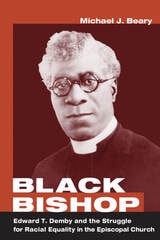
Black Bishop
Edward T. Demby and the Struggle for Racial Equality in the Episcopal ChurchMichael J. Beary
University of Illinois Press, 2001
America’s first Black bishop and his struggle to rebuild the African American presence inside the Episcopal Church
In 1918, the Right Reverend Edward T. Demby took up the reins as Suffragan (assistant) Bishop for Colored Work in Arkansas and the Province of the Southwest, an area encompassing Arkansas, Texas, Kansas, Oklahoma, Missouri, and New Mexico. Set within the context of a series of experiments in black leadership conducted by the Episcopal Diocese of Arkansas in the early decades of the twentieth century, Demby's tenure in a segregated ministry illuminates the larger American experience of segregation disguised as a social good.
Intent on demonstrating the industry and self-reliance of black Episcopalians to the church at large, Demby set about securing black priests for the diocese, baptizing and confirming communicants, and building schools and other institutions of community service. A gifted leader and a committed Episcopalian, Demby recognized that black service institutions, such as schools, hospitals, and orphanages, would be the means to draw African Americans back to the Episcopal Church, which they had abandoned in droves after emancipation as the church of their former masters.
For more than twenty years, hamstrung by white apathy, lack of funds, jurisdictional ambiguity, and the Great Depression, Demby doggedly tried to establish the credibility of a ministry that was as ill-conceived as it was well intended. Michael J. Beary skillfully narrates the shifting alliances within the Episcopal Church and shows how race was but one aspect of a more elemental struggle for power. He demonstrates how Demby's steadiness of purpose and non-confrontational manner gathered allies on both sides of the color line and how, ultimately, his judgment and the weight of his experience carried the church past its segregationist experiment.
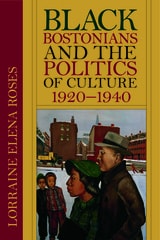
Black Bostonians and the Politics of Culture, 1920-1940
Lorraine Elena Roses
University of Massachusetts Press, 2017
In the 1920s and 1930s Boston became a rich and distinctive site of African American artistic production, unfolding at the same time as the Harlem Renaissance and encompassing literature, theater, music, and visual art. Owing to the ephemeral nature of much of this work, many of the era's primary sources have been lost.
In this book, Lorraine Elena Roses employs archival sources and personal interviews to recover this artistic output, examining the work of celebrated figures such as Dorothy West, Helene Johnson, Meta Warrick Fuller, and Allan Rohan Crite, as well as lesser-known artists including Eugene Gordon, Ralf Coleman, Gertrude “Toki” Schalk, and Alvira Hazzard. Black Bostonians and the Politics of Culture, 1920–1940 demonstrates how this creative community militated against the color line not solely through powerful acts of civil disobedience but also by way of a strong repertoire of artistic projects.

Black British Cultural Studies
A ReaderEdited by Houston A. Baker, Jr., Manthia Diawara, and Ruth H. Lindeborg
University of Chicago Press, 1996
From Stuart Hall's classic study of racially structured societies to an interview by Manthia Diawara with Sonia Boyce, a leading figure in the Black British arts movement, the papers included here have transformed cultural studies through their sustained focus on the issue of race. Much of the book centers on Black British arts, especially film, ranging from a historical overview of Black British cinema to a weighing of the costly burden on Black artists of representing their communities. Other essays consider such topics as race and representation and colonial and postcolonial discourse.
This anthology will be an invaluable and timely resource for everyone interested in cultural studies. It also has much to offer students of anthropology, sociology, media and film studies, and literary criticism.
Black Chicago's First Century
1833-1900Christopher Robert Reed
University of Missouri Press, 2005
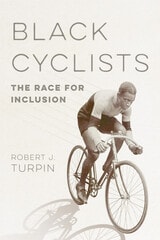
Black Cyclists
The Race for InclusionRobert J. Turpin
University of Illinois Press, 2024
Eye-opening and long overdue, Black Cyclists uses race, technology, and mobility to explore a forgotten chapter in cycling history.
Black Europe and the African Diaspora
Edited by Darlene Clark Hine, Trica Danielle Keaton, and Stephen Small
University of Illinois Press, 2009
The presence of Blacks in a number of European societies has drawn increasing interest from scholars, policymakers, and the general public. This interdisciplinary and multi-disciplinary collection penetrates the multifaceted Black presence in Europe, and, in so doing, complicates the notions of race, belonging, desire, and identities assumed and presumed in revealing portraits of Black experiences in a European context. In focusing on contemporary intellectual currents and themes, the contributors theorize and re-imagine a range of historical and contemporary issues related to the broader questions of blackness, diaspora, hegemony, transnationalism, and "Black Europe" itself as lived and perceived realities.
Contributors are Allison Blakely, Jacqueline Nassy Brown, Tina Campt, Fred Constant, Alessandra Di Maio, Philomena Essed, Terri Francis, Barnor Hesse, Darlene Clark Hine, Dienke Hondius, Eileen Julien, Trica Danielle Keaton, Kwame Nimako, Tiffany Ruby Patterson, T. Denean Sharpley-Whiting, Stephen Small, Tyler Stovall, Alexander G. Weheliye, Gloria Wekker, and Michelle M. Wright.
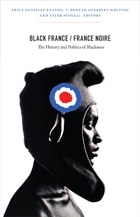
Black France / France Noire
The History and Politics of BlacknessTrica Danielle Keaton, T. Denean Sharpley-Whiting and Tyler Stovall, eds.
Duke University Press, 2012
Contributors. Rémy Bazenguissa-Ganga, Allison Blakely, Jennifer Anne Boittin, Marcus Bruce, Fred Constant, Mamadou Diouf, Arlette Frund, Michel Giraud, Bennetta Jules-Rosette, Trica Danielle Keaton, Jake Lamar, Patrick Lozès, Alain Mabanckou, Elisabeth Mudimbe-Boyi, T. Denean Sharpley-Whiting, Tyler Stovall, Christiane Taubira, Dominic Thomas, Gary Wilder
Black Georgia in the Progressive Era, 1900-1920
John Dittmer
University of Illinois Press, 1977
have of black life in a southern state at the beginning of the twentieth century."
-- Howard N. Rabinowitz,
Journal of American History
"The author shows clearly and forcefully
the ways in which this [white] system abused and controlled the black lower
caste in Georgia." -- Lester C. Lamon, American Historical Review.
"Dittmer has a faculty for lucid exposition of complicated subjects. This is
especially true of the sections on segregation, racial politics, disfranchisement,
woman's suffrage and prohitibion, the neo-slavery in agriculture, and the racial
violence whose threat and reality hung like a pall over all of Georgia throughout
the period." -- Donald L. Grant, Georgia Historical Quarterly.
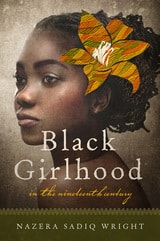
Black Girlhood in the Nineteenth Century
Nazera Sadiq Wright
University of Illinois Press, 2016
As Wright shows, the figure of the black girl in African American literature provided a powerful avenue for exploring issues like domesticity, femininity, and proper conduct. The characters' actions, however fictional, became a rubric for African American citizenship and racial progress. At the same time, their seeming dependence and insignificance allegorized the unjust treatment of African Americans. Wright reveals fascinating girls who, possessed of a premature knowing and wisdom beyond their years, projected a courage and resiliency that made them exemplary representations of the project of racial advance and citizenship.
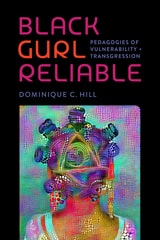
Black Gurl Reliable
Pedagogies of Vulnerability and TransgressionDominique C. Hill
Vanderbilt University Press, 2025
As a means of mitigating the deleterious effects of schooling on Black girls’ and women’s bodies and making legible the insights and knowledge produced from schooling experiences, Hill introduces the concept of Transgressngroove. This living feminist practice explores the relationships between Black girlhood, education, and the body, as researched for over a decade through workshops, consulting, classrooms, personal development, and other teaching/learning spaces.

Black Life Matter
Blackness, Religion, and the SubjectBiko Mandela Gray
Duke University Press, 2022
Black Lives, Native Lands, White Worlds
A History of Slavery in New EnglandJared Ross Hardesty
University of Massachusetts Press, 2019
In this concise yet comprehensive history, Jared Ross Hardesty focuses on the individual stories of enslaved people, bringing their experiences to life. He also explores larger issues such as the importance of slavery to the colonization of the region and to agriculture and industry, New England's deep connections to Caribbean plantation societies, and the significance of emancipation movements in the era of the American Revolution. Thoroughly researched and engagingly written, Black Lives, Native Lands, White Worlds is a must-read for anyone interested in the history of New England.
Black Nationalism
The Search for an IdentityE. U. Essien-Udom
University of Chicago Press, 1995
"An excellent standard treatment of black nationalist belief and practice in the 50's."—Michael Eric Dyson, New York Times Book Review
"This is an absorbing exercise in first class reporting. . . . In the light of his scrupulous fairness, the book is another illustration of how the press prejudges a story. And most provocatively, Essien-Udom has emphasized that even after the current campaigns for wide-scale integration are won, there will be an even wider chasm between the 'liberated' Negro middle class and the rootless Negro poor."—Nat Hentoff,Commonweal
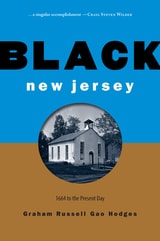
Black New Jersey
1664 to the Present DayGraham Russell Gao Hodges
Rutgers University Press, 2019
Black New Jersey tells the rich and complex story of the African American community’s remarkable accomplishments and the colossal obstacles they faced along the way. Drawing from rare archives, historian Graham Russell Gao Hodges brings to life the courageous black men and women who fought for their freedom and eventually built a sturdy and substantial middle class. He explores how the state’s unique mix of religious, artistic, and cultural traditions have helped to produce such world-renowned figures as Paul Robeson, Cory Booker, and Queen Latifah, as well as a host of lesser-known but equally influential New Jersey natives.

Black People in the British Empire
Peter Fryer
Pluto Press, 1988
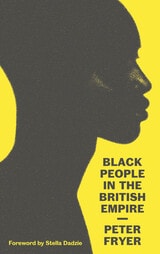
Black People in the British Empire
Peter Fryer
Pluto Press, 2021
Black People in the British Empire is a challenge to the official version of British history. It tells the story of Britain's exploitation and oppression of its subject peoples in its colonies, and in particular the people of Africa, Asia and Australasia
Peter Fryer reveals how the ideology of racism was used as justification for acquiring and expanding the Empire; how the British Industrial Revolution developed out of profits from the slave trade; and how the colonies were deliberately de-industrialised to create a market for British manufacturers.
In describing the frequency and the scale of revolts by subject peoples against slavery and foreign domination - and the brutality used in crushing them - Peter Fryer exposes the true history of colonialism, and restores to Black people their central role in Britain's past.
Black People in the British Empire
Peter Fryer
Pluto Press, 2021
'Fantastic … the most important book on Black British history’ - Akala
Black People in the British Empire is a challenge to the official version of British history. It tells the story of Britain's exploitation and oppression of its subject peoples in its colonies, and in particular the people of Africa, Asia and Australasia
Peter Fryer reveals how the ideology of racism was used as justification for acquiring and expanding the Empire; how the British Industrial Revolution developed out of profits from the slave trade; and how the colonies were deliberately de-industrialised to create a market for British manufacturers.
In describing the frequency and the scale of revolts by subject peoples against slavery and foreign domination - and the brutality used in crushing them - Peter Fryer exposes the true history of colonialism, and restores to Black people their central role in Britain's past.
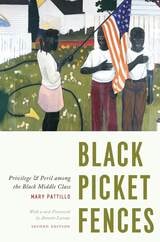
Black Picket Fences, Second Edition
Privilege and Peril among the Black Middle ClassMary Pattillo
University of Chicago Press, 2013
Stark, moving, and still timely, the book is updated for this edition with a new epilogue by the author that details how the neighborhood and its residents fared in the recession of 2008, as well as new interviews with many of the same neighborhood residents featured in the original. Also included is a new foreword by acclaimed University of Pennsylvania sociologist Annette Lareau.