Results by title
145 books match the query 'Refugees' and 14 start with b

Bad News for Refugees
Greg Philo, Emma Briant, and Pauline Donald
Pluto Press, 2013
Bad News for Refugees analyses the political, economic and environmental contexts of migration and looks specifically at how refugees and asylum seekers have been stigmatised in political rhetoric and in media coverage.
Through forensic research it shows how hysterical and inaccurate media accounts act to legitimise political action which can have terrible consequences both on the lives of refugees and also on established migrant communities.
Based on new research by the renowned Glasgow Media Group, Bad News for Refugees is essential reading for those concerned with the negative effects of media on public understanding and for the safety of vulnerable groups and communities in our society.
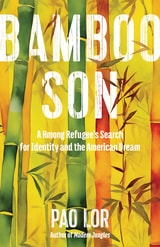
Bamboo Son
A Hmong Refugee’s Search for Identity and the American DreamPao Lor
Wisconsin Historical Society Press, 2026
“In Hmong, the word bamboo or ntsuag has two meanings. It refers to the bamboo plant, which has many significant cultural and practical uses in Hmong life. The word also means orphan. Therefore, bamboo son, in Hmong, means tub ntsuag or orphan son. To survive and succeed as a Hmong orphan, like bamboo, one must be resilient and adaptable, bend without breaking, and stand tall against enormous odds.”
In this follow-up to his acclaimed memoir, Modern Jungles, Pao Lor picks up his story as a young Hmong immigrant building a new life in a new home and shares the narrative of his ensuing journey into adulthood. Lor emerged from war and tragedies in the jungles of Laos and refugee camps of Thailand in the 1970s to pursue a vision of the American dream in Green Bay, Wisconsin, in the 1980s. The distance between his humble beginnings and that dream life was littered with challenges as well as possibilities.
Lor’s transformation from an insecure but determined high school student to a husband, father, teacher, administrator, and author is marked by triumph and defeat, trauma and joy, and always hope and optimism. As he navigates school, first loves, family relationships, and a career, Lor must contend with language barriers, discrimination, and his own inner demons stemming from feelings of inferiority. Threads of his identity—Hmong, American, and Wisconsinite—intersect and occasionally come into conflict.
Lor’s search for belonging comes full circle when he travels to Laos and Thailand with his wife, Maya, in 2022. Seeing his birthplace for the first time in forty-five years, he revisits the isolated mountain villages where he spent his early childhood; the places where his parents and sister died as the family fled the region in the violent aftermath of the Vietnam War; and the two refugee camps where Pao and his siblings lived before being relocated to the United States when he was seven. As he reexamines these memories and reconciles his past, Lor finds peace and the freedom to move forward with his soul renewed.
Lor’s story is an uplifting journey of resilience, adaptation, love, and forgiveness, inspiring readers to reflect on the meaning and accessibility of the American dream.
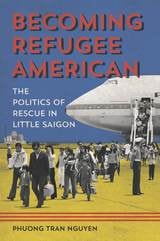
Becoming Refugee American
The Politics of Rescue in Little SaigonPhuong Nguyen
University of Illinois Press, 2017
Phuong Tran Nguyen examines the phenomenon of refugee nationalism among Vietnamese Americans in Southern California. Here, the residents of Little Saigon keep alive nostalgia for the old regime and, by extension, their claim to a lost statehood. Their refugee nationalism is less a refusal to assimilate than a mode of becoming, in essence, a distinct group of refugee Americans. Nguyen examines the factors that encouraged them to adopt this identity. His analysis also moves beyond the familiar rescue narrative to chart the intimate yet contentious relationship these Vietnamese Americans have with their adopted homeland. Nguyen sets their plight within the context of the Cold War, an era when Americans sought to atone for broken promises but also saw themselves as providing a sanctuary for people everywhere fleeing communism.

Before the Fire Dogs Steal the Sun
An ElegyCrystal Mun-hye Baik
Duke University Press, 2026
Belonging and Becoming in a Multicultural World
Refugee Youth and the Pursuit of IdentityLaura Moran
Rutgers University Press, 2020
Download open access ebook.
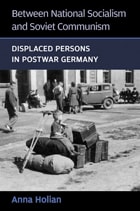
Between National Socialism and Soviet Communism
Displaced Persons in Postwar GermanyAnna Holian
University of Michigan Press, 2015
"Though its primary focus is on the immediate postwar, Between National Socialism and Soviet Communism will surely illuminate the contemporary crisis around citizenship and definitions of Germanness in the context of European Union and globalization."
---Geoff Eley, University of Michigan
In May of 1945, there were more than eight million "displaced persons" (or DPs) in Germany---recently liberated foreign workers, concentration camp prisoners, and prisoners of war from all of Nazi-occupied Europe, as well as eastern Europeans who had fled west before the advancing Red Army. Although most of them quickly returned home, it soon became clear that large numbers of eastern European DPs could or would not do so. In the aftermath of National Socialism, Germany thus ironically became a temporary home for a large population of "foreigners." Focusing on Bavaria, in the heart of the American occupation zone, Between National Socialism and Soviet Communism examines the cultural and political worlds that four groups of displaced persons---Polish, Ukrainian, Russian, and Jewish---created in Germany during the late 1940s and early 1950s. The volume investigates the development of refugee communities and how divergent interpretations of National Socialism and Soviet Communism defined these displaced groups.
Combining German and eastern European history, Anna Holian draws on a rich array of sources in cultural and political history and engages the broader literature on displacement in the fields of anthropology, sociology, political theory, and cultural studies. Her book will interest students and scholars of German, eastern European, and Jewish history; migration and refugees; and human rights.
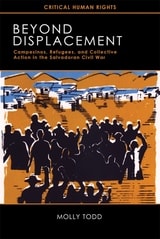
Beyond Displacement
Campesinos, Refugees, and Collective Action in the Salvadoran Civil WarMolly Todd
University of Wisconsin Press, 2010
During the civil war that wracked El Salvador from the mid-1970s to the early 1990s, the Salvadoran military tried to stamp out dissidence and insurgency through an aggressive campaign of crop-burning, kidnapping, rape, killing, torture, and gruesome bodily mutilations. Even as human rights violations drew world attention, repression and war displaced more than a quarter of El Salvador’s population, both inside the country and beyond its borders. Beyond Displacement examines how the peasant campesinos of war-torn northern El Salvador responded to violence by taking to the hills. Molly Todd demonstrates that their flight was not hasty and chaotic, but was a deliberate strategy that grew out of a longer history of collective organization, mobilization, and self-defense.
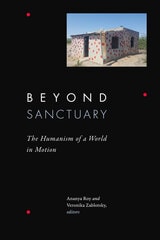
Beyond Sanctuary
The Humanism of a World in MotionAnanya Roy and Veronika Zablotsky, editors
Duke University Press, 2025
Contributors. Leisy Abrego, Damon Azali-Rojas, Amy Sara Carroll, Sharad Chari, Nicholas De Genova, Ricardo Dominguez, Lorgia García-Peña, Sarah Haley, Gaye Theresa Johnson, Moon-Kie Jung, Maria Kaika, Saree Makdisi, Kyle T. Mays, Ananya Roy, Charles Sepulveda, SA Smythe, Vanessa E. Thompson, Charalampos Tsavdaroglou, João H. Costa Vargas, Rinaldo Walcott, Veronika Zablotsky, Maite Zubiaurre

Blacks on the Border
The Black Refugees in British North America, 1815–1860Harvey Whitfield
University Press of New England, 2006
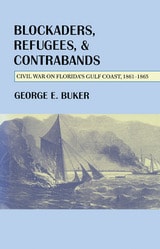
Blockaders, Refugees, and Contrabands
Civil War on Florida's Gulf Coast, 1861-1865George E. Buker
University of Alabama Press, 2004
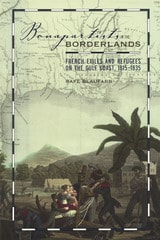
Bonapartists in the Borderlands
French Exiles and Refugees on the Gulf Coast, 1815-1835Rafe Blaufarb
University of Alabama Press, 2005
Bonapartists in the Borderlands debunks the standard account of the Vine and Olive Colony, which stresses the failure of aristocratic, luxury-loving French to tame the wilderness. Rafe Blaufarb recounts how Napoleonic exiles and French refugees from Europe and the Caribbean joined forces with Latin American insurgents, Gulf pirates, and international adventurers to seek their fortune in the Gulf borderlands. The US Congress welcomed the French and granted them a capacious tract of rich Black Belt land near Demopolis, Alabama, on the condition that they would establish a Mediterranean-style Vine and Olive colony.
Blaufard shows that it was not a lack of grit that caused the enterprise to fail. Rather, the Napoleonic officers involved in the colony sold their land shares to speculators to finance an even more perilous adventure—invading the Texas borderlands contested by Spain and the US. Their departure left the Vine and Olive colony in the hands of French refugees from the Haitian slave revolt. They soon abandoned vine cultivation and fused with the neighboring communities of Anglo-American slaveholding cotton planters and speculators.
Rafe Blaufarb examines the underlying motivations and aims that inspired this endeavor and details the nitty-gritty politics, economics, and backroom bargaining that resulted in the settlement. He employs a wide variety of local, national, and international resources: from documents held by the Alabama State Archives, Marengo County court records, and French-language newspapers published in America to material from the War Ministry Archives at Vincennes, the Diplomatic Archives at the Quai d’Orasy, and the French National Archives.
Bosnian Studies
Perspectives from an Emerging FieldDzeneta Karabegovic
University of Missouri Press, 2023
Diaspora communities have formed in North America (especially in St. Louis), Europe, and Australia because of war and displacement, and have themselves become a considerable topic of study spanning the disciplines of anthropology, migration studies, political science, memory studies, conflict and security studies, psychology, and geography.
This volume seeks to illuminate how Bosnian migrant and diaspora scholars are contributing to the development of Bosnian Studies. The authors included in this volume are either writing from their (new) home bases in Australia, Austria, Canada, Switzerland, the United Kingdom, and the United States, among others, or they have returned to Bosnia after a period of migration. Their chapters have distinct entry points of inquiry, demonstrating how scholars have integrated Bosnia as a theme across the range of disciplines in which they are situated. The selections included in the volume range from literary analysis to personal memoirs of the conflict, from studies of heritage and identity to political science analysis of diaspora voting, to genocide studies and questions of (or lack of) ethics in the growing field of Bosnian Studies.

Bridging Borders
Portraits of Community and MigrationUniversity Neighborhood Partners
University of Utah Press, 2027
Building Little Saigon
Refugee Urbanism in American Cities and SuburbsErica Allen-Kim
University of Texas Press, 2024
2026 Spiro Kostof Book Award, Society of Architectural Historians
An in-depth look at the diverging paths of Vietnamese American communities, or “Little Saigons,” in America’s built environment.
In the final days before the fall of Saigon in 1975, 125,000 Vietnamese who were evacuated or who made their own way out of the country resettled in the United States. Finding themselves in unfamiliar places yet still connected in exile, these refugees began building their own communities as memorials to a lost homeland. Known both officially and unofficially as Little Saigons, these built landscapes offer space for everyday activities as well as the staging of cultural heritage and political events.
Building Little Saigon examines nearly fifty years of city building by Vietnamese Americans—who number over 2.2 million today. Author Erica Allen-Kim highlights architecture and planning ideas adapted by the Vietnamese communities who, in turn, have influenced planning policies and mainstream practices. Allen-Kim traveled to ten Little Saigons in the United States to visit archives, buildings, and public art and to converse with developers, community planners, artists, business owners, and Vietnam veterans. By examining everyday buildings—who made them and what they mean for those who know them—Building Little Saigon shows us the complexities of migration unfolding across lifetimes and generations.