Results by title
192 books match the query 'Regional & Cultural' and 7 start with b

Balzac's Omelette
A Delicious Tour of French Food and Culture with Honore de BalzacAnkha Muhlstein
Haus Publishing, 2012
It is not a coincidence that Balzac was the first in French literature to tackle this appetizing topic. Before the French Revolution, a traveller in France was apt to find local food scarce, tasteless and of dubious appearance. Restaurants did not even exist! Just as the art of the table became a centrepiece of French mores, Balzac used it as a connecting thread in his novels, showing how food can evoke character, atmosphere, class and social pretensions. Full of insights, Balzac’s Omelette invites you to taste anew French literature and cuisine.
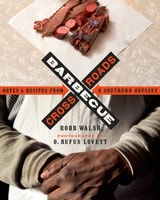
Barbecue Crossroads
Notes and Recipes from a Southern OdysseyBy Robb Walsh
University of Texas Press, 2013
In stories, recipes, and photographs, James Beard Award–winning writer Robb Walsh and acclaimed documentary photographer O. Rufus Lovett take us on a barbecue odyssey from East Texas to the Carolinas and back. In Barbecue Crossroads, we meet the pitmasters who still use old-fashioned wood-fired pits, and we sample some of their succulent pork shoulders, whole hogs, savory beef, sausage, mutton, and even some barbecued baloney. Recipes for these and the side dishes, sauces, and desserts that come with them are painstakingly recorded and tested.
But Barbecue Crossroads is more than a cookbook; it is a trip back to the roots of our oldest artisan food tradition and a look at how Southern culture is changing. Walsh and Lovett trace the lineage of Southern barbecue backwards through time as they travel across a part of the country where slow-cooked meat has long been part of everyday life. What they find is not one story, but many. They visit legendary joints that don’t live up to their reputations—and discover unknown places that deserve more attention. They tell us why the corporatizing of agriculture is making it difficult for pitmasters to afford hickory wood or find whole hogs that fit on a pit.
Walsh and Lovett also remind us of myriad ways that race weaves in and out of the barbecue story, from African American cooking techniques and recipes to the tastes of migrant farmworkers who ate their barbecue in meat markets, gas stations, and convenience stores because they weren’t welcome in restaurants. The authors also expose the ways that barbecue competitions and TV shows are undermining traditional barbecue culture. And they predict that the revival of the community barbecue tradition may well be its salvation.
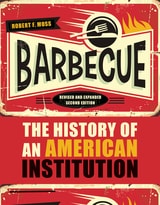
Barbecue
The History of an American Institution, Revised and Expanded Second EditionRobert F. Moss
University of Alabama Press, 2020
The definitive history of an iconic American food, with new chapters, sidebars, and updated historical accounts.
Expert Robert F. Moss researched hundreds of sources—newspapers, letters, journals, diaries, and travel narratives—to document the origins and evolution of barbecue from its origins among Native Americans to its present status as an icon of American culture. In this definitive guide, he maps out the development of the rich array of regional barbecue styles, chronicles the rise of barbecue restaurants, and profiles the famed pitmasters who made the tradition what it is today.
Barbecue is the story not just of a dish but also of a social institution that helped shape many regional cultures of the United States. The history begins with British colonists’ adoption of barbecuing techniques from Native Americans in the 17th and 18th centuries, moves to barbecue’s establishment as the preeminent form of public celebration in the 19th century, and is carried through to barbecue’s ubiquitous standing today.
From the very beginning, barbecues were powerful social magnets, drawing together people from a wide range of classes and geographic backgrounds. Barbecue played a key role in three centuries of American history, both reflecting and influencing the direction of an evolving society. By tracing the story of barbecue from its origins to today, Barbecue: The History of an American Institution traces the very thread of American social history.
Moss has made significant updates in this new edition, offering a wealth of new historical research, sources, illustrations, and anecdotes.
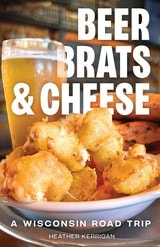
Beer, Brats, and Cheese
A Wisconsin Road TripHeather Kerrigan
University of Wisconsin Press, 2025
To thoroughly research this book, Heather Kerrigan undertook a twenty-six-hundred-mile road trip crisscrossing the Badger State, seeking the hidden gems that locals frequent. She visited Wisconsin’s best restaurants, creameries, breweries, butcher shops, and cheesemongers. In Beer, Brats, and Cheese, Kerrigan highlights the innovative flavors and unexpected delights found in these spots. Great beer isn’t made only in Milwaukee, Sheboygan doesn’t have a lock on the best bratwurst, and excellent cheeses don’t just come from Monroe County. In fact, there are towns large and small, from the far north to the Illinois border, from Door County to the Mississippi River, that contribute to the state’s amazing culinary experiences.
Whether you’re planning a bite-by-bite day trip or simply looking for a great place to eat or drink near home, this guide has you covered.
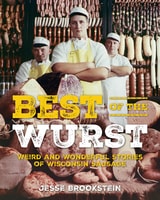
Best of the Wurst
Weird and Wonderful Stories of Wisconsin SausageJesse Brookstein
Wisconsin Historical Society Press, 2026
Sink your teeth into a big, bold, and unabashed celebration of a quintessential Wisconsin food.
Wisconsin is famous for its world-class cheeses and its “beer state” moniker. But every Wisconsinite knows that no tailgate party or backyard barbecue is complete without a grill full of sizzling hot brats. Or Polish sausages. Or good ol’ Oscar Mayer wieners. From charcuterie boards to chorizo, sausage is an essential ingredient in the state’s cultural identity. In this lively, comprehensive ode to the link, writer and storyteller Jesse Brookstein embarks on a quest to show why Wisconsin is the sausage maker to the world.
Best of the Wurst traces the long arc of sausage making in the state, starting with First Nations communities who used pemmican as a staple food source. It features subsequent immigrant groups—German, Polish, Italian, Thai, Mexican, and more—who brought their own sausage recipes and traditions, and lands squarely on today’s bustling sausage scene. A final chapter, “The Future of Sausage,” explores emerging trends, tastes, and technologies—offering a peek at what’s next for Wisconsin’s revered food.
Brookstein travels the state to meet the people behind the links and captures the culture, craft, and quirks that make Wisconsin sausages unlike those found anywhere else. Profiles of standout producers are threaded throughout, from household names like Usinger’s and Johnsonville to family-run shops that have fed communities for generations. Brookstein also highlights the professionals shaping the field today, including graduates of UW–Madison’s Master Meat Crafter Program and chefs who feature local sausage in their menus with pride.
Readers will get insights from master butchers, small-town sausage savants, big-name producers, and superfans reflecting on hotly debated topics like seasonings, casings, and the eternal question: “Should you parboil?” And memorable traditions—such as Sheboygan’s double brat on a hard roll, the ceremonial slicing of La Crosse’s Golden Brat, Madison’s world’s largest Brat Fest, and the show-stealing Milwaukee Brewers’ Famous Racing Sausages—showcase the sausage’s indelible mark on the state.
Featuring 150 color photos and packed with humor and an insider’s appreciation for the art of stuffing a perfect link, Best of the Wurst encases these stories, people, and places in a perfect blend of history and heart. Wisconsinites love eating sausages—and now you can enjoy reading about them too.
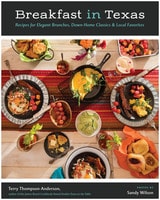
Breakfast in Texas
Recipes for Elegant Brunches, Down-Home Classics, and Local FavoritesBy Terry Thompson-Anderson, with photos by Sandy Wilson
University of Texas Press, 2017
Texans love the morning meal, whether it’s bacon and eggs (often eaten in a breakfast taco) or something as distinctively nontraditional as saag paneer omelets, pon haus, or goat curry. A Lone Star breakfast can be a time for eating healthy, or for indulging in decadent food and drink. And with Texas’s rich regional and cultural diversity, an amazing variety of dishes graces the state’s breakfast and brunch tables. The first Texas cookbook dedicated exclusively to the morning meal, Breakfast in Texas gathers nearly one hundred recipes that range from perfectly prepared classics to the breakfast foods of our regional cuisines (Southern, Mexican, German, Czech, Indian, and Asian among them) to stand-out dishes from the state’s established and rising chefs and restaurants.
Terry Thompson-Anderson organizes the book into sections that cover breakfast and brunch libations (with and without alcohol); simple, classic, and fancy egg presentations; pancakes, French toast, and waffles; meat lover’s dishes; seafood and shellfish; vegan dishes and sides; and pastries. The recipes reference locally sourced ingredients whenever possible, and Thompson-Anderson provides enjoyable notes about the chefs who created them or the cultural history they represent. She also offers an expert primer on cooking eggs, featuring an encounter with Julia Child, as well as a selection of theme brunches (the boozy brunch, the make-ahead brunch, New Year’s Day brunch, Mother’s Day brunch with seasonal ingredients, teenage daughter’s post-slumber party breakfast, and more). Sandy Wilson’s color photographs of many of the dishes and the chefs and restaurants who serve them provide a lovely visual counterpoint to the appetizing text.
Bulldaggers, Pansies, and Chocolate Babies
Performance, Race, and Sexuality in the Harlem RenaissanceJames F. Wilson
University of Michigan Press, 2011
—David Krasner, author of A Beautiful Pageant: African American Theatre, Drama, and Performance in the Harlem Renaissance, 1910-1927