Results by title
70 books match the query 'Rehabilitation' and 4 start with b
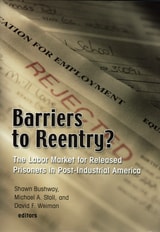
Barriers to Reentry?
The Labor Market for Released Prisoners in Post-Industrial AmericaShawn D. Bushway
Russell Sage Foundation, 2007
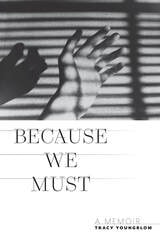
Because We Must
A MemoirTracy Youngblom
University of Massachusetts Press, 2025
A breathtaking memoir navigating caregiving, motherhood, and letting go after a tragic accident
On March 16th, 2015, Tracy Youngblom was rushing to finish last-minute preparations for a class she would teach the next day when there was an unexpected knock at her door. Grudgingly, she answered it to find a uniformed officer standing on her front porch. Youngblom realized then that her youngest son Elias should have been arriving home from a trip to Fargo where he was visiting friends at North Dakota State University. The officer told her that Elias had been in an accident and was in the hospital. Later, she learned that his car had been struck nearly head on by a drunk driver going 70 miles per hour. Denial and shock took over as she made the long drive from their home in Coon Rapids, Minnesota. When she saw Elias in the ICU—swollen beyond recognition, covered in stitches, with a myriad of tubes attached to him—the full gravity of the situation descended.
On the day of the crash, Elias had been driving back to Coon Rapids to celebrate National Ice Cream Day with friends. An avid lover of music, he’d been working as a conductor while wrapping up his degree, moving toward his dream of becoming a marching band director. After the accident, Elias begins his long journey of recovery, which is set back when doctors announce that his optic nerves are dead. Despite it all, Elias never wavers, approaching each challenge with resilience, grace, and humor.
Alongside Elias, Youngblom faces her own challenges, staying by his side in the ICU for weeks, coordinating with other family members and friends, and never flagging in her care of her severely injured son, yet all the while coping with her own emotions, fears, and trauma. She struggles to support Elias, heal her self, and let him go on with his life. In this riveting memoir, Youngblom traverses her family’s lives before and after the accident, capturing the complications of grief, recovery, and the strength it takes to move forward—because we must.
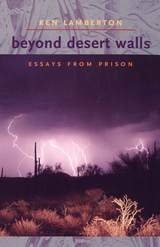
Beyond Desert Walls
Essays from PrisonKen Lamberton
University of Arizona Press, 2005
For some people, even prison cannot shut out the natural world.
A teacher and family man incarcerated in Arizona State Prison—the result of a transgression that would cost him a dozen years of his life—Ken Lamberton can see beyond his desert walls. In essays that focus on the natural history of the region and on his own personal experiences with desert places, the author of the Burroughs Medal-winning book Wilderness and Razor Wire takes readers along as he revisits the Southwest he knew when he was free, and as he makes an inner journey toward self-awareness. Whether considering the seemingly eternal cacti or the desolate beauty of the Pinacate, he draws on sharp powers of observation to re-create what lies beyond his six-by-eight cell and to contemplate the thoughts that haunt his mind as tenaciously as the kissing bugs that haunt his sleep.
Ranging from prehistoric ruins on the Colorado Plateau to the shores of the Sea of Cortez, these writings were begun before Wilderness and Razor Wire and serve as a prequel to it. They seamlessly interweave natural and personal history as Lamberton explores caves, canyons, and dry ponds, evoking the mysteries and rhythms of desert life that elude even the most careful observers. He offers new ways of thinking about how we relate to the natural world, and about the links between those relationships and the ones we forge with other people. With the assurance of a gifted writer, he seeks to make sense of his own place in life, crafting words to come to terms with an insanity of his own making, to look inside himself and understand his passions and flaws.
Whether considering rattlesnakes of the hellish summer desert or the fellow inmates of his own personal hell, Lamberton finds meaningful connections—to his crime and his place, to the people who remained in his life and those who didn’t. But what he reveals in Beyond Desert Walls ultimately arises from language itself: a deep, and perhaps even frightening, understanding of a singular human nature.
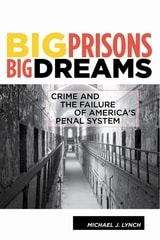
Big Prisons, Big Dreams
Crime and the Failure of America's Penal SystemMichael J. Lynch
Rutgers University Press, 2007
The American prison system has grown tenfold since the 1970s, but crime rates in the United States have not decreased. This doesn't surprise Michael J. Lynch, a critical criminologist, who argues that our oversized prison system is a product of our consumer culture, the public's inaccurate beliefs about controlling crime, and the government's criminalizing of the poor.
While deterrence and incapacitation theories suggest that imprisoning more criminals and punishing them leads to a reduction in crime, case studies, such as one focusing on the New York City jail system between 1993 and 2003, show that a reduction in crime is unrelated to the size of jail populations. Although we are locking away more people, Lynch explains that we are not targeting the worst offenders. Prison populations are comprised of the poor, and many are incarcerated for relatively minor robberies and violence. America's prison expansion focused on this group to the exclusion of corporate and white collar offenders who create hazardous workplace and environmental conditions that lead to deaths and injuries, and enormous economic crimes. If America truly wants to reduce crime, Lynch urges readers to rethink cultural values that equate bigger with better.