Results by title
939 books match the query 'Religious aspects' and 38 start with b
Baring Witness
36 Mormon Women Talk Candidly about Love, Sex, and MarriageEdited by Holly Welker
University of Illinois Press, 2016

Bearing Witness against Sin
The Evangelical Birth of the American Social MovementMichael P. Young
University of Chicago Press, 2007
During the 1830s the United States experienced a wave of movements for social change over temperance, the abolition of slavery, anti-vice activism, and a host of other moral reforms. Michael Young argues for the first time in Bearing Witness against Sin that together they represented a distinctive new style of mobilization—one that prefigured contemporary forms of social protest by underscoring the role of national religious structures and cultural schemas.
In this book, Young identifies a new strain of protest that challenged antebellum Americans to take personal responsibility for reforming social problems.In this period activists demanded that social problems like drinking and slaveholding be recognized as national sins unsurpassed in their evil and immorality. This newly awakened consciousness undergirded by a confessional style of protest, seized the American imagination and galvanized thousands of people. Such a phenomenon, Young argues, helps explain the lives of charismatic reformers such as William Lloyd Garrison and the Grimké sisters, among others.
Marshalling lively historical materials, including letters and life histories of reformers, Bearing Witness against Sin is a revelatory account of how religion lay at the heart of social reform.

Beautiful Work
A Meditation on PainSharon Cameron
Duke University Press, 2000
In order to understand the nature of pain, Anna undertakes a meditation practice. We tend to think of pain as self-absorbing and exclusively our own ("my pain," "I am in pain"). In distinction, Sharon Cameron’s Anna comes to explore pain as common property, and as the basis for a radically reconceived selfhood. Resisting the limitations of memoir, Beautiful Work speaks from experience and simultaneously releases it from the closed shell of personal ownership. Outside of the not quite inevitable stories we tell about it, experience is less protected, less compromised, and more vivid than could be supposed.
Beautiful Work brings to bear the same interest in consciousness and intersubjectivity that characterizes Cameron’s other work.
Beauty and the Good
Recovering the Classical Tradition from Plato to Duns ScotusAlice M. Ramos
Catholic University of America Press, 2021
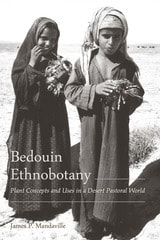
Bedouin Ethnobotany
Plant Concepts and Uses in a Desert Pastoral WorldJames P. Mandaville
University of Arizona Press, 2011
Bedouin Ethnobotany offers the first detailed study of plant uses among the Najdi Arabic–speaking tribal peoples of eastern Saudi Arabia. It also makes a major contribution to the larger project of ethnobotany by describing aspects of a nomadic peoples’ conceptual relationships with the plants of their homeland.
The modern theoretical basis for studies of the folk classification and nomenclature of plants was developed from accounts of peoples who were small-scale agriculturists and, to a lesser extent, hunter-gatherers. This book fills a major gap by extending such study into the world of the nomadic pastoralist and exploring the extent to which these patterns are valid for another major subsistence type. James P. Mandaville, an Arabic speaker who lived in Saudi Arabia for many years, focuses first on the role of plants in Bedouin life, explaining their uses for livestock forage, firewood, medicinals, food, and dyestuffs, and examining other practical purposes. He then explicates the conceptual and linguistic aspects of his subject, applying the theory developed by Brent Berlin and others to a previously unstudied population. Mandaville also looks at the long history of Bedouin plant nomenclature, finding that very little has changed among the names and classifications in nearly eleven centuries.
This volume includes a CD-ROM featuring more than 340 color images of the people, the terrain, and nearly all of the plants mentioned in the text as well as an audio file of a traditional Bedouin song and its translation and analysis.
An essential volume for anyone interested in the interaction between human culture and plant life, Bedouin Ethnobotany will stand as a definitive source for years to come.
Before Amoris Laetitia
The Sources of the ControversyJaroslaw Kupczak
Catholic University of America Press, 2021
Before Truth
Lonergan, Aquinas, and the Problem of WisdomJeremy Wilkins
Catholic University of America Press, 2018
Believing Women in Islam
A Brief IntroductionBy Asma Barlas and David Raeburn Finn
University of Texas Press, 2019
Is women’s inequality supported by the Qur’an? Do men have the exclusive right to interpret Islam’s holy scripture? In her best-selling book Believing Women in Islam: Unreading Patriarchal Interpretations of the Qur’an, Asma Barlas argues that, far from supporting male privilege, the Qur’an actually encourages the full equality of women and men. She explains why a handful of verses have been interpreted to favor men and shows how these same verses can be read in an egalitarian way that is fully supported by the text itself and compatible with the Qur’an’s message that it is complete and self-consistent.
A Brief Introduction presents the arguments of Believing Women in a simplified way that will be accessible and inviting to general readers and undergraduate students. The authors focus primarily on the Qur’an’s teachings about women and patriarchy. They show how traditional teachings about women’s inferiority are not supported by the Qur’an but were products of patriarchal societies that used it to justify their existing religious and social structures. The authors’ hope is that by understanding how patriarchal traditionalists have come to exercise so much authority in today’s Islam, as well as by rereading some of the Qur’an’s most controversial verses, adherents of the faith will learn to question patriarchal dogma and see that an egalitarian reading of the Qur’an is equally possible and, for myriad reasons, more plausible.
Believing Women in Islam
Unreading Patriarchal Interpretations of the Qur'anBy Asma Barlas
University of Texas Press, 2019
Does Islam call for the oppression of women? Non-Muslims point to the subjugation of women that occurs in many Muslim countries, especially those that claim to be "Islamic," while many Muslims read the Qur’an in ways that seem to justify sexual oppression, inequality, and patriarchy. Taking a wholly different view, Asma Barlas develops a believer’s reading of the Qur’an that demonstrates the radically egalitarian and antipatriarchal nature of its teachings.
Beginning with a historical analysis of religious authority and knowledge, Barlas shows how Muslims came to read inequality and patriarchy into the Qur’an to justify existing religious and social structures and demonstrates that the patriarchal meanings ascribed to the Qur’an are a function of who has read it, how, and in what contexts. She goes on to reread the Qur’an’s position on a variety of issues in order to argue that its teachings do not support patriarchy. To the contrary, Barlas convincingly asserts that the Qur’an affirms the complete equality of the sexes, thereby offering an opportunity to theorize radical sexual equality from within the framework of its teachings. This new view takes readers into the heart of Islamic teachings on women, gender, and patriarchy, allowing them to understand Islam through its most sacred scripture, rather than through Muslim cultural practices or Western media stereotypes.
For this revised edition of Believing Women in Islam, Asma Barlas has written two new chapters—“Abraham’s Sacrifice in the Qur’an” and “Secular/Feminism and the Qur’an”—as well as a new preface, an extended discussion of the Qur’an’s “wife-beating” verse and of men’s presumed role as women’s guardians, and other updates throughout the book.

Between Jesus and the Market
The Emotions that Matter in Right-Wing AmericaLinda Kintz
Duke University Press, 1997
With texts from such organizations as the Christian Coalition, the Heritage Foundation, and Concerned Women for America, and writings by Elizabeth Dole, Newt Gingrich, Pat Robertson, and Rush Limbaugh, Kintz traces the usefulness of this activism for the secular claim that conservative political economy is, in fact, simply an expression of the deepest and most admirable elements of human nature itself. The discussion of Limbaugh shows how he draws on the skepticism of contemporary culture to create a sense of absolute truth within his own media performance—its truth guaranteed by the market. Kintz also describes how conservative interpretations of the Holy Scriptures, the U.S. Constitution, and the Declaration of Independence have been used to challenge causes such as feminism, women’s reproductive rights, and gay and lesbian rights. In addition to critiquing the intellectual and political left for underestimating the power of right-wing grassroots organizing, corporate interests, and postmodern media sophistication, Between Jesus and the Market discusses the proliferation of militia groups, Christian entrepreneurship, and the explosive growth and "selling" of the Promise Keepers.

Beyond Breaking the Glass
A Spiritual Guide to Your Jewish Wedding, Revised EditionRabbi Nancy H. Wiener, Dmin
Central Conference of American Rabbis, 2012
This compendium explores the rich history of wedding rituals and customs practiced by Jews through the years. Included are multiple options of traditional, contemporary, and creative rituals as well as prayers for couples of all approaches, orientations, and identities.
Beyond Breaking the Glass is a rich source of practical information for planning a Jewish wedding, and includes a variety of ceremonies, checklists, references, and a planning timeline. This beautiful guidebook will help all couples create a wedding that will resonate with Jewish tradition while offering the very best of contemporary innovations.

Beyond Debt
Islamic Experiments in Global FinanceDaromir Rudnyckyj
University of Chicago Press, 2018
Beyond Debt describes efforts to create a transnational economy free of debt. Based on ethnographic fieldwork in Malaysia, Daromir Rudnyckyj illustrates how the state, led by the central bank, seeks to make the country’s capital Kuala Lumpur “the New York of the Muslim world”—the central node of global financial activity conducted in accordance with Islam. Rudnyckyj shows how Islamic financial experts have undertaken ambitious experiments to create more stable economies and stronger social solidarities by facilitating risk- and profit-sharing, enhanced entrepreneurial skills, and more collaborative economic action. Building on scholarship that reveals the impact of financial devices on human activity, he illustrates how Islamic finance is deployed to fashion subjects who are at once more pious Muslims and more ambitious entrepreneurs. In so doing, Rudnyckyj shows how experts seek to create a new “geoeconomics”—a global Islamic alternative to the conventional financial network centered on New York, London, and Tokyo. A groundbreaking analysis of a timely subject, Beyond Debt tells the captivating story of efforts to re-center international finance in an emergent Islamic global city and, ultimately, to challenge the very foundations of conventional finance.
Beyond Man
Race, Coloniality, and Philosophy of ReligionYountae An and Eleanor Craig, editors
Duke University Press, 2021
Contributors. An Yountae, Ellen Armour, J. Kameron Carter, Eleanor Craig, Amy Hollywood, Vincent Lloyd, Filipe Maia, Mayra Rivera, Devin Singh, Joseph R. Winters
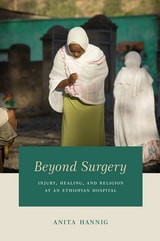
Beyond Surgery
Injury, Healing, and Religion at an Ethiopian HospitalAnita Hannig
University of Chicago Press, 2017
Through her in-depth ethnography of two repair and rehabilitation centers operating in Ethiopia, Hannig takes the reader deep into a world inside hospital walls, where women recount stories of loss and belonging, shame and delight. As she chronicles the lived experiences of fistula patients in clinical treatment, Hannig explores the danger of labeling “culture” the culprit, showing how this common argument ignores the larger problem of insufficient medical access in rural Africa. Beyond Surgery portrays the complex social outcomes of surgery in an effort to deepen our understanding of medical missions in Africa, expose cultural biases, and clear the path toward more effective ways of delivering care to those who need it most.
Bible in/and Popular Culture
Philip Culbertson
SBL Press, 2010
Biblical and Theological Foundation of the Family
Joseph C. Atkinson
Catholic University of America Press, 2014

Biology and Ideology from Descartes to Dawkins
Edited by Denis R. Alexander and Ronald L. Numbers
University of Chicago Press, 2010
Over the course of human history, the sciences, and biology in particular, have often been manipulated to cause immense human suffering. For example, biology has been used to justify eugenic programs, forced sterilization, human experimentation, and death camps—all in an attempt to support notions of racial superiority. By investigating the past, the contributors to Biology and Ideology from Descartes to Dawkins hope to better prepare us to discern ideological abuse of science when it occurs in the future.
Denis R. Alexander and Ronald L. Numbers bring together fourteen experts to examine the varied ways science has been used and abused for nonscientific purposes from the fifteenth century to the present day. Featuring an essay on eugenics from Edward J. Larson and an examination of the progress of evolution by Michael J. Ruse, Biology and Ideology examines uses both benign and sinister, ultimately reminding us that ideological extrapolation continues today. An accessible survey, this collection will enlighten historians of science, their students, practicing scientists, and anyone interested in the relationship between science and culture.
Biomedicen and Beatitude
An Introduction to Catholic Bioethics, Second EditionNicanor Pier Giorgio Austriaco
Catholic University of America Press, 2021
Biomedicine and Beatitude
An Introduction to Catholic BioethicsNicanor Pier Giorgio AUSTRIACO
Catholic University of America Press, 2011

Birth of the Living God
A Psychoanalytic StudyAna-Marie Rizzuto
University of Chicago Press, 1981
Bishops and Bodies
Reproductive Care in American Catholic HospitalsLori Freedman
Rutgers University Press, 2023
One out of every six patients in the United States is treated in a Catholic hospital that follows the policies of the U.S. Conference of Catholic Bishops. These policies prohibit abortion, sterilization, contraception, some treatments for miscarriage and gender confirmation, and other reproductive care, undermining hard-won patients’ rights to bodily autonomy and informed decision-making. Drawing on rich interviews with patients and providers, this book reveals both how the bishops’ directives operate and how people inside Catholic hospitals navigate the resulting restrictions on medical practice. In doing so, Bishops and Bodies fleshes out a vivid picture of how The Church’s stance on sex, reproduction, and “life” itself manifests in institutions that affect us all.
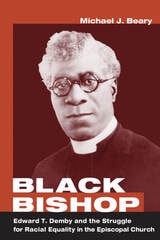
Black Bishop
Edward T. Demby and the Struggle for Racial Equality in the Episcopal ChurchMichael J. Beary
University of Illinois Press, 2001
America’s first Black bishop and his struggle to rebuild the African American presence inside the Episcopal Church
In 1918, the Right Reverend Edward T. Demby took up the reins as Suffragan (assistant) Bishop for Colored Work in Arkansas and the Province of the Southwest, an area encompassing Arkansas, Texas, Kansas, Oklahoma, Missouri, and New Mexico. Set within the context of a series of experiments in black leadership conducted by the Episcopal Diocese of Arkansas in the early decades of the twentieth century, Demby's tenure in a segregated ministry illuminates the larger American experience of segregation disguised as a social good.
Intent on demonstrating the industry and self-reliance of black Episcopalians to the church at large, Demby set about securing black priests for the diocese, baptizing and confirming communicants, and building schools and other institutions of community service. A gifted leader and a committed Episcopalian, Demby recognized that black service institutions, such as schools, hospitals, and orphanages, would be the means to draw African Americans back to the Episcopal Church, which they had abandoned in droves after emancipation as the church of their former masters.
For more than twenty years, hamstrung by white apathy, lack of funds, jurisdictional ambiguity, and the Great Depression, Demby doggedly tried to establish the credibility of a ministry that was as ill-conceived as it was well intended. Michael J. Beary skillfully narrates the shifting alliances within the Episcopal Church and shows how race was but one aspect of a more elemental struggle for power. He demonstrates how Demby's steadiness of purpose and non-confrontational manner gathered allies on both sides of the color line and how, ultimately, his judgment and the weight of his experience carried the church past its segregationist experiment.
Blessed Rage for Order
The New Pluralism in TheologyDavid Tracy
University of Chicago Press, 1995
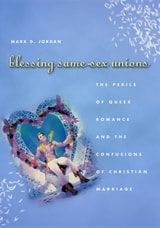
Blessing Same-Sex Unions
The Perils of Queer Romance and the Confusions of Christian MarriageMark D. Jordan
University of Chicago Press, 2005
Why then, asks noted gay commentator Mark D. Jordan, are so many churches vehemently opposed to blessing same-sex unions? In this incisive work, Jordan shows how carefully selected ideals of Christian marriage have come to dominate recent debates over same-sex unions. Opponents of gay marriage, he reveals, too often confuse simplified ideals of matrimony with historical facts. They suppose, for instance, that there has been a stable Christian tradition of marriage across millennia, when in reality Christians have quarreled among themselves for centuries about even the most basic elements of marital theology, authorizing experiments like polygamy and divorce.
Jordan also argues that no matter what the courts do, Christian churches will have to decide for themselves whether to bless same-sex unions. No civil compromise can settle the religious questions surrounding gay marriage. And queer Christians, he contends, will have to discover for themselves what they really want out of marriage. If they are not just after legal recognition as a couple or a place at the social table, do they really seek the blessing of God? Or just the garish melodrama of a white wedding? Posing trenchant questions such as these, Blessing Same-Sex Unions will be a must-read for both sides of the debate over gay marriage in America today.

Blood Work
Life and Laboratories in PenangJanet Carsten
Duke University Press, 2019
Bloodsucking Witchcraft
An Epistemological Study of Anthropomorphic Supernaturalism in Rural TlaxcalaHugo G. Nutini
University of Arizona Press, 1993
"The most comprehensive statement on this centrally important ethnographic phenomenon in the last forty years. It bears ready comparison with the two great classics, Evans-Pritchard's Witchcraft Among the Azande and Clyde Kluckhohn's Navaho Witchcraft."—Henry H. Selby
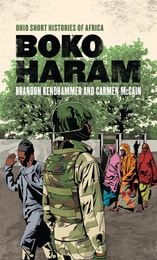
Boko Haram
Brandon Kendhammer
Ohio University Press, 2018
From its small-time origins in the early 2000s to its transformation into one of the world’s most-recognized terrorist groups, this remarkable short book tells the story of Boko Haram’s bloody, decade-long war in northeastern Nigeria. Going beyond the headlines, including the group’s 2014 abduction of 276 girls in Chibok and the international outrage it inspired, Boko Haram provides readers new to the conflict with a clearly written and comprehensive history of how the group came to be, the Nigerian government’s failed efforts to end it, and its enormous impact on ordinary citizens.
Drawing on years of research, Boko Haram is a timely addition to the acclaimed Ohio Short Histories of Africa. Brandon Kendhammer and Carmen McCain—two leading specialists on northern Nigeria—separate fact from fiction within one of the world’s least-understood conflicts. Most distinctively, it is a social history, one that tells the story of Boko Haram’s violence through the journalism, literature, film, and music made by people close to it.
Bold Conscience
Luther to Shakespeare to MiltonJoshua R. Held
University of Alabama Press, 2023
Traces how conscience—inner moral conviction—came to shape public life, fueling martyrdom, free speech, and political revolts
Bold Conscience: Luther to Shakespeare to Milton is a sweeping, original study of how conscience became one of the most powerful ideas in early modern England. Tracing the emergence of what Joshua R. Held calls the “bold conscience,” the book shows how inner moral conviction moved from the realm of private guilt to public action, fueling debates about authority, obedience, free speech, and resistance. By placing conscience at the center of literary, religious, and political conflict, Bold Conscience reveals a vital intellectual throughline linking the Reformation to the birth of modern ideas of liberty and toleration.
The book unfolds chronologically, beginning with Martin Luther and Henry VIII and moving through Shakespeare’s Hamlet and Henry VIII, John Donne’s court sermons, and John Milton’s polemical and poetic works, including Areopagitica and Paradise Lost. Each chapter combines close literary reading with historical and theological analysis, showing how conscience operates across genres—drama, sermon, pamphlet, and epic poetry. Joshua R. Held is a distinguished scholar of early modern literature whose work bridges literary criticism, intellectual history, and religious studies, bringing clarity and narrative energy to complex debates.
Bold Conscience will appeal to scholars and students of early modern literature, Shakespeare, Milton, and Reformation history, as well as readers interested in the origins of religious freedom and political dissent. It will also engage anyone concerned with how moral conviction shapes public life then and now.
Books and Readers in the Premodern World
Essays in Honor of Harry GambleKarl Shuve
SBL Press, 2018
A book about the role of books in shaping the ancient religious landscape
This collection of essays by leading scholars from a variety of academic disciplines explores the ongoing relevance of Harry Gamble’s Books and Readers in the Early Church (1995) for the study of premodern book cultures. Contributors expand the conversation of book culture to examine the role the Hebrew Bible, the New Testament, and the Qur’an played in shaping the Jewish, Christian, and Muslim religions in the ancient and medieval world. By considering books as material objects rather than as repositories for stories and texts, the essays examine how new technologies, new materials, and new cultural encounters contributed to these holy books spreading throughout territories, becoming authoritative, and profoundly shaping three global religions.
Features:
- Comparative analysis of book culture in Roman, Jewish, Christian, and Islamic contexts
- Art-historical, papyrological, philological, and historical modes of analysis
- Essays that demonstrate the vibrant, ongoing legacy of Gamble’s seminal work
Borders of Belief
Religious Nationalism and the Formation of Identity in Ireland and TurkeyGregory J. Goalwin
Rutgers University Press, 2022

Born Again
The Christian Right GlobalizedJennifer S. Butler
Pluto Press, 2006
This book reveals how Christian conservative groups are able to shape policy in every corner of the world. Drawing on interviews with religious leaders, it reveals how today's most powerful Christian Right organisations are building interfaith coalitions, connecting Catholic, Mormon and Muslim allies to advance a conservative agenda.
The US under Bush Jr. has given them a significant voice in shaping US policy on issues including women's rights, reproductive health, human cloning, children's rights and AIDS.
In short, the Christian Right is globalising -- a phenomenon that promises to challenge progressive social policy on a world-wide scale - as well as transform the Christian Right itself.
Bound for Beatitude A Thomistic Study in Eschatology and Ethics
Reinhard Hütter
Catholic University of America Press, 2019
Brand Islam
The Marketing and Commodification of PietyBy Faegheh Shirazi
University of Texas Press, 2016
From food products to fashions and cosmetics to children’s toys, a wide range of commodities today are being marketed as “halal” (permitted, lawful) or “Islamic” to Muslim consumers both in the West and in Muslim-majority nations. However, many of these products are not authentically Islamic or halal, and their producers have not necessarily created them to honor religious practice or sentiment. Instead, most “halal” commodities are profit-driven, and they exploit the rise of a new Islamic economic paradigm, “Brand Islam,” as a clever marketing tool.
Brand Islam investigates the rise of this highly lucrative marketing strategy and the resulting growth in consumer loyalty to goods and services identified as Islamic. Faegheh Shirazi explores the reasons why consumers buy Islam-branded products, including conspicuous piety or a longing to identify with a larger Muslim community, especially for those Muslims who live in Western countries, and how this phenomenon is affecting the religious, cultural, and economic lives of Muslim consumers. She demonstrates that Brand Islam has actually enabled a new type of global networking, joining product and service sectors together in a huge conglomerate that some are referring to as the Interland. A timely and original contribution to Muslim cultural studies, Brand Islam reveals how and why the growth of consumerism, global communications, and the Westernization of many Islamic countries are all driving the commercialization of Islam.
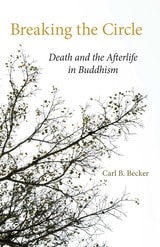
Breaking the Circle
Death and the Afterlife in BuddhismCarl B. Becker
Southern Illinois University Press, 1993
In this much-needed examination of Buddhist views of death and the afterlife, Carl B. Becker bridges the gap between books on death in the West and books on Buddhism in the East.
Other Western writers have addressed the mysteries surrounding death and the afterlife, but few have approached the topic from a Buddhist perspective. Here, Becker resolves questions that have troubled scholars since the beginning of Buddhism: How can Buddhism reconcile its belief in karma and rebirth with its denial of a permanent soul? What is reborn? And when, exactly, is the moment of death?
By systematically tracing Buddhism’s migration from India through China, Japan, and Tibet, Becker demonstrates how culture and environment affect Buddhist religious tradition.
In addition to discussing historical Buddhism, Becker shows how Buddhism resolves controversial current issues as well. In the face of modern medicine’s trend toward depersonalization, traditional Buddhist practices imbue the dying process with respect and dignity. At the same time, Buddhist tradition offers documented precedents for decision making in cases of suicide and euthanasia.
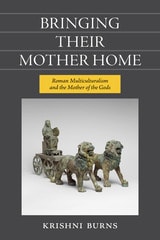
Bringing Their Mother Home
Roman Multiculturalism and the Mother of the GodsKrishni Burns
University of Michigan Press, 2025
Drawing on historical, literary, and archaeological evidence, Bringing Their Mother Home reevaluates the semiotics and practices of the Magna Mater cult as a way to perform the multicultural Roman identity and explores the political and military climate of the Mediterranean leading up to the cult's adoption in 204 BCE.
Brokered Subjects
Sex, Trafficking, and the Politics of FreedomElizabeth Bernstein
University of Chicago Press, 2018
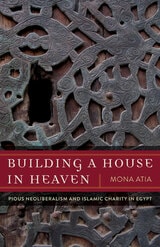
Building a House in Heaven
Pious Neoliberalism and Islamic Charity in EgyptMona Atia
University of Minnesota Press, 2013
Charity is an economic act. This premise underlies a societal transformation—the merging of religious and capitalist impulses that Mona Atia calls “pious neoliberalism.” Though the phenomenon spans religious lines, Atia makes the connection between Islam and capitalism to examine the surprising relations between charity and the economy, the state, and religion in the transition from Mubarak-era Egypt.
Mapping the landscape of charity and development in Egypt, Building a House in Heaven reveals the factors that changed the nature of Egyptian charitable practices—the state’s intervention in social care and religion, an Islamic revival, intensified economic pressures on the poor, and the subsequent emergence of the private sector as a critical actor in development. She shows how, when individuals from Egypt’s private sector felt it necessary to address poverty, they sought to make Islamic charities work as engines of development, a practice that changed the function of charity from distributing goods to empowering the poor. Drawing on interviews with key players, Atia explores the geography of Islamic charities through multiple neighborhoods, ideologies, sources of funding, projects, and wide social networks. Her work shifts between absorbing ethnographic stories of specific organizations and reflections on the patterns that appear across the sector.
An enlightening look at the simultaneous neoliberalization of Islamic charity work and Islamization of neoliberal development, the book also offers an insightful analysis of the political and socioeconomic movements leading up to the uprisings that ended Mubarak’s rule and that amplified the importance of not only the Muslim Brotherhood but also the broader forces of Islamic piety and charity.
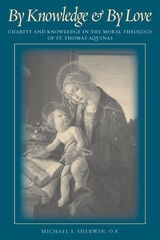
By knowledge & by love
charity and knowledge in the moral theology of St. Thomas AquinasMichael S. Sherwin
Catholic University of America Press, 2005