Results by title
53 books match the query 'Revolutionaries' and 5 start with b
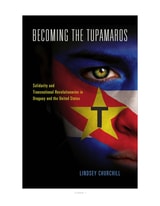
Becoming the Tupamaros
Solidarity and Transnational Revolutionaries in Uruguay and the United StatesLindsey Churchill
Vanderbilt University Press, 2013
Churchill examines the relationship between state repression and revolutionary resistance, the transnational connections between the Uruguayan Tupamaro revolutionaries and leftist groups in the US, and issues of gender and sexuality within these movements. Angela Davis and Eldridge Cleaver, for example, became symbols of resistance in both the United States and Uruguay. and while much of the Uruguayan left and many other revolutionary groups in Latin America focused on motherhood as inspiring women's politics, the Tupamaros disdained traditional constructions of femininity for female combatants. Ultimately, Becoming the Tupamaros revises our understanding of what makes a Movement truly revolutionary.
Biography of a Runaway Slave
Miguel Barnet
Northwestern University Press, 2002
In this remarkable testimony, Cuban novelist and anthropologist Miguel Barnet presents the narrative of 105-year-old Esteban Montejo, who lived as a slave, as fugitive in the wilderness, and as a soldier in the Cuban War of Independence. Honest, blunt, compassionate, shrewd, and engaging, his voice provides an extraordinary insight into the African culture that took root in the Caribbean.
Biography of a Runaway Slave
Fiftieth Anniversary EditionMiguel Barnet; Translated from the Spanish by W. Nick Hill; Introduction by William Luis
Northwestern University Press, 2016
Fiftieth Anniversary Edition
Originally published in 1966, Miguel Barnet’s Biography of a Runaway Slave provides the written history of the life of Esteban Montejo, who lived as a slave, as a fugitive in the wilderness, and as a soldier fighting against Spain in the Cuban War of Independence. A new introduction by one of the most preeminent Afro-Hispanic scholars, William Luis, situates Barnet’s ethnographic strategy and lyrical narrative style as foundational for the tradition of testimonial fiction in Latin American literature. Barnet recorded his interviews with the 103-year-old Montejo at the onset of the Cuban Revolution. This insurgent’s history allows the reader into the folklore and cultural history of Afro-Cubans before and after the abolition of slavery. The book serves as an important contribution to the archive of black experience in Cuba and as a reminder of the many ways that the present continues to echo the past.

Bones of Contention
The living archive of Vasil Levski and the making of Bulgaria's national heroMaria Todorova
Central European University Press, 2009
Bourdieu's Secret Admirer in the Caucasus
A World-System BiographyGeorgi M. Derluguian
University of Chicago Press, 2005
Exploring globalization, democratization, ethnic identity, and international terrorism, Derluguian contextualizes Shanib's personal trajectory from de-Stalinization through the nationalist rebellions of the 1990s, to the recent rise in Islamic militancy. He masterfully reveals not only how external economic and political forces affect the former Soviet republics but how those forces are in turn shaped by the individuals, institutions, ethnicities, and social networks that make up those societies. Drawing on the work of Charles Tilly, Immanuel Wallerstein, and, of course, Bourdieu, Derluguian's explanation of the recent ethnic wars and terrorist acts in Russia succeeds in illuminating the role of human agency in shaping history.