Results by title
81 books match the query 'Revolutions, Uprisings & Rebellions' and 3 start with b

Babies In Bottles
Susan Merrill Squier
Rutgers University Press, 1994
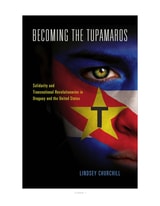
Becoming the Tupamaros
Solidarity and Transnational Revolutionaries in Uruguay and the United StatesLindsey Churchill
Vanderbilt University Press, 2013
Churchill examines the relationship between state repression and revolutionary resistance, the transnational connections between the Uruguayan Tupamaro revolutionaries and leftist groups in the US, and issues of gender and sexuality within these movements. Angela Davis and Eldridge Cleaver, for example, became symbols of resistance in both the United States and Uruguay. and while much of the Uruguayan left and many other revolutionary groups in Latin America focused on motherhood as inspiring women's politics, the Tupamaros disdained traditional constructions of femininity for female combatants. Ultimately, Becoming the Tupamaros revises our understanding of what makes a Movement truly revolutionary.
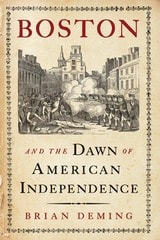
Boston and the Dawn of American Independence
Brian Deming
Westholme Publishing, 2013
In 1760, no one could imagine the American colonies revolting against Great Britain. The colonists were not hungry peasants groaning under the whip of a brute. They lived well. Land was cheap, wages were good, opportunities abounded. While many colonists had been in the New World for generations, they identified with Britain, and England was still “home.” Yet in the space of just fifteen years these sturdy bonds snapped. Boston—a town of just 16,000—lit the fire for American Independence. Brian Deming explains how and why in his lucid, lively, and deeply researched Boston and the Dawn of American Independence.
To dodge British taxes, Boston merchants for as long as anyone could remember had routinely smuggled in molasses from French and Spanish possessions in the Caribbean. Boston distillers transformed this sweet cargo into rum, the liquid gold traded around the world. But British authorities cracked down on smuggling and imposed the Sugar Act to help pay for the debts incurred during their wars against France. Then came the hated Stamp Act, a tax on documents, newspapers, and printed materials of all kinds. In courtrooms, in the press, and in the streets, Bostonians rallied in protest against taxation without representation. As anger swept America, Boston was at the center of the storm, which burst forth with the infamous massacre and the Boston Tea Party. By 1775, open warfare erupted at Lexington, Concord, and Bunker Hill. Boston and the Dawn of American Independence ties these scenes together with the people of the time, including John and Sam Adams, John Hancock, and Paul Revere, as well as Thomas Hutchinson, the beleaguered Massachusetts royal governor, and James Otis, the bombastic, unstable early patriot. Readers hear their voices, but also those of many amazing, colorful, and memorable personalities— feisty mob leaders, defiant Tories, terrified townspeople. Deming illuminates this epic story with views of everyday life inside taverns, outside newspaper offices, and along the wharves, and the political dramas in London and Philadelphia that shaped the destiny of an empire and gave rise to the world’s first modern democracy.