Results by title
105 books match the query 'Social Work' and 4 start with b
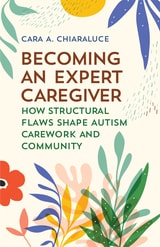
Becoming an Expert Caregiver
How Structural Flaws Shape Autism Carework and CommunityCara A. Chiaraluce
Rutgers University Press, 2025
Throughout the chapters in this book, the expert caregiver is one person who faces unbelievably daunting tasks of filling or reforming persistent institutional gaps, primarily in education and health care, and subverting ableist cultural norms. Without institutional support, answers to their questions, or pragmatic avenues to access resources, lay caregivers become the experts. Their trials and tribulations, especially when navigating the boundaries of professional/lay and private/public worlds, illuminate a type of carework that is increasingly relevant to a growing number of young families caring for neurodivergent, disabled, medically fragile, and/or chronically ill children. These stories offer a vivid picture of the often invisible complex challenges and structural forces that drive individuals to become expert caregivers in the first place.
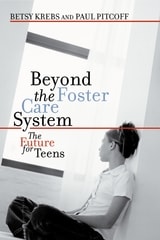
Beyond The Foster Care System
The Future for TeensBetsy Krebs
Rutgers University Press, 2006
Each year tens of thousands of teenagers are released from the foster care system in the United States without high school degrees or strong family relationships. Two to four years after discharge, half of these young people still do not have either a high school diploma or equivalency degree, and fewer than ten percent enter college. Nearly a third end up on public assistance within fifteen months, and eventually more than a third will be arrested or convicted of a crime.
In this richly detailed and often surprising exploration of the foster care system, Betsy Krebs and Paul Pitcoff argue that the existing structure sets kids up to fail by inadequately preparing them for adult life. Foster care programs traditionally emphasize goals of reuniting children with family or placing children into adoptive homes. But neither of these outcomes is likely for adolescents. Krebs and Pitcoff contend that the primary goal of foster care for teenagers should be rigorous preparation for a fully productive adult life and that the standard life skills curriculum is woefully inadequate for this purpose.
The authors, who together cofounded the Youth Advocacy Center in New York City, draw on their fifteen years of experience working with teens and the foster care system to introduce new ways to teach teens to be responsible for themselves and to identify and develop their potential. They also explore what sorts of resources-legal, financial, and human-will need to come from inside and outside the system to more fully humanize the practice of foster care. Ultimately, Krebs and Pitcoff argue that change must involve the participation of caring communities of volunteers who want to see disadvantaged youth succeed as well as developing methods to empower teens to take control of their lives.
Bringing together a series of inspiring, real-life accounts, Beyond the Foster Care System introduces readers to a number of dynamic young people who have participated in the Youth Advocacy Center's programs and who have gone on to apply these lessons to other areas of life. Their stories demonstrate that more successful alternatives to the standard way of providing foster care are not only imaginable, but possible. With the practical improvements Krebs and Pitcoff outline, teens can learn the skills of effective self-advocacy, become better prepared for the transition to full independence, and avoid becoming the statistics that foster care has so often produced in the past.
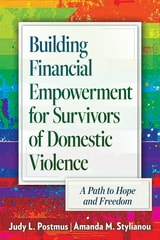
Building Financial Empowerment for Survivors of Domestic Violence
A Path to Hope and FreedomJudy L. Postmus
Rutgers University Press, 2023
Curiously, little of the research on domestic violence has sought to either fully understand the impact of financial abuse or to determine which intervention strategies are most effective for the financial empowerment of survivors. Building Financial Empowerment for Survivors of Domestic Violence aims to address this critical knowledge gap by providing those who work with survivors of domestic violence with practical knowledge on how to empower the financial well-being and stability of survivors. Specifically, every practitioner, human service provider, criminal justice practitioner, financial manager, and corporate supervisor should be screening the women they encounter for economic abuse, and when such abuse is found, they should work with the women toward developing financial safety plans and refer survivors to financial empowerment programs to assist survivors to become free from abuse.
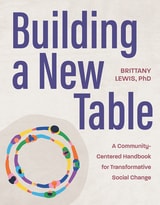
Building a New Table
A Community-Centered Handbook for Transformative Social ChangeBrittany Lewis
University of Minnesota Press, 2026
A vital guide to centering community knowledge to generate effective solutions to inequality
When organizations take on social problems, from school reform to conservation to healthcare disparities, community members are sometimes “invited to the table” to share their insights. But if the table has already been set with institutional assumptions about the issue at hand, the solutions that emerge often have little to do with the people and places they are meant to help. When this is the case, inclusion can only go so far: as Dr. Brittany Lewis argues, it’s time to build a new table.
Drawing on her work as a community researcher and nonprofit consultant, Dr. Lewis developed the Equity in Action (EIA) model as a framework for closing the gaps between communities, researchers, and institutions. By centering the knowledge of the community members who ostensibly benefit from the work of various organizations, EIA makes research questions more relevant and the research process more targeted, getting at the roots of social inequality to find sustainable, impactful solutions. In Building a New Table, Dr. Lewis guides readers through the steps of EIA: assessing the landscape, building the community action council, co-developing a research approach, data collection, community review, and identifying solutions. Along the way, she highlights the values imbued in each step and the skills needed for success as well as how the model can be adapted for different organizations.
Practical and hands-on, Building a New Table explores each phase of the Equity in Action model through case studies featuring commentary from organizational leaders and staff who have used it to reshape their engagement with the communities they serve. Demonstrating how to ground solutions in lessons from lived experience, this book teaches how authentic community engagement and community-driven research creates reciprocal, generative relationships that can enact real, systemic change.
Retail e-book files for this title are screen-reader friendly with images accompanied by short alt text and/or extended descriptions.