Results by title
382 books match the query 'Southwest (AZ, NM, OK, TX)' and 23 start with b
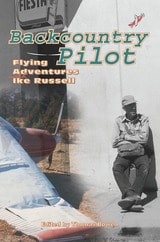
Backcountry Pilot
Flying Adventures with Ike RussellEdited by Thomas Bowen
University of Arizona Press, 2002
This book combines biography and oral history by offering a wide range of anecdotes and remembrances about Ike by friends and family. Many describe the great adventures and gut-wrenching close calls that have become enshrined in local folklore as classic "Ike Russell stories," in all their hair-raising and hilarious splendor.
Russell was an easterner who moved to Arizona for his health and got his pilot's license in 1948—despite suffering from a respiratory disorder that would have kept other men firmly anchored to the ground. Over the years he flew scientists and other scholars to remote field locations in Mexico's Gulf of California and Sierra Madre Occidental that otherwise might not have been investigated. He often landed on short and dangerous airstrips and never seemed to mind running out of gas, getting caught without provisions, or attempting night landings in unlighted terrain. He took along a teapot wherever he went—and wherever he stopped, his first priority was to brew a quick cup.
Backcountry Pilot is the story of a larger-than-life adventurer, with those who knew Ike sharing tales tall and true about his famous exploits, brushes with fate, and sometimes narrow escapes from the jaws of disaster. It includes reminiscences by such scientists and friends as botanist Richard Felger, whom Ike frequently flew down to Seriland; ethnohistorian Bernard Fontana, whom Ike took to Tarahumara country; and paleoecologist Paul Martin, who talked Ike into a nine-month trip through Africa over totally unfamiliar terrain. A concluding chapter by Thomas Bowen offers a brief biographical sketch of Russell.
Ike Russell was a central figure for a generation of people who studied the southwestern desert and who helped others see it as a biological treasure rather than a wasteland. More than a highly skilled bush pilot, he was an extraordinary human being who touched the lives of everyone he met. For those who never got the chance, Backcountry Pilot secures Ike Russell's legacy in the desert skies.

Baker & Botts in the Development of Modern Houston
By Kenneth J. Lipartito and Joseph A. Pratt
University of Texas Press, 1991
As counsel for Pennzoil's successful effort to recover billions of dollars in damages from Texaco over the acquisition of Getty Oil Company, the Baker & Botts law firm of Houston, Texas, achieved wide public recognition in the 1980s. But among its peers in the legal and corporate worlds, Baker & Botts has for more than a century held a preeminent position, handling the legal affairs of such blue-chip clients as the Southern Pacific Railroad, Houston Lighting & Power Company, Rice University, Texas Commerce Bank, and Tenneco. In this study, Kenneth J. Lipartito and Joseph A. Pratt chronicle the history of Baker & Botts, placing particular emphasis on the firm's role in Houston's economic development.
Founded in 1840, Baker & Botts literally grew up with Houston. The authors chart its evolution from a nineteenth-century regional firm that represented eastern-based corporations moving into Texas to a twentieth-century national firm with clients throughout the world. They honestly discuss the criticisms that Baker & Botts has faced as an advocate of big business. But they also identify the important impact that corporate law firms of this type have on business reorganization and government regulation. As the authors demonstrate in this case study, law firms throughout the twentieth century have helped to shape public policy in these critical areas.
Always prominent in the community, and with prominent connections (former Secretary of State James A. Baker III is the great-grandson of the original Baker), the Baker & Botts law firm belongs in any history of the development of Houston and the Southwest.

Barry Goldwater and the Remaking of the American Political Landscape
Edited by Elizabeth Tandy Shermer
University of Arizona Press, 2013
Since Goldwater’s death in 1998, politicians, pundits, and academics have been assessing his achievements and his shortcomings. The twelve essays in this volume thoroughly examine the life, times, and impact of “Mr. Conservative.” Scrutinizing the transformation of a Phoenix department store owner into a politician, de facto political philosopher, and five-time US senator, contributors highlight the importance of power, showcasing the relationship between the nascent conservative movement’s cadre of elite businessmen, newsmen, and intellectuals and their followers at the grassroots—or sagebrush—level.
Goldwater, who was born in the Arizona Territory in 1909, was deeply influenced by his Western upbringing. With his appearance on the national stage in 1964, he not only articulated a new brand of conservatism but gave a voice to many Americans who were not enamored with the social and political changes of the era. He may have lost the battle for the presidency, but he energized a coalition of journalists, publishers, women’s groups, and Southerners to band together in a movement that reshaped the nation.
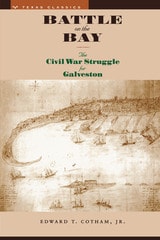
Battle on the Bay
The Civil War Struggle for GalvestonBy Edward T. Cotham, Jr.
University of Texas Press, 1998
The Civil War history of Galveston is one of the last untold stories from America's bloodiest war, despite the fact that Galveston was a focal point of hostilities throughout the conflict. As other Southern ports fell to the Union, Galveston emerged as one of the Confederacy's only lifelines to the outside world. When the war ended in 1865, Galveston was the only major port still in Confederate hands.
In this beautifully written narrative history, Ed Cotham draws upon years of archival and on-site research, as well as rare historical photographs, drawings, and maps, to chronicle the Civil War years in Galveston. His story encompasses all the military engagements that took place in the city and on Galveston Bay, including the dramatic Battle of Galveston, in which Confederate forces retook the city on New Year's Day, 1863.
Cotham sets the events in Galveston within the overall conduct of the war, revealing how the city's loss was a great strategic impediment to the North. Through his pages pass major figures of the era, as well as ordinary soldiers, sailors, and citizens of Galveston, whose courage in the face of privation and danger adds an inspiring dimension to the story.
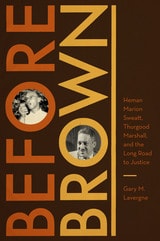
Before Brown
Heman Marion Sweatt, Thurgood Marshall, and the Long Road to JusticeBy Gary M. Lavergne
University of Texas Press, 2010
Winner, Coral Horton Tullis Memorial Prize for Best Book on Texas History, Texas State Historical Association, 2010
Carr P. Collins Award, Texas Institute of Letters, 2011
On February 26, 1946, an African American from Houston applied for admission to the University of Texas School of Law. Although he met all of the school's academic qualifications, Heman Marion Sweatt was denied admission because he was black. He challenged the university's decision in court, and the resulting case, Sweatt v. Painter, went to the U.S. Supreme Court, which ruled in Sweatt's favor. The Sweatt case paved the way for the landmark Brown v. Board of Education of Topeka rulings that finally opened the doors to higher education for all African Americans and desegregated public education in the United States.
In this engrossing, well-researched book, Gary M. Lavergne tells the fascinating story of Heman Sweatt's struggle for justice and how it became a milestone for the civil rights movement. He reveals that Sweatt was a central player in a master plan conceived by the National Association for the Advancement of Colored People (NAACP) for ending racial segregation in the United States. Lavergne masterfully describes how the NAACP used the Sweatt case to practically invalidate the "separate but equal" doctrine that had undergirded segregated education for decades. He also shows how the Sweatt case advanced the career of Thurgood Marshall, whose advocacy of Sweatt taught him valuable lessons that he used to win the Brown v. Board of Education case in 1954 and ultimately led to his becoming the first black Associate Justice of the Supreme Court.
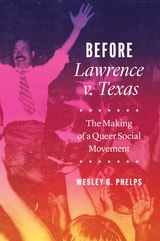
Before Lawrence v. Texas
The Making of a Queer Social MovementWesley G. Phelps
University of Texas Press, 2022
2024 Coral Horton Tullis Memorial Prize, Texas State Historical Association
2024 Award of Merit, The Philosophical Society of Texas Nonfiction Book Prize
The grassroots queer activism and legal challenges that led to a landmark Supreme Court decision in favor of gay and lesbian equality.
In 2003 the US Supreme Court overturned anti-sodomy laws across the country, ruling in Lawrence v. Texas that the Constitution protects private consensual sex between adults. To some, the decision seemed to come like lightning from above, altering the landscape of America’s sexual politics all at once. In actuality, many years of work and organizing led up to the legal case, and the landmark ruling might never have happened were it not for the passionate struggle of Texans who rejected their state’s discriminatory laws.
Before Lawrence v. Texas tells the story of the long, troubled, and ultimately hopeful road to constitutional change. Wesley G. Phelps describes the achievements, setbacks, and unlikely alliances along the way. Over the course of decades, and at great risk to themselves, gay and lesbian Texans and their supporters launched political campaigns and legal challenges, laying the groundwork for Lawrence. Phelps shares the personal experiences of the people and couples who contributed to the legal strategy that ultimately overturned the state’s discriminatory law. Even when their individual court cases were unsuccessful, justice seekers and activists collectively influenced public opinion by insisting that their voices be heard. Nine Supreme Court justices ruled, but it was grassroots politics that vindicated the ideal of equality under the law.
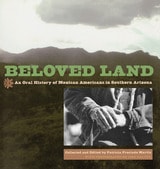
Beloved Land
An Oral History of Mexican Americans in Southern ArizonaCollected and Edited by Patricia Preciado Martin, with Photographs by José Galvez
University of Arizona Press, 2004
For Doña Ramona as well as for countless generations of Mexican Americans, memories of rural life recall la querida tierra, the beloved land. Through good times and bad, the land provided sustenance. Today, many of those homesteads and ranches have succumbed to bulldozers that have brought housing projects and strip malls in their wake.
Now a writer and a photographer who have long been intimately involved with Arizona's Hispanic community have preserved the voices and images of men and women who are descendants of pioneer ranching and farming families in southern Arizona. Ranging from Tucson to the San Rafael Valley and points in between, this book documents the contributions of Mexican American families whose history and culture are intertwined with the lifestyle of the contemporary Southwest. These were hardy, self-reliant pioneers who settled in what were then remote areas. Their stories tell of love affairs with the land and a way of life that is rapidly disappearing.
Through oral histories and a captivating array of historic and contemporary photos, Beloved Land records a vibrant and resourceful way of life that has contributed so much to the region. Individuals like Doña Ramona tell stories about rural life, farming, ranching, and vaquero culture that enrich our knowledge of settlement, culinary practices, religious traditions, arts, and education of Hispanic settlers of Arizona. They talk frankly about how the land changed hands—not always by legal means—and tell how they feel about modern society and the disappearance of the rural lifestyle.
"Our ranch homes and fields, our chapels and corrals may have been bulldozed by progress or renovated into spas and guest ranches that never whisper our ancestors' names," writes Patricia Preciado Martin. "The story of our beautiful and resilient heritage will never be silenced . . . as long as we always remember to run our fingers through the nourishing and nurturing soil of our history." Beloved Land works that soil as it revitalizes that history for the generations to come.
Best Backpacking Trips in Utah, Arizona, and New Mexico
Mike White
University of Nevada Press, 2016
This is the second book in a series of detailed guidebooks covering all the best “life-list” backpacking vacations in the spectacular backcountry of the American West. This new volume specifically covers the best such adventures in the states of Utah, Arizona, and New Mexico. Every conceivable aspect of trip planning is covered in the guide, including maps and descriptions of the trail, where to locate the nearest airport, other area attractions that shouldn’t be missed, and guide services that are available. A noteworthy feature of the book is the individual vignettes that give insight into the historical significance of many of the trails. Also unique are the interesting and humorous personal accounts that the authors share from their personal experiences hiking these routes. Backpackers will find a wide range of outstanding trips, from high mountain adventures to some of the world’s best lower-elevation canyon hikes. Best Backpacking Trips in Utah, Arizona, and New Mexico provides an extensive choice of terrific expeditions.

Big Wonderful Thing
A History of TexasBy Stephen Harrigan
University of Texas Press, 2019
2020 Philosophical Society of Texas Nonfiction Book Prize
2019 Nonfiction Book Award Finalist, Writers’ League of Texas
2021 Citation from the San Antonio Conservation Society
"Harrigan, surveying thousands of years of history that lead to the banh mi restaurants of Houston and the juke joints of Austin, remembering the forgotten as well as the famous, delivers an exhilarating blend of the base and the ignoble, a very human story indeed. [ Big Wonderful Thing is] as good a state history as has ever been written and a must-read for Texas aficionados.”—Kirkus, Starred Review
The story of Texas is the story of struggle and triumph in a land of extremes. It is a story of drought and flood, invasion and war, boom and bust, and the myriad peoples who, over centuries of conflict, gave rise to a place that has helped shape the identity of the United States and the destiny of the world.
“I couldn’t believe Texas was real,” the painter Georgia O’Keeffe remembered of her first encounter with the Lone Star State. It was, for her, “the same big wonderful thing that oceans and the highest mountains are.”
Big Wonderful Thing invites us to walk in the footsteps of ancient as well as modern people along the path of Texas’s evolution. Blending action and atmosphere with impeccable research, New York Times best-selling author Stephen Harrigan brings to life with novelistic immediacy the generations of driven men and women who shaped Texas, including Spanish explorers, American filibusters, Comanche warriors, wildcatters, Tejano activists, and spellbinding artists—all of them taking their part in the creation of a place that became not just a nation, not just a state, but an indelible idea.
Written in fast-paced prose, rich with personal observation and a passionate sense of place, Big Wonderful Thing calls to mind the literary spirit of Robert Hughes writing about Australia or Shelby Foote about the Civil War. Like those volumes, it is a big book about a big subject, a book that dares to tell the whole glorious, gruesome, epically sprawling story of Texas.

Bill Hobby
A Life in Journalism and Public ServiceDon Carleton and Erin L. Purdy
University of Texas Press, 2024
A comprehensive biography of a legendary lieutenant governor.
During his five terms as lieutenant governor of Texas, Bill Hobby became one of the most powerful political figures in the state’s history. He was first elected lieutenant governor of Texas in 1972 and served until 1990. Thanks to his brilliance as a political tactician and his personal integrity, Hobby was able to set the Senate’s agenda and garner respect from legislators on both sides of the aisle.
In Bill Hobby: A Life in Journalism and Public Service, Don Carleton and Erin Purdy document Hobby’s significant contributions to Texas as a journalist, politician, and philanthropist. Born into a prominent Texas family with a rich legacy of public service, he was the son of Houston newspaper publisher and former Texas governor William P. Hobby Sr., and Oveta Culp Hobby, who led the Women’s Army Corps during World War II and served in Eisenhower’s cabinet. After more than a decade as a journalist for the Houston Post, Hobby forged his own political path while also playing a prominent role in his family’s newspaper and television business.
Hobby was never shy about using his power to serve the people of Texas. Even after he left office, he continued to make a difference as a strong advocate for public education, including a term as chancellor of the University of Houston.

Biscuits, the Dole, and Nodding Donkeys
Texas Politics, 1929-1932By Norman D. Brown, edited and with an introduction by Rachel Ozanne
University of Texas Press, 2019
When the venerable historian Norman D. Brown published Hood, Bonnet, and Little Brown Jug in 1984, he earned national acclaim for revealing the audacious tactics at play in Texas politics during the Roaring Twenties, detailing the effects of the Ku Klux Klan, newly enfranchised women, and Prohibition. Shortly before his death in 2015, Brown completed Biscuits, the Dole, and Nodding Donkeys, which picks up just as the Democratic Party was poised for a bruising fight in the 1930 primary. Charting the governorships of Dan Moody, Ross Sterling, Miriam “Ma” Ferguson in her second term, and James V. Allred, this engrossing sequel takes its title from the notion that Texas politicians should give voters what they want (“When you cease to deliver the biscuits they will not be for you any longer,” said Jim “Pa” Ferguson) while remaining wary of federal assistance (the dole) in a state where the economy is fueled by oil pump jacks (nodding donkeys).
Taking readers to an era when a self-serving group of Texas politicians operated in a system that was closed to anyone outside the state’s white, wealthy echelons, Brown unearths a riveting, little-known history whose impact continues to ripple at the capitol.

Black Texas Women
A SourcebookBy Ruthe Winegarten
University of Texas Press, 1994
When Black Texas Women: 150 Years of Trial and Triumph was published in 1995, it was acclaimed as the first comprehensive history of black women's struggles and achievements. This companion volume contains the original source materials that Ruthe Winegarten uncovered during her extensive research.
Like a time capsule of black women's history, A Sourcebook includes petitions from free women of color, lawsuits, slave testimonies, wills, plantation journals, club minutes, autobiographies, ads, congressional reports, contracts, prison records, college catalogues, newspaper clippings, protest letters, and much more.
In addition to the documents, a biographical section highlights the lives of women from various walks of life. The book concludes with a timeline that begins in 1777 and reaches to 1992. This wealth of original material will be a treasure trove for scholars and general readers interested in the emerging field of black women's history.
Blue Desert
Charles Bowden; Foreword by Francisco Cantú
University of Arizona Press, 2018
Bowden presents a view of the Southwest that measures how rapid growth takes its toll on the land. Writing with a reporter’s objectivity and a desert rat’s passion, Bowden offers us his trademarked craft and wit to take us into the streets as well as the desert to depict not a fragile environment but the unavoidable reality of abuse, exploitation, and human cruelty. Blue Desert shows us the darker side of development—where “the land always makes promises of aching beauty and the people always fail the land”—and defies us to ignore it.
In a thoughtful new foreword, Francisco Cantú writes, “In Blue Desert, we follow Bowden in the processes of becoming. We see the version of Bowden that he would likely most want us to remember—someone who did their best to be an honest witness, someone who was haunted by modernity and his place in it, someone who grappled with his demons by gazing deeply into the desert.” Blue Desert is a critical piece in the oeuvre of Charles Bowden, and it continues to remind readers of the cruelty and beauty of the world around us.

Bones of Texas
Photos and Stories from Bygone PlacesMorgan Page and Dustin Rice
University of Texas Press, 2026
Border Citizens
The Making of Indians, Mexicans, and Anglos in ArizonaBy Eric V. Meeks; foreword by Patricia Nelson Limerick
University of Texas Press, 2007
In Border Citizens, historian Eric V. Meeks explores how the racial classification and identities of the diverse indigenous, mestizo, and Euro-American residents of Arizona’s borderlands evolved as the region was politically and economically incorporated into the United States. First published in 2007, the book examines the complex relationship between racial subordination and resistance over the course of a century. On the one hand, Meeks links the construction of multiple racial categories to the process of nation-state building and capitalist integration. On the other, he explores how the region’s diverse communities altered the blueprint drawn up by government officials and members of the Anglo majority for their assimilation or exclusion while redefining citizenship and national belonging.
The revised edition of this highly praised and influential study features dozens of new images, an introductory essay by historian Patricia Nelson Limerick, and a chapter-length afterword by the author. In his afterword, Meeks details and contextualizes Arizona’s aggressive response to undocumented immigration and ethnic studies in the decade after Border Citizens was first published, demonstrating that the broad-based movement against these measures had ramifications well beyond Arizona. He also revisits the Yaqui and Tohono O’odham nations on both sides of the Sonora-Arizona border, focusing on their efforts to retain, extend, and enrich their connections to one another in the face of increasingly stringent border enforcement.

Border Contraband
A History of Smuggling across the Rio GrandeBy George T. Díaz
University of Texas Press, 2015

Border Dilemmas
Racial and National Uncertainties in New Mexico, 1848–1912Anthony Mora
Duke University Press, 2011

Border Spaces
Visualizing the U.S.-Mexico FronteraEdited by Katherine G. Morrissey and John-Michael H. Warner
University of Arizona Press, 2018
In Border Spaces, Katherine G. Morrissey, John-Michael H. Warner, and other essayists build on the insights of border dwellers, or fronterizos, and draw on two interrelated fields—border art history and border studies. The editors engage in a conversation on the physical landscape of the border and its representations through time, art, and architecture.
The volume is divided into two linked sections—one on border histories of built environments and the second on border art histories. Each section begins with a “conversation” essay—co-authored by two leading interdisciplinary scholars in the relevant fields—that weaves together the book’s thematic questions with the ideas and essays to follow.
Border Spaces is prompted by art and grounded in an academy ready to consider the connections between art, land, and people in a binational region.
Contributors
Maribel Alvarez
Geraldo Luján Cadava
Amelia Malagamba-Ansótegui
Mary E. Mendoza
Sarah J. Moore
Katherine G. Morrissey
Margaret Regan
Rebecca M. Schreiber
Ila N. Sheren
Samuel Truett
John-Michael H. Warner

Borderman
Memoirs of Federico José María RonstadtEdited by Edward F. Ronstadt; Forewords by Bernard L. Fontana and Ernesto Portillo, Jr.
University of Arizona Press, 2003
Writing proudly of his Mexican and American heritages, Ronstadt offers readers an extraordinary portrait of the Arizona-Mexico borderlands during the late nineteenth century. His memoirs provide a richness of detail and insight unmatched by traditional histories, relating such scenarios as the hardships of Yaqui hardrock miners working under primitive conditions, the travails of pearl divers in the Gulf of California, and the insurrection of Francisco Serna in 1875 Sonora. They also depict the simple activities of childhood, with its schooling and musical training, its games and mischief. Ronstadt relates his apprenticeship to a wagon- and carriage-maker in Tucson, recalling labor relations in the shop, the establishment of his own business, and the joys and anguish of his personal life. He tells of how he drew on talents nurtured in childhood to become a musician and bandleader, playing weekly concerts with Club Filarmónica Tucsonense for nine years—musical talents that were eventually passed on to his children, his grandchildren (including Linda), and great-grandchildren.
Through Ronstadt's memories, we are better able to understand the sense of independence and self-reliance found today among many lifelong residents of Sonora and Baja California—people isolated from major supply sources and centers of power—and to appreciate a different view of Tucson's past. Enhanced by 22 historical photos, Borderman is a treasure trove of historical source material that will enlighten all readers interested in borderlands history.
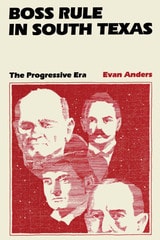
Boss Rule in South Texas
The Progressive EraBy Evan Anders
University of Texas Press, 1982
Four men played leading roles in the political drama that unfolded in South Texas during the first decades of this century:
- James B. Wells, who ruled as boss of Cameron County and served as leading conservative spokesman of the Democratic Party in Texas;
- Archer (Archie) Parr, whose ruthless tactics and misuse of public funds in Duval County established him as one of the most notoriously corrupt politicians in Texas history;
- Manuel Guerra, Mexican American rancher and merchant whose domination of Starr County mirrored the rule of his Anglo counterparts in the border region;
- John Nance Garner, who served the interests of these bosses of South Texas as he set forth on the road that would lead him to the United States vice-presidency.
Evan Anders's Boss Rule in South Texas tells the story of these men and the county rings they shaped in South Texas during the Progressive Era.
Power was the byword of the bosses of the Lower Rio Grande Valley, and Anders explores the sources of that power. These politicos did not shirk from using corrupt and even violent means to attain their goals, but Anders demonstrates that their keen sensitivity to the needs of their diverse constituency was key to their long-term success. Patronage and other political services were their lifeblood, and the allies gained by these ranged from developers and businessmen to ranchers and Mexican Americans, wealthy and poor.
Besides examining the workings of the Democratic machines of four South Texas counties, Anders explores the role of the Hispanic populace in shaping the politics of the border region, the economic development of the Lower Rio Grande Valley and its political repercussions, the emergence and nature of progressive movements at both local and state levels, and the part played by the Texas Rangers in supporting bossism in South Texas.

Brewing Arizona
A Century of Beer in the Grand Canyon StateEd Sipos
University of Arizona Press, 2013
Since 1864, the state’s breweries have had a history as colorful as the state. With an eye like a historian, the good taste of a connoisseur, and the tenacity of a dedicated collector, author Ed Sipos serves up beer history with gusto. Brewing Arizona is the first book of Arizona beer. It includes every brewery known to have operated in the state, from the first to the latest, from crude brews to craft brews, from mass beer to microbrews. This eye-opening chronicle is encyclopedic in scope but smooth in its delivery. Like a fine beer, the contents are deep and rich, with a little froth on top.
With more than 250 photographs—200 in full color—Brewing Arizona is as beautiful as it is tasty. So put up your feet, grab a cold one, and sip to your heart’s delight.

Bringing Home the Wild
A Riparian Garden in a Southwest CityJuliet C. Stromberg
University of Arizona Press, 2023
When living in a large sprawling city, one may feel disconnected and adrift. Finding ways to belong and have positive effects is challenging. In Bringing Home the Wild, botanist Juliet C. Stromberg demonstrates how ecologically guided gardening develops a sense of place, restores connections to nature, and brings joy and meaning to our lives.
This book follows a two-decade journey in ecologically guided gardening on a four-acre irrigated parcel in Phoenix, Arizona, from the perspective of a retired botanist and her science historian partner. Through humor and playful use of language, Bringing Home the Wild not only introduces the plants who are feeding them, buffering the climate, and elevating their moods but also acknowledges the animals and fungi who are pollinating the plants and recycling the waste. Some of the plants featured are indigenous to the American Southwest, while others are part of the biocultural heritage of the cityscape. This book makes the case for valuing inclusive biodiversity and for respectful interactions with all wild creatures, regardless of their historical origin.
As author and partner learn to cohabit with the plants who feed them, calm them, entertain them, and protect them from the increasing heat, their desire to live sustainably, ethically, and close to the land becomes even stronger, revealing the importance of observing, appreciating, and learning from the ecosystems of which we are a part.

Burton Barr
Political Leadership and the Transformation of ArizonaPhilip R. VanderMeer, Foreword by Alfredo Gutierrez
University of Arizona Press, 2014
Considered perhaps the most influential person in Arizona’s political development, Burton Barr represented north central Phoenix in the Arizona House of Representatives for the twenty-two years from 1964 to 1986. As the Republican House Majority Leader for twenty of those years, he left his fingerprints on every major piece of legislation during those decades, covering such issues as air pollution, health care for indigents, school aid, the tax code, prison reform, child care, groundwater management, and freeway funding.
Burton Barr’s political life unfolded during the very time his state and region shifted from being outliers to trendsetters. His choices in policy making and his leadership style were both an outcome and a creator of his sociopolitical environment. Arizona politics in the 1960s and ’70s was a rich brew of key elements, a time when the economy was being transformed, the nature and distribution of populations shifted, partisan politics were in flux, and the very lifeblood of the West—water—was being contested under increasing pressures of usage and depletion.
How Barr successfully responded to those challenges is the story of Arizona’s development during those years. At the heart of it, Barr’s political life and personality are inextricably bound up with the life of the West.