Results by title
191 books match the query 'Studies' and 3 start with b
Baha'i
Studies in Contemporary ReligionMargit Warburg
Signature Books, 2001
In fact, Baha’i draws on a diverse heritage that encompasses both East and West. Reflecting their Islamic roots, they observe daily prayers and the reading of sacred texts; a month of fast; pilgrimage to Haifa, Israel, where the religion’s relics are preserved; and abstinence from alcohol. They face toward their prophet Baha’u'llah’s resting place when praying, which is reminiscent of Muslims facing Mecca to pray.
In other ways, the Baha’i religion has dissociated itself from orthodox Shi’ism. Adherents avoid communal prayer, reject the idea of a professional clergy, promote gender equality, and devote a great deal of attention to education, health care, and environmental issues. They work actively through the United Nations system to promote their view of a new world order of peace and harmony that they feel will one day unify humankind across all nations, races, and religions.
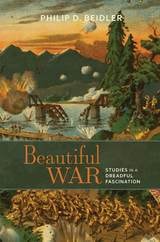
Beautiful War
Studies in a Dreadful FascinationPhilip D. Beidler
University of Alabama Press, 2016
Beautiful War: Studies in a Dreadful Fascination is a wide-ranging exploration of armed conflict as depicted in art that illustrates the constant presence of war in our everyday lives. Philip D. Beidler investigates the unending assimilation and pervasive presence of the idea of war in popular culture, the impulses behind the making of art out of war, and the unending and debatably aimless trajectories of war itself.
Beidler’s critical scope spans from Shakespeare’s plays, through the Victorian battle paintings of Lady Butler, into the post-World War I writings of F. Scott Fitzgerald and Virginia Woolf, and up to twenty-first-century films such as The Hurt Locker and Extremely Loud and Incredibly Close. As these works of art have become ubiquitous in contemporary culture, the many faces of war clearly spill over into our art and media, and Beidler argues that these portrayals in turn shift the perception of war from a savage truth to a concept.
Beautiful War argues that the representation of war in the arts has always been, and continues to be, an incredibly powerful force. Incorporating painting, music, photography, literature, and film, Beidler traces a disturbing but fundamental truth: that war has always provided an aesthetic inspiration while serving ends as various and complex as ideological or geopolitical history, public memory, and mass entertainment.
Beautiful War is a bold and vivid account of the role of war and military conflict as a subject of art that offers much of value to literary and cultural critics, historians, veterans, students of art history and communication studies, and those interested in expanding their understanding of art and media’s influence on contemporary values and memories of the past.
Budapest and New York
Studies in Metropolitan Transformation, 1870-1930Thomas Bender
Russell Sage Foundation, 1994